
A small backyard can be the dreamiest reception space—intimate, personal, and full of charm. The trick is choosing a layout that keeps guests comfortable while leaving room for the moments that matter: dinner, dancing, toasts, and mingling.
Below are backyard wedding reception layout ideas designed to make tight footprints feel intentional, airy, and photo-ready (without sacrificing your must-haves).
1) Perimeter Dining With a Central “Moment” Zone
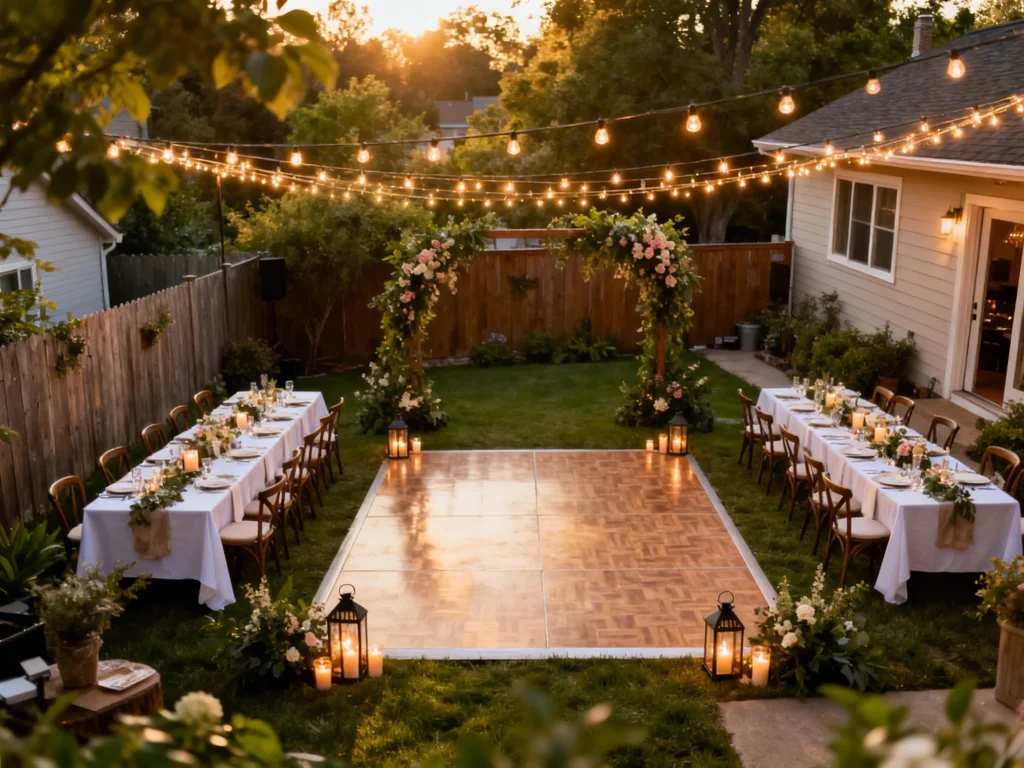
Place dinner tables around the edges of the yard and keep the center open for dancing, first dance photos, or a lounge moment. This layout creates a natural “room” in the middle that feels bigger than it is. It also keeps traffic flowing along the outside, so guests aren’t cutting through the dance floor. Add string lights overhead to visually define the central space.
2) One Long Banquet Table for a Clean, Space-Saving Look
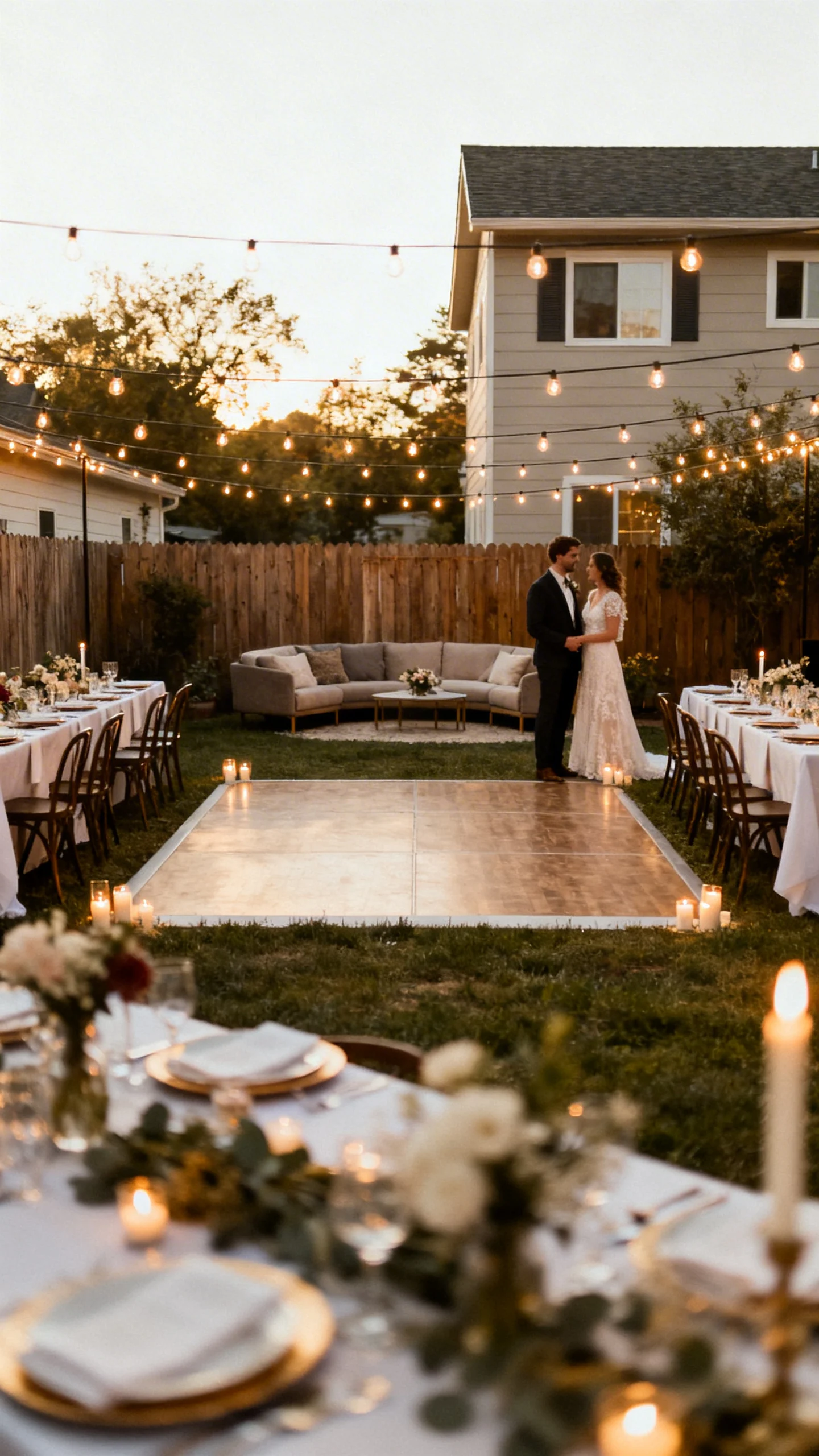
A single family-style table is one of the easiest ways to maximize small spaces while looking intentional. It reduces the number of aisles and awkward gaps that come with multiple rounds. Run the table parallel to the house or fence line to keep edges tidy. Finish with a greenery runner and taper candles for an elevated backyard feel.
3) Bistro Cocktail Reception With Mixed High-Tops
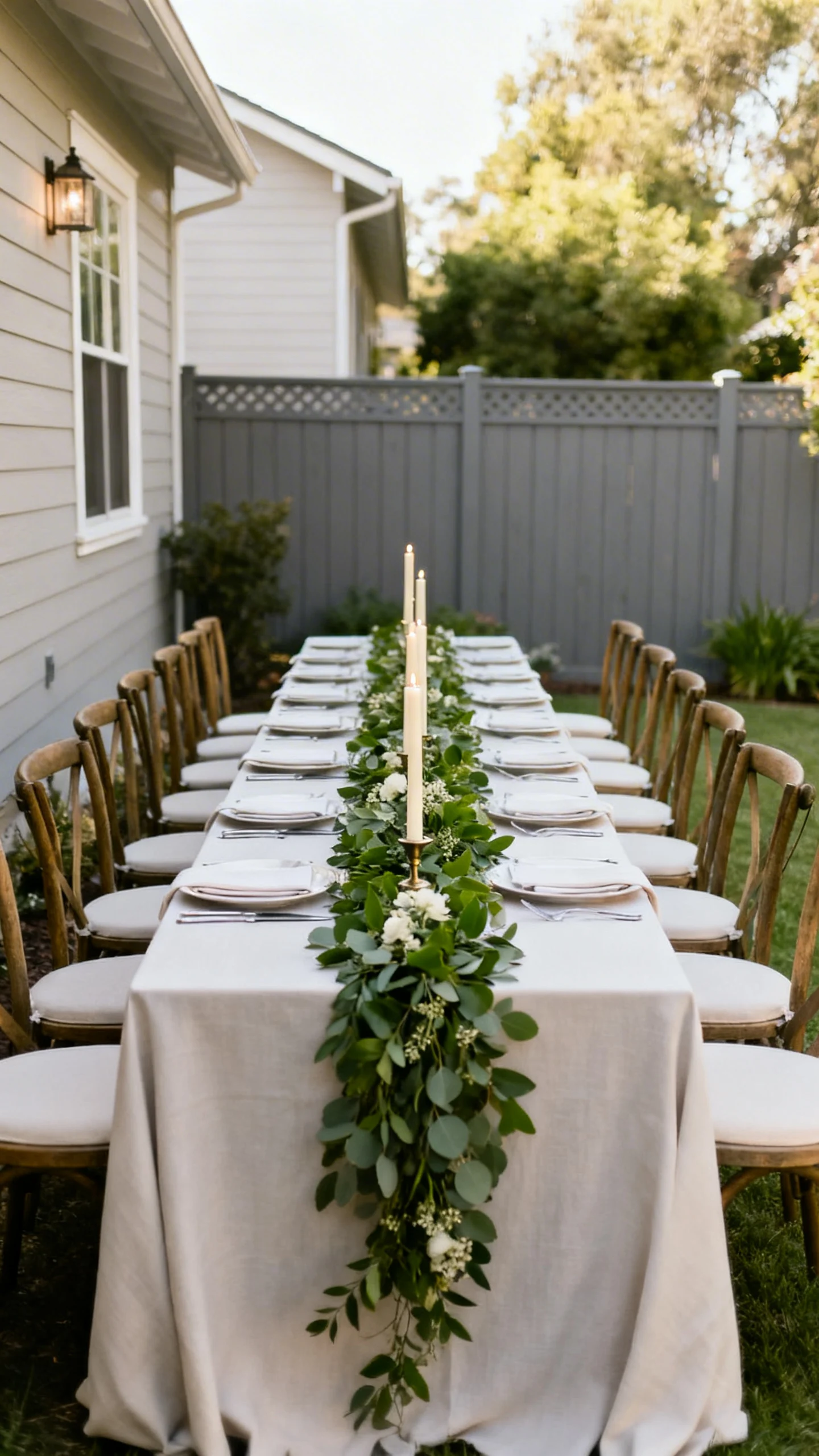
If your guest count is tight or you want more mingling, skip full seating and lean into a cocktail-style layout. Use a mix of high-top tables and a few low lounge clusters to give guests options. This keeps footprints small and creates a lively, European garden-party vibe. Make sure to include at least a few seated spots for older guests and anyone who needs a break.
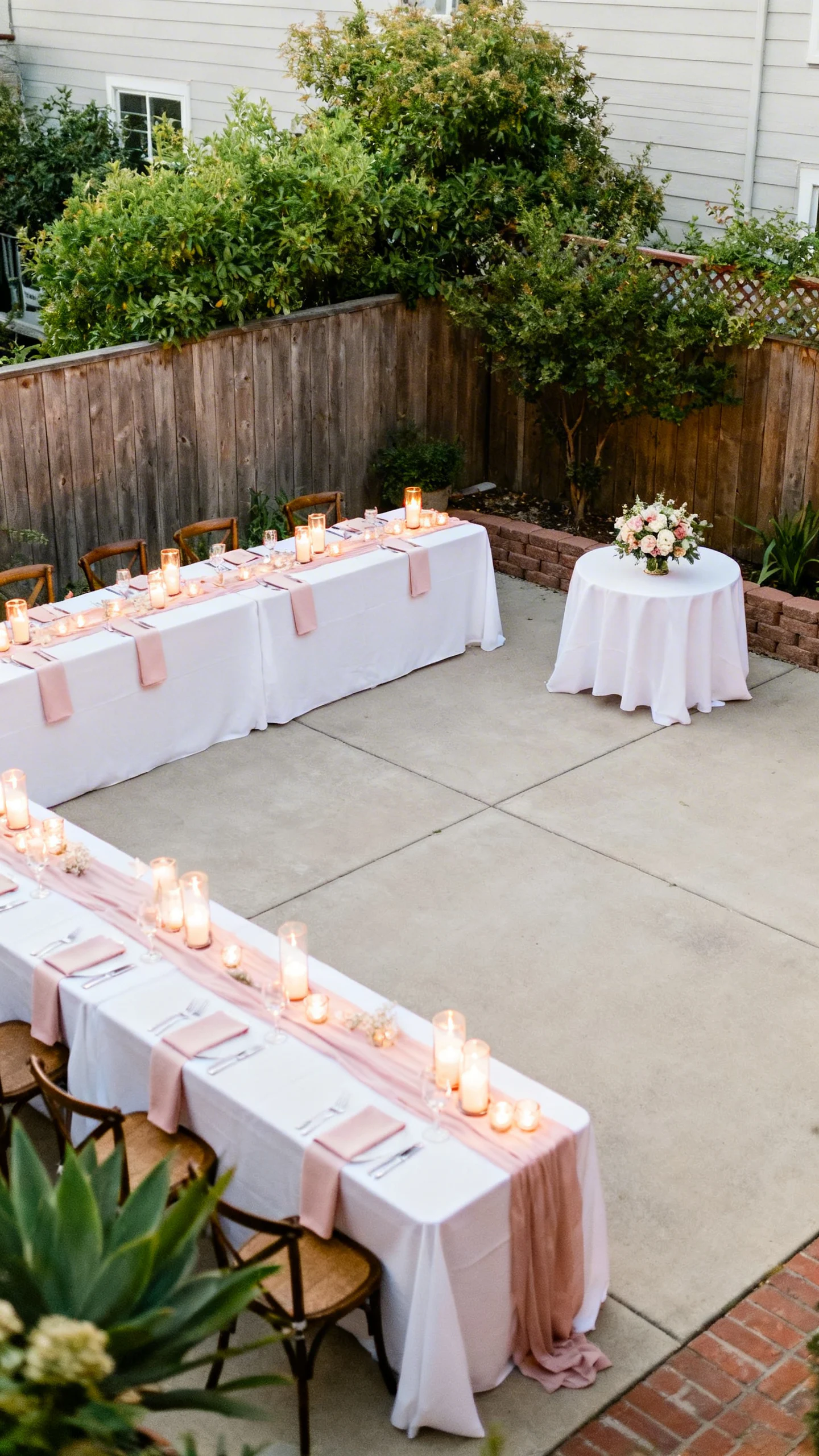
4) L-Shaped Table Arrangement to “Hug” the Yard
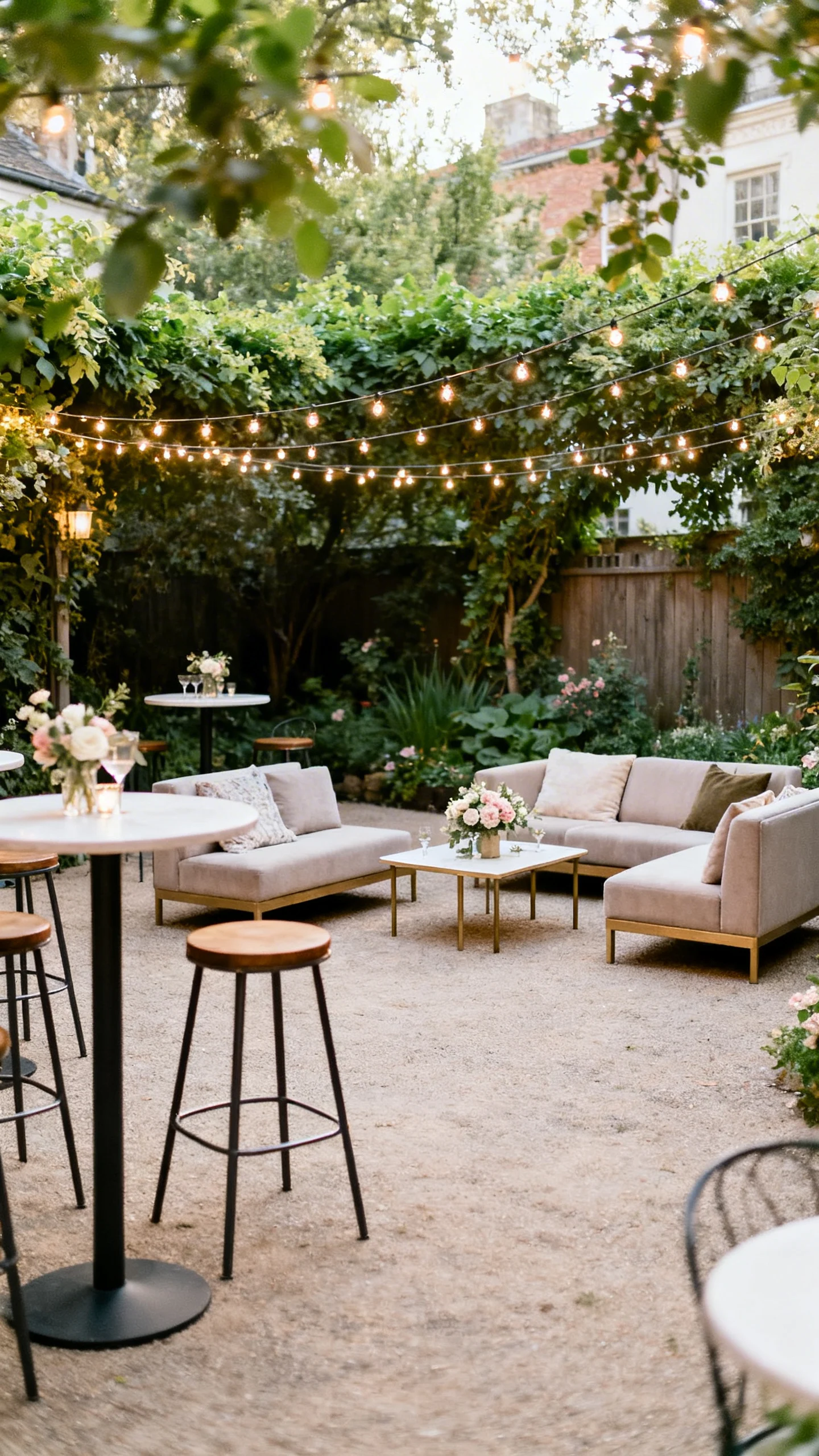
An L-shaped setup is ideal when your backyard has a patio, deck, or narrow side yard that needs structure. Arrange tables in an L to follow the perimeter and preserve a clear open area for dancing or a lounge. It feels cozy and intentional, not cramped. Place the sweetheart table at the corner of the L for a natural focal point.
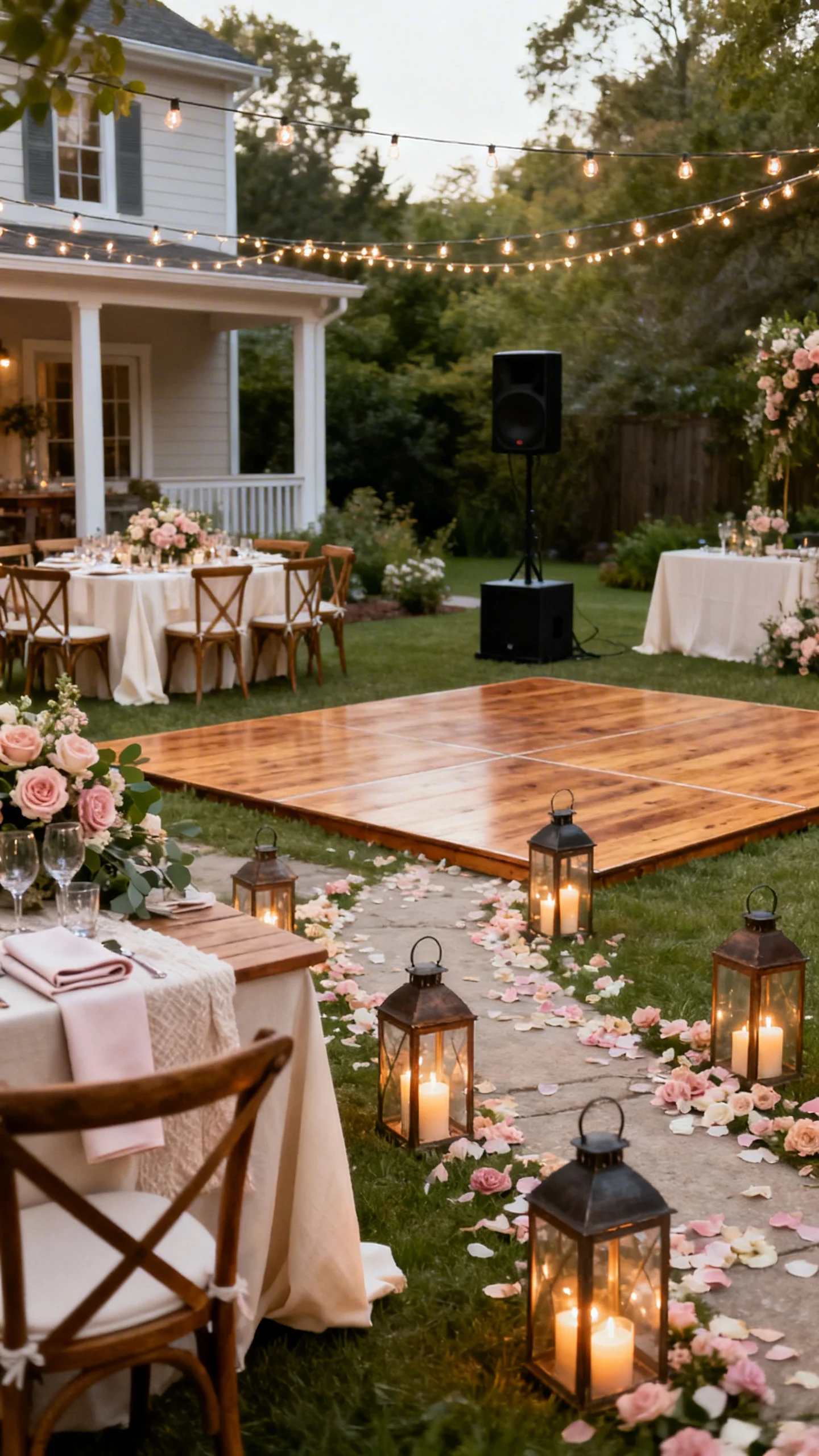
5) Split-Zone Layout: Dinner in One Area, Dancing in Another
When square footage is limited, separating functions can make everything feel calmer. Host dinner closer to the house (easy access to restrooms and kitchen staging), then set dancing and DJ/speakers farther out. Guests naturally migrate, which prevents crowding. Use a runner of lanterns, candles, or florals to guide the transition between zones.
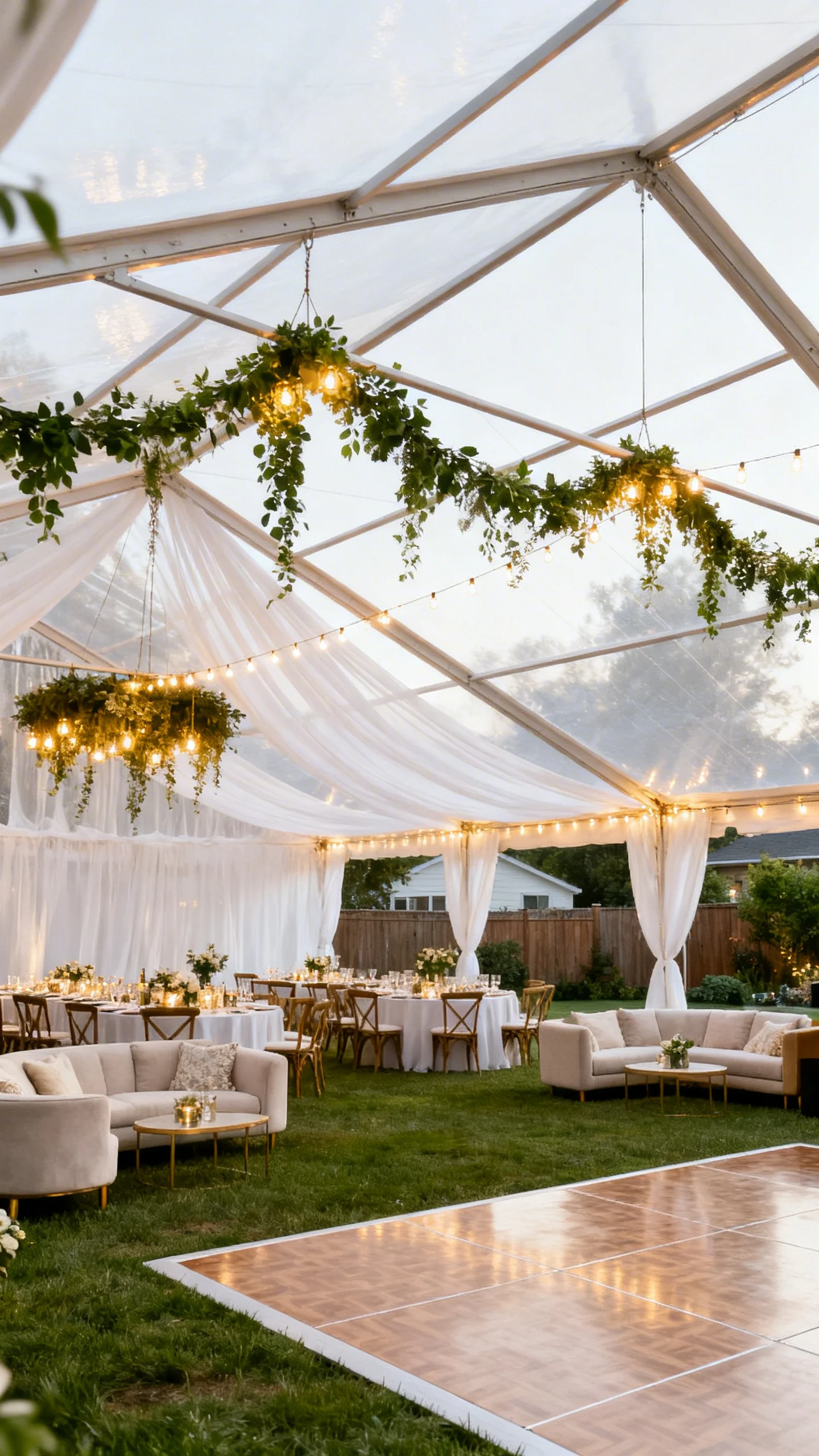
6) Tented “Room” With Open Sides for Airy Flow
A small tent can create instant structure without swallowing the yard—especially if you choose open sides. Place dining under the tent and keep cocktail hour or lounge seating outside to spread guests out. A tent also gives you an obvious spot for lighting and hanging greenery. Keep the dance floor just outside the tent edge so it doesn’t compete for precious covered space.
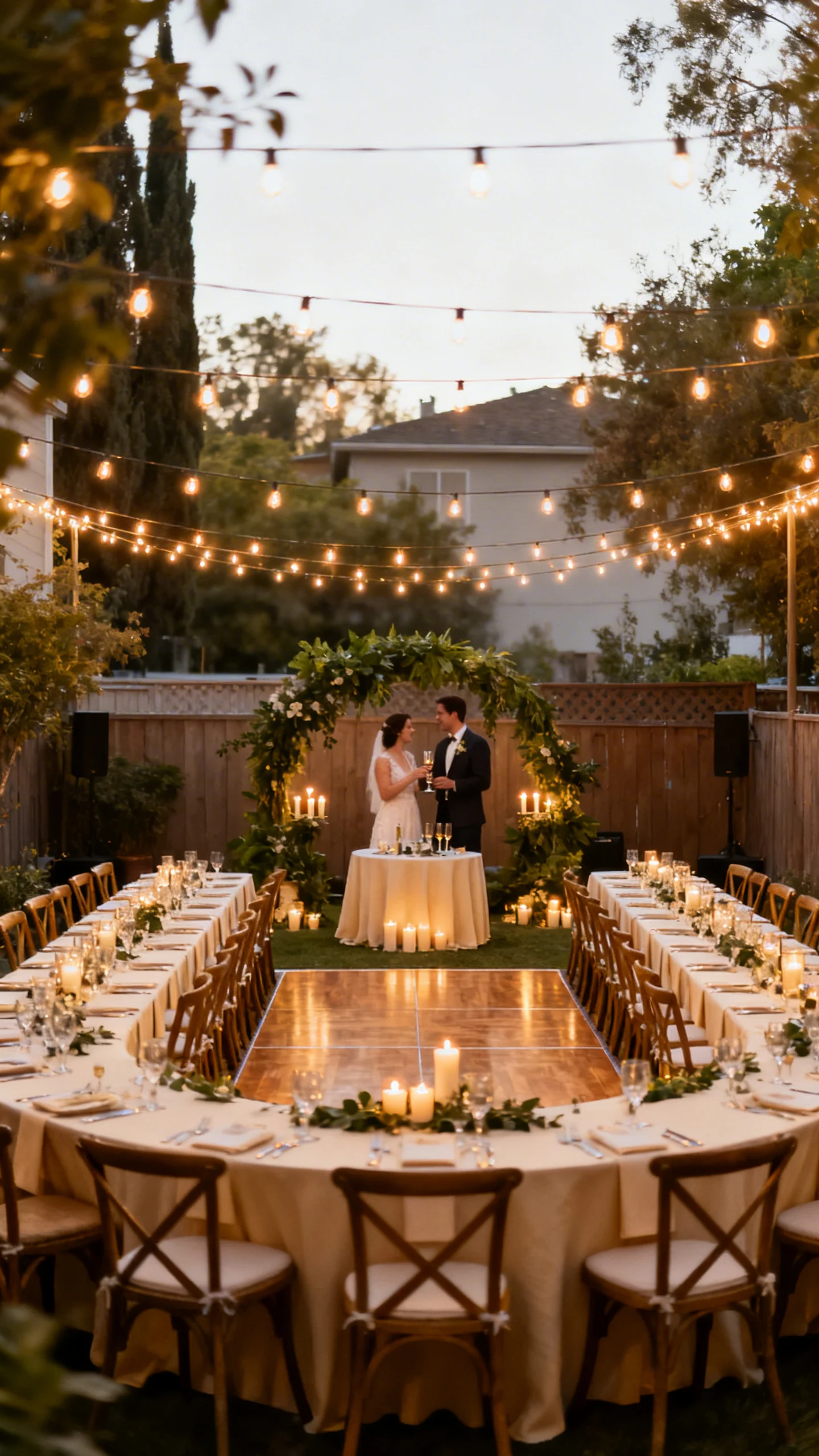
7) U-Shaped Seating That Keeps Everyone Close
Arrange tables in a U to create a built-in “stage” for toasts, first dances, or a sweetheart table. It maximizes seating while keeping sightlines open, which matters in tight yards. The open center of the U can hold a small dance floor or a statement floral installation. This layout is especially good for receptions with speeches and structured moments.
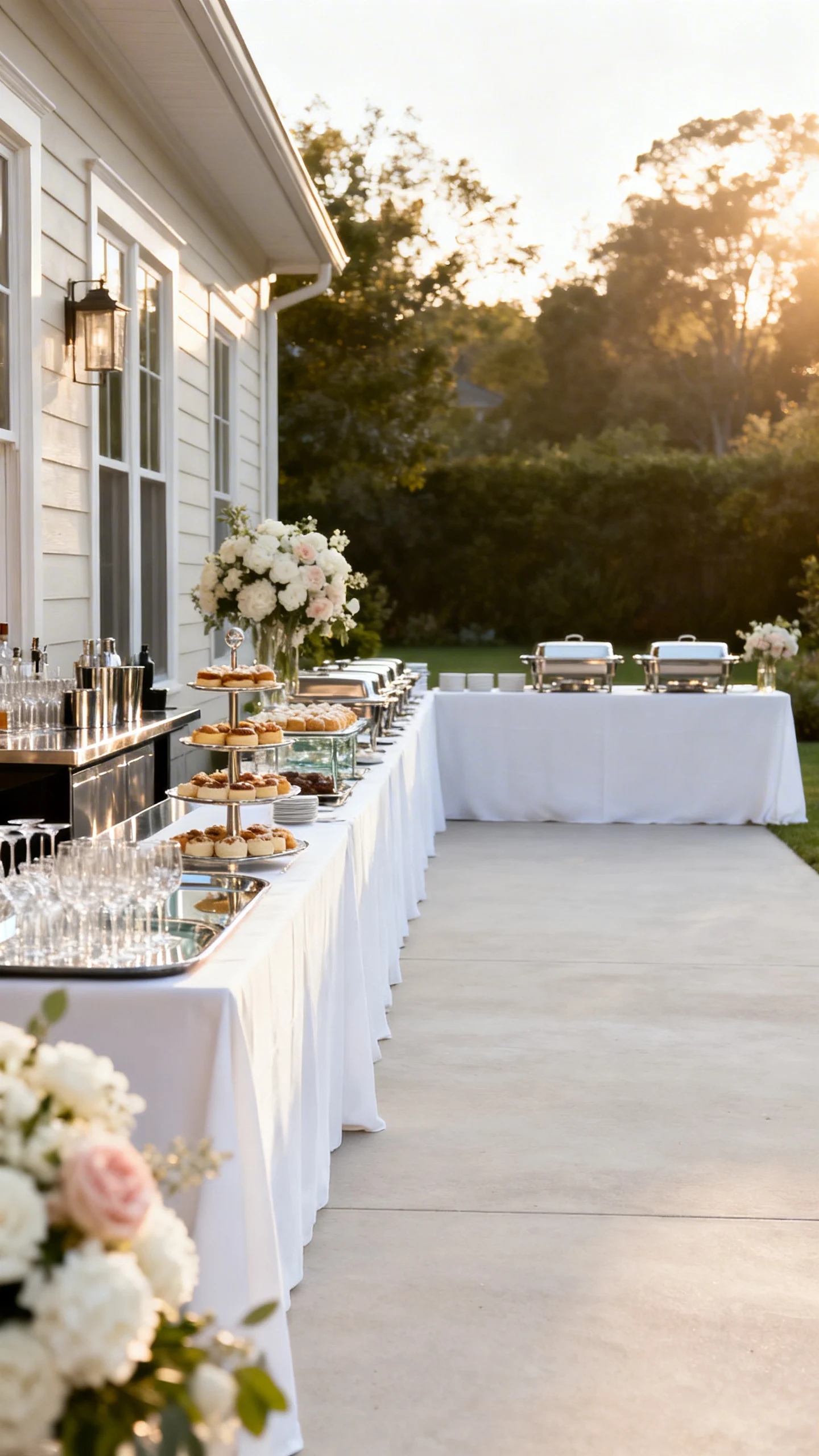
8) The “House Wall” Setup: Bar, Dessert, and Buffet in a Single Line
To prevent bottlenecks, put service stations along one straight run—often against the house wall, fence, or garage. Create a clean line for the bar, water/coffee, dessert, and buffet so guests know exactly where to go. This keeps the middle of the yard free for tables and movement. Add matching signage and a consistent linen color to make the functional area feel styled.
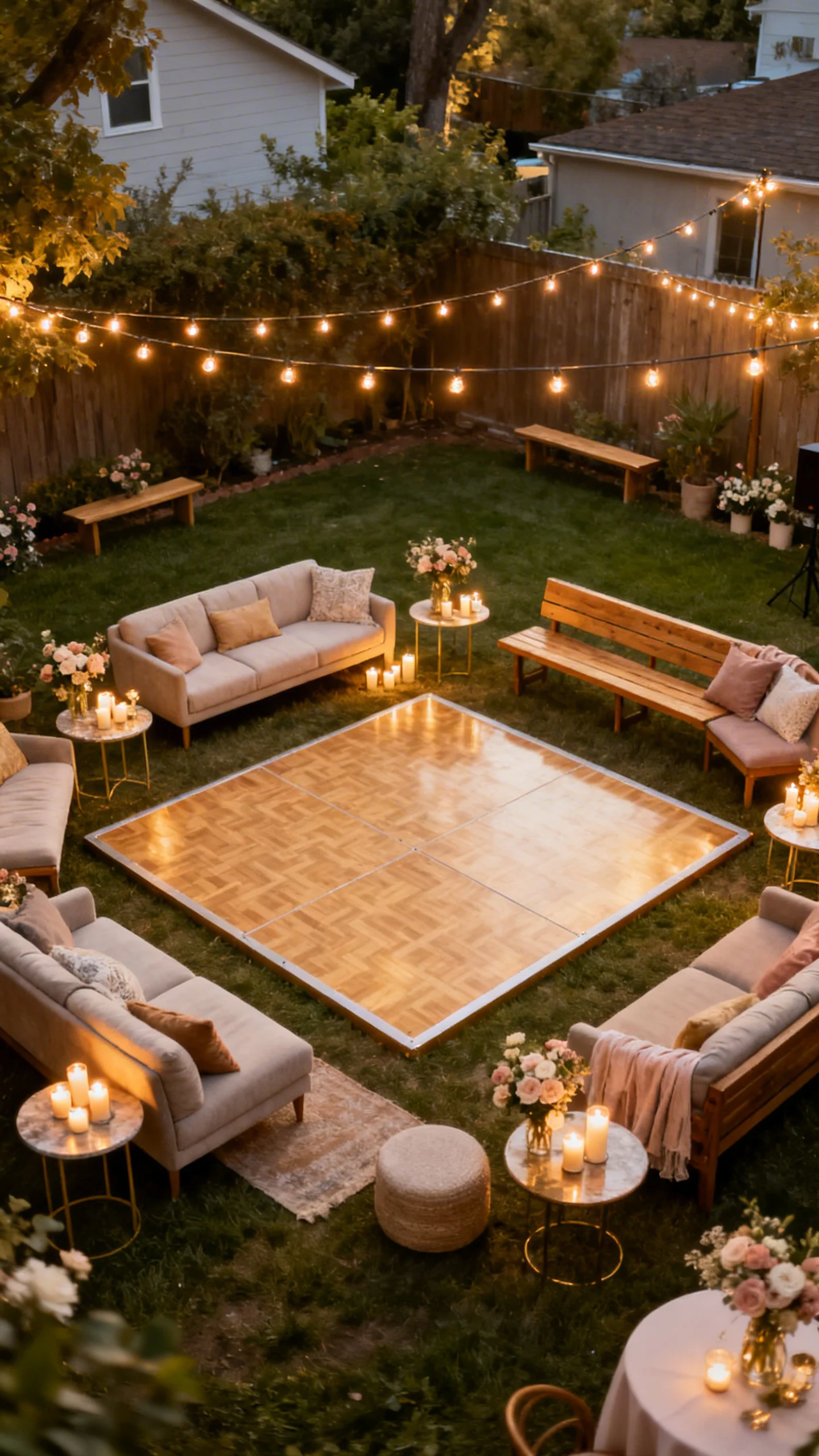
9) Micro Dance Floor + Lounge Ring Instead of Big Dancing Space
If dancing matters but space is tight, choose a smaller dance floor and surround it with a lounge ring. Sofas, benches, and petite cocktail tables make the area feel like a chic outdoor living room. Guests can watch, sip, and jump in without needing a huge open area. Bonus: this layout photographs beautifully and feels naturally social.
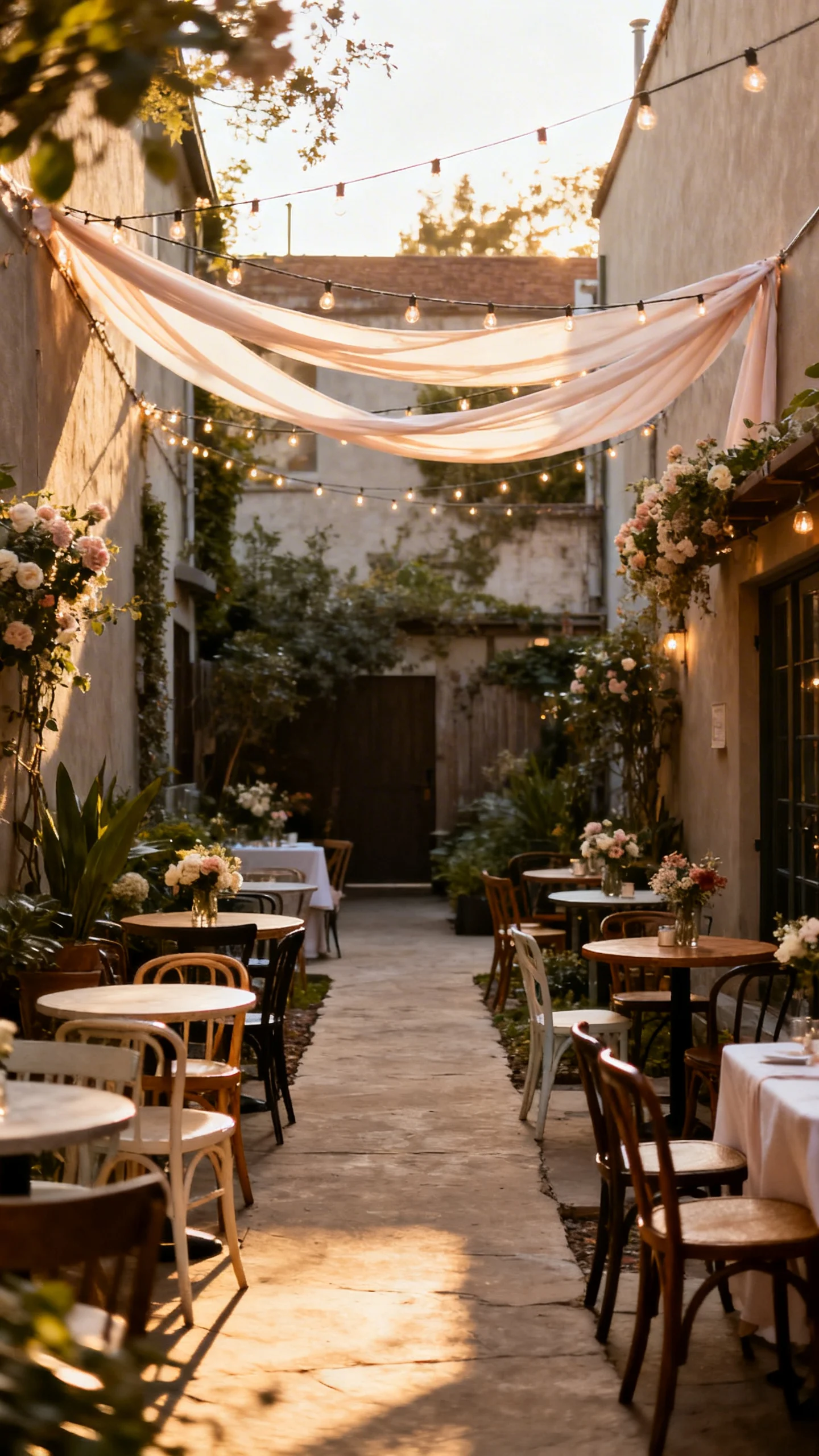
10) Courtyard Path Layout With Clear “Aisles” for Guest Flow
In narrow or oddly shaped yards, prioritize pathways first, then place everything else around them. Build one main aisle from entry to bar/buffet/restrooms, and keep it uncluttered for smooth movement. Tables can tuck into little pockets like a courtyard café, especially with mixed chair styles. Use overhead string lights or fabric draping to visually pull the layout together.
FAQ
How much space do I need per guest for a backyard reception?
For seated dinner, a comfortable rule of thumb is around 12–15 square feet per guest, plus extra space for a bar, buffet, and a small dance floor. If you’re doing cocktail-style mingling with fewer chairs, you can often reduce that to about 8–10 square feet per guest. Measure your usable space (not counting gardens you want to protect) before finalizing rentals.
What’s the easiest small-space layout for guests to navigate?
Perimeter dining with a clear central zone is typically the most intuitive. Guests can circulate along the edges, and your “main moment” area stays uncluttered. Pair it with one clearly marked service line (bar/buffet) to avoid cross-traffic.
Should I do round tables or long banquet tables in a small backyard?
Long banquet tables usually waste less space because they reduce gaps and aisle width. Round tables can work if you have a wider, more open footprint, but they tend to create leftover pockets that aren’t as useful. If you love rounds, choose smaller sizes and keep your table count minimal.
Where should the bar go in a tight backyard?
Place the bar against a boundary like a fence line, house wall, or garage edge so guests queue in one direction. Keep it away from the main pathway to restrooms and away from the dance floor perimeter. A secondary self-serve water station nearby helps reduce crowding.
How do I keep a small backyard reception from feeling cramped?
Limit bulky decor on the ground, use vertical styling (string lights, hanging greenery, tall candles in safe enclosures), and keep pathways clear. Choose multi-purpose zones, like a lounge that doubles as cocktail seating or a dessert display that shares a table with favors. Most importantly, don’t oversize the dance floor—right-sizing it often makes the entire layout feel instantly calmer.