
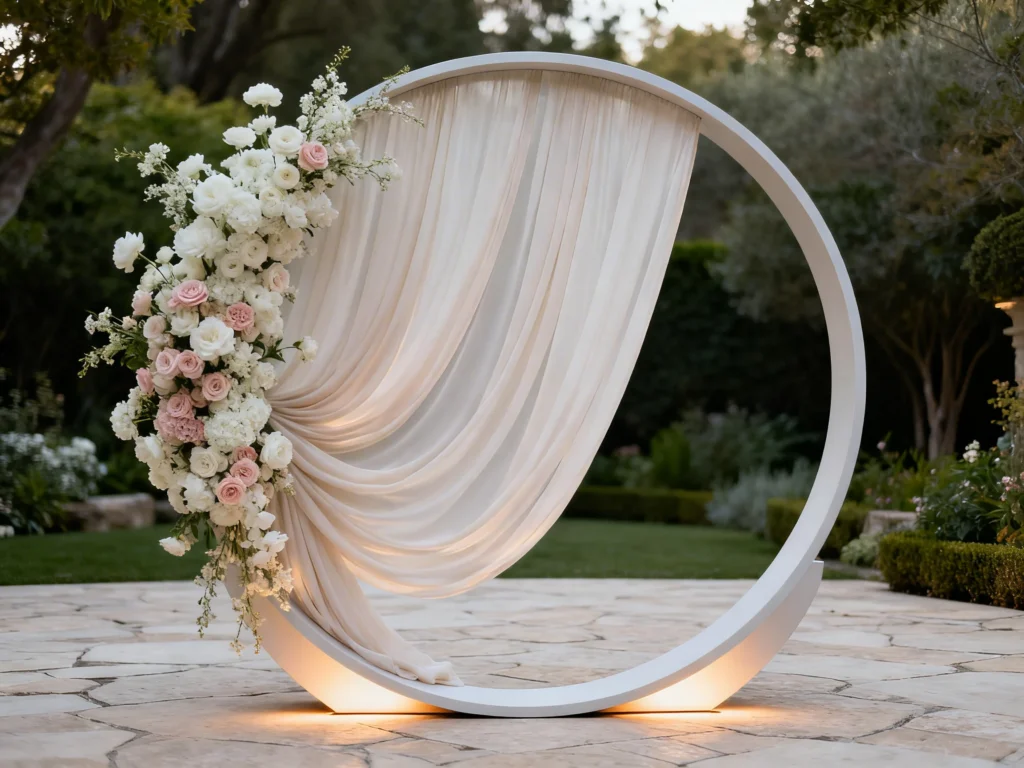
Your wedding backdrop does more than fill space—it sets the mood, frames your photos, and instantly makes the day feel intentional. Whether you’re saying vows outdoors or transforming a blank wall indoors, the right backdrop can turn “pretty” into “print-and-frame.”
Below are wedding backdrop ideas designed to photograph beautifully from every angle, with practical tips so you can pull them off without overcomplicating your timeline or budget.
Soft draping with layered textures
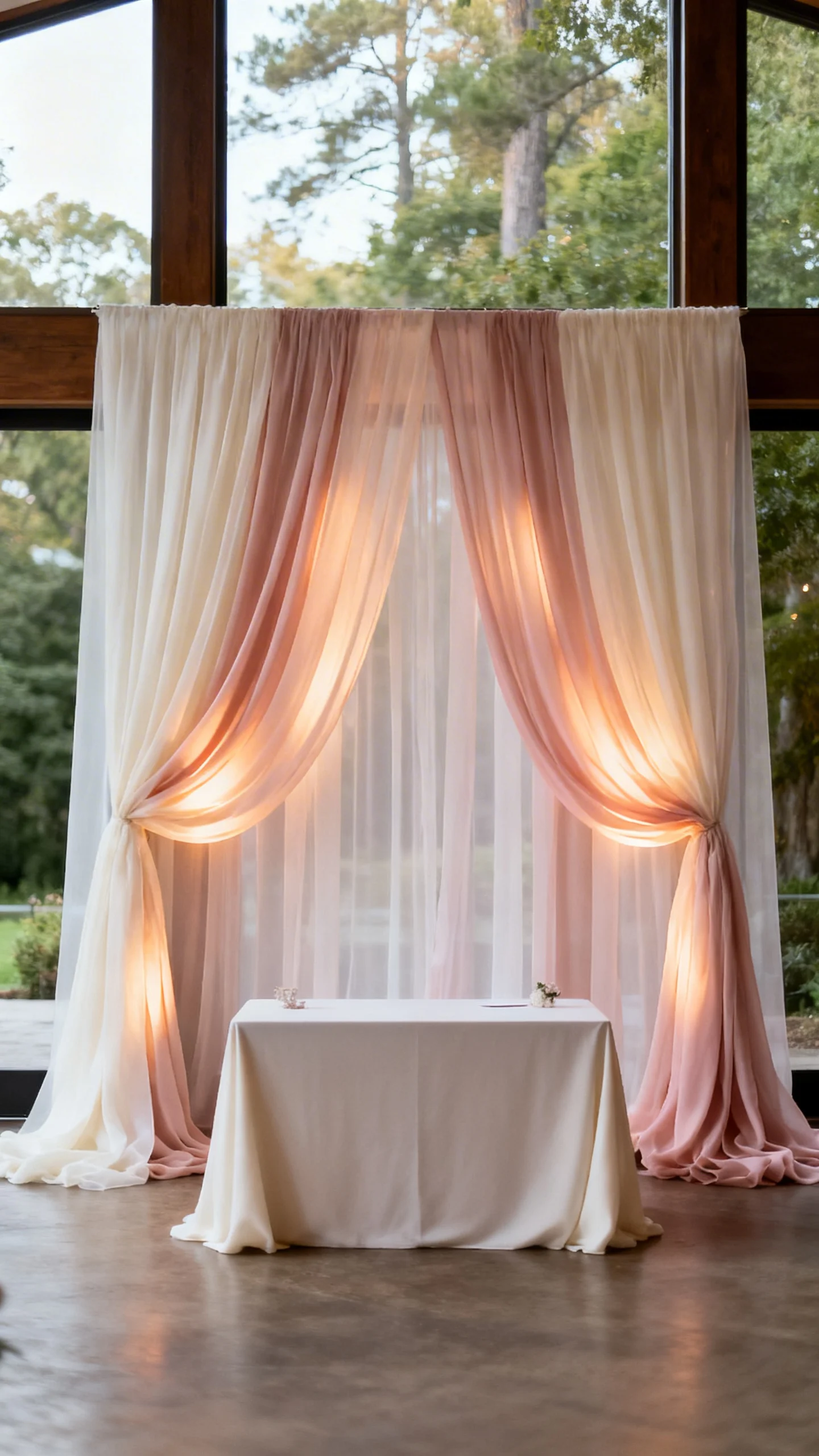
Nothing photographs more romantic than fabric draping with depth—think chiffon, voile, or velvet layered in complementary tones. Use two to three panels and vary the lengths so the backdrop looks styled, not flat. Add subtle uplighting to bring out the folds and keep faces evenly lit. This works especially well behind sweetheart tables and ceremony arches.
Floral meadow wall (fresh, faux, or a mix)
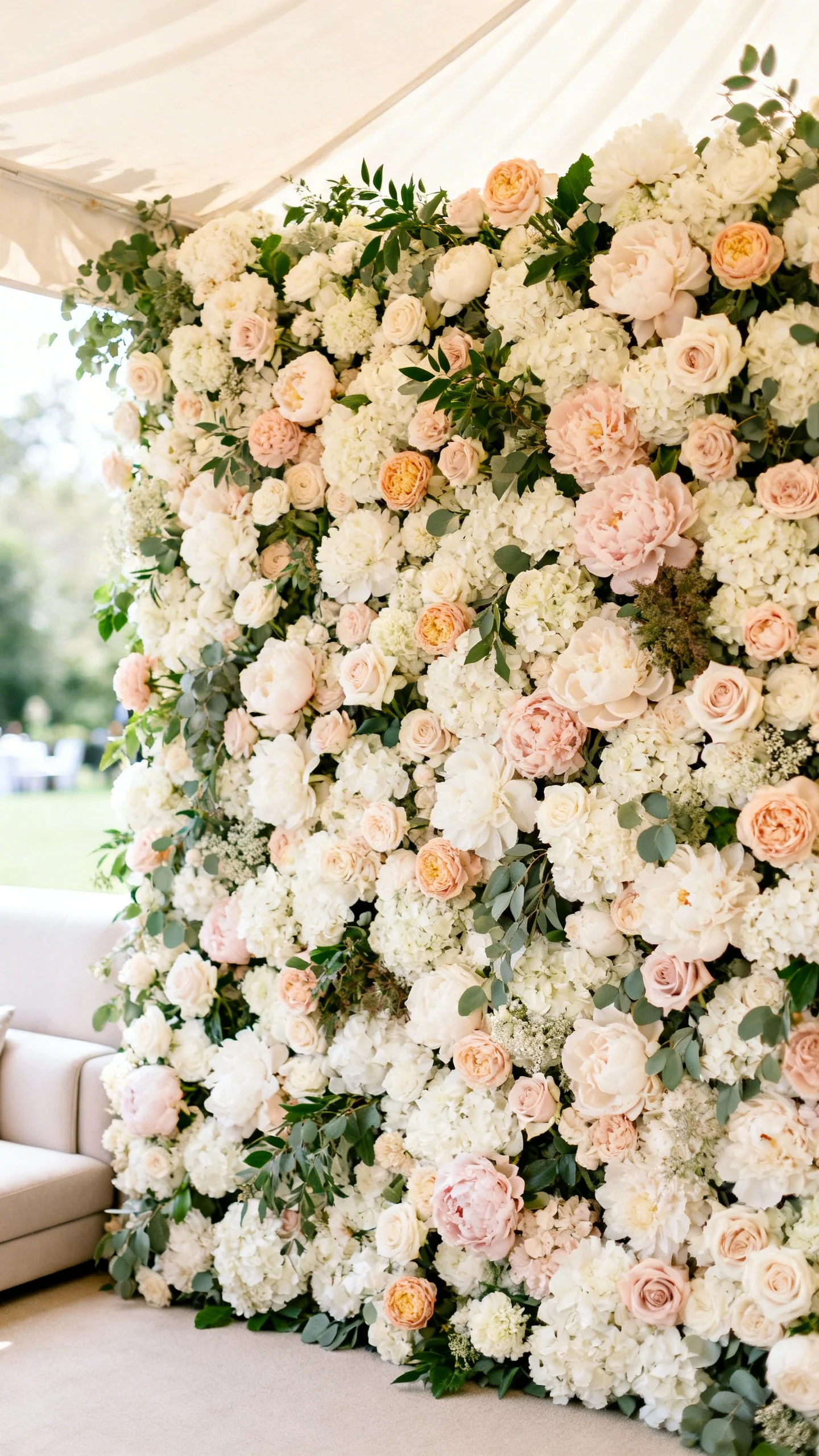
A flower wall reads instantly “wedding” in photos and gives you a built-in portrait spot for guests. For the most natural look, vary flower sizes and add greenery so it doesn’t look too uniform. A mix of faux blooms with a few fresh focal flowers can be budget-friendly and still photograph lush. Place it in open shade or use soft lighting to avoid harsh shadows.
Modern geometric arch with asymmetrical florals
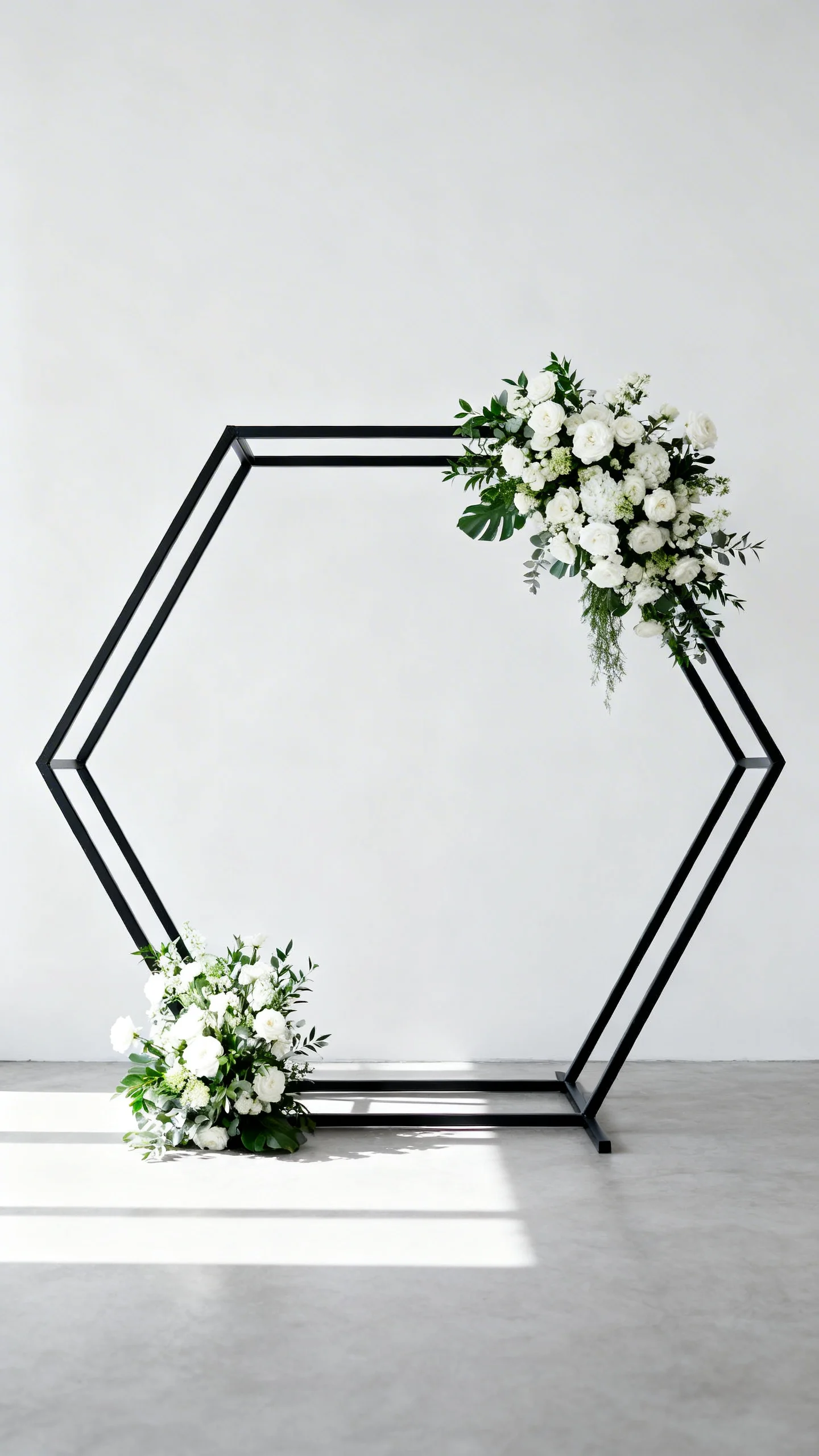
Geometric arches (hexagon, circle, or square) create clean lines that look crisp in wide ceremony shots. Keep florals asymmetrical for a modern, editorial feel that still reads romantic. The negative space helps your faces stand out in photos, especially with minimal décor around it. Match the arch finish to your metals (gold, black, or wood) for a cohesive look.
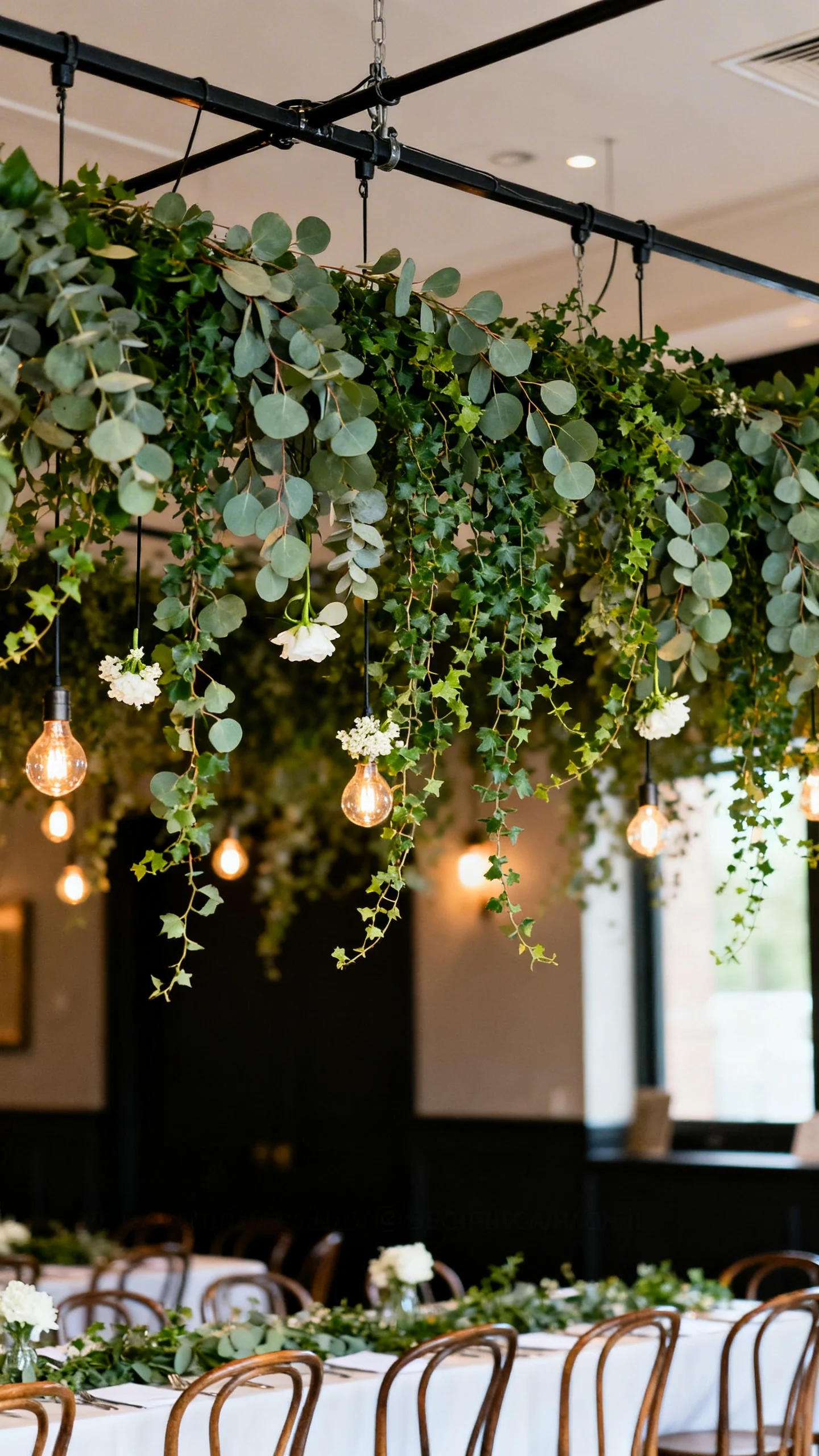
Hanging greenery installation
A ceiling or overhead greenery install makes photos feel immersive, especially for first dances and head table moments. Use eucalyptus, ruscus, or smilax for movement and a naturally “draped” look. Add a few statement blooms or small bud vases tucked in to break up the green. Make sure it hangs high enough for clear sightlines and clean camera angles.
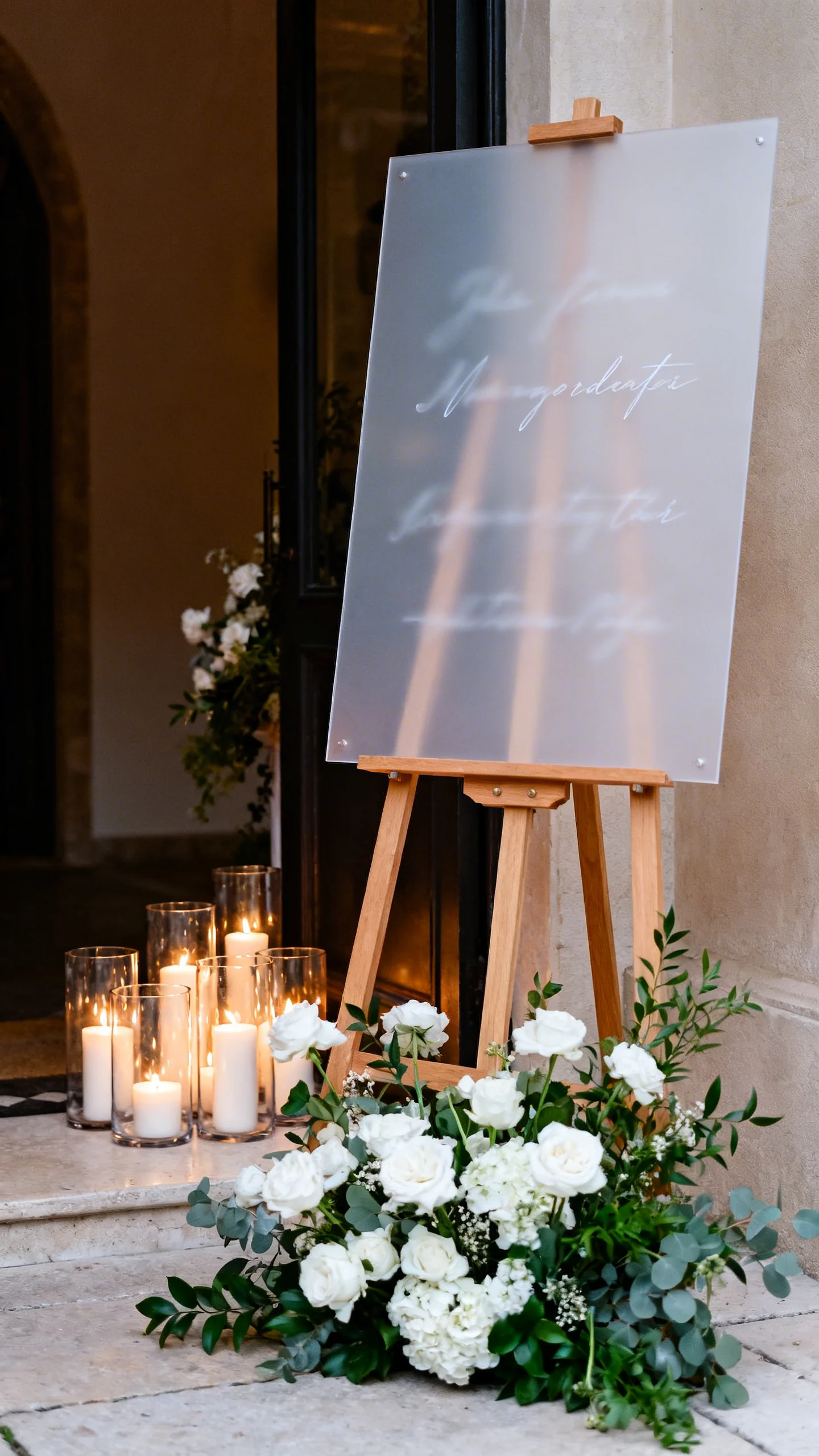
Statement signage backdrop (seating chart or welcome moment)
Turn a functional sign into a photo-worthy backdrop by scaling it up and styling the base. Acrylic, fabric, or painted boards photograph beautifully when paired with grounded florals and candles. Keep the font bold and readable so it looks good in full-length shots and close-ups. Position it where guests naturally pause—near the entrance or just outside cocktail hour.
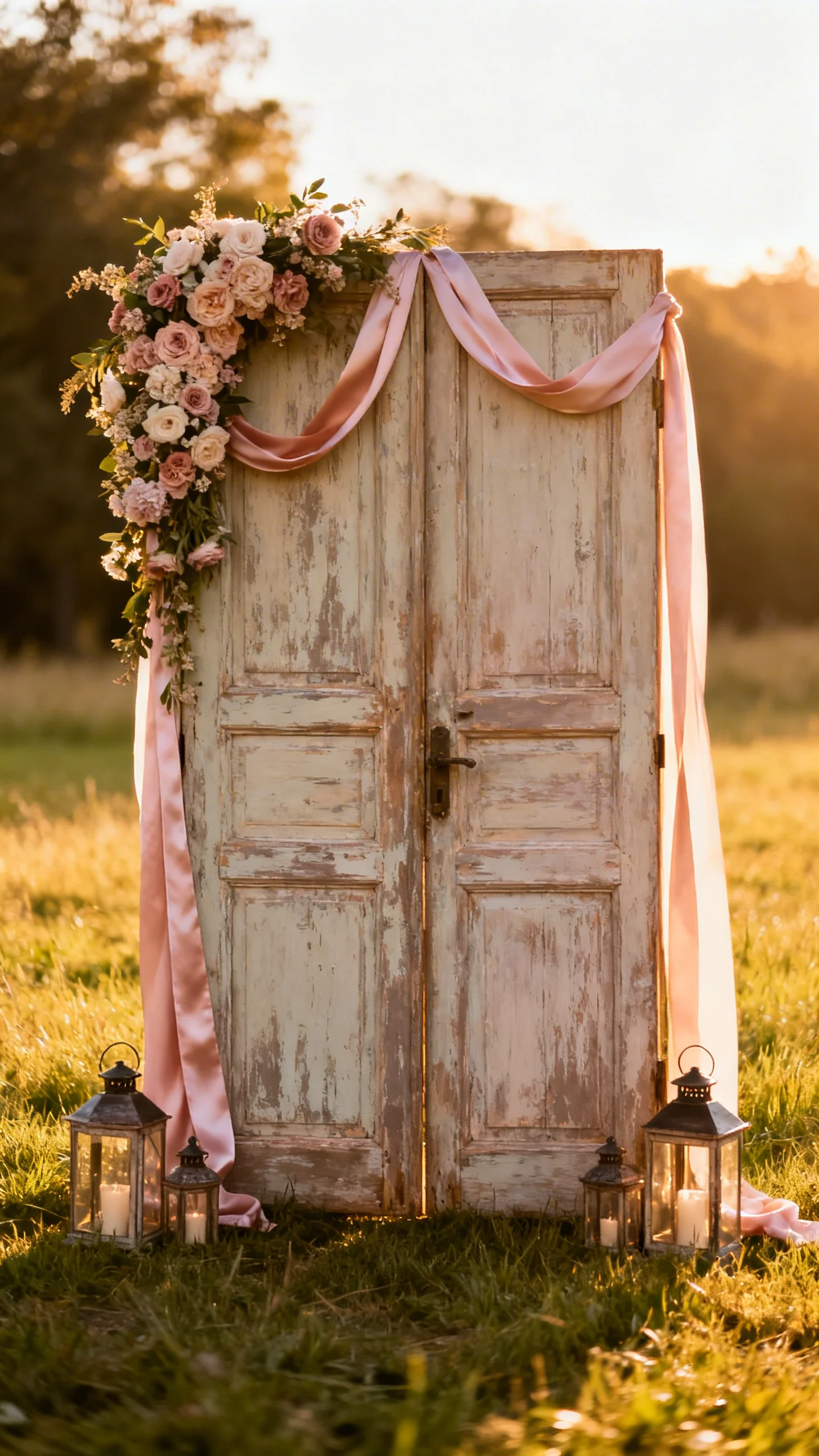
Vintage doors or window frames
Antique doors or oversized window frames add instant character and texture to portraits. They’re especially stunning in outdoor settings where the contrast makes the backdrop feel curated. Dress them with a floral swag, trailing ribbon, or small lantern clusters for dimension. Anchor everything securely so it stays steady in wind and during group photos.
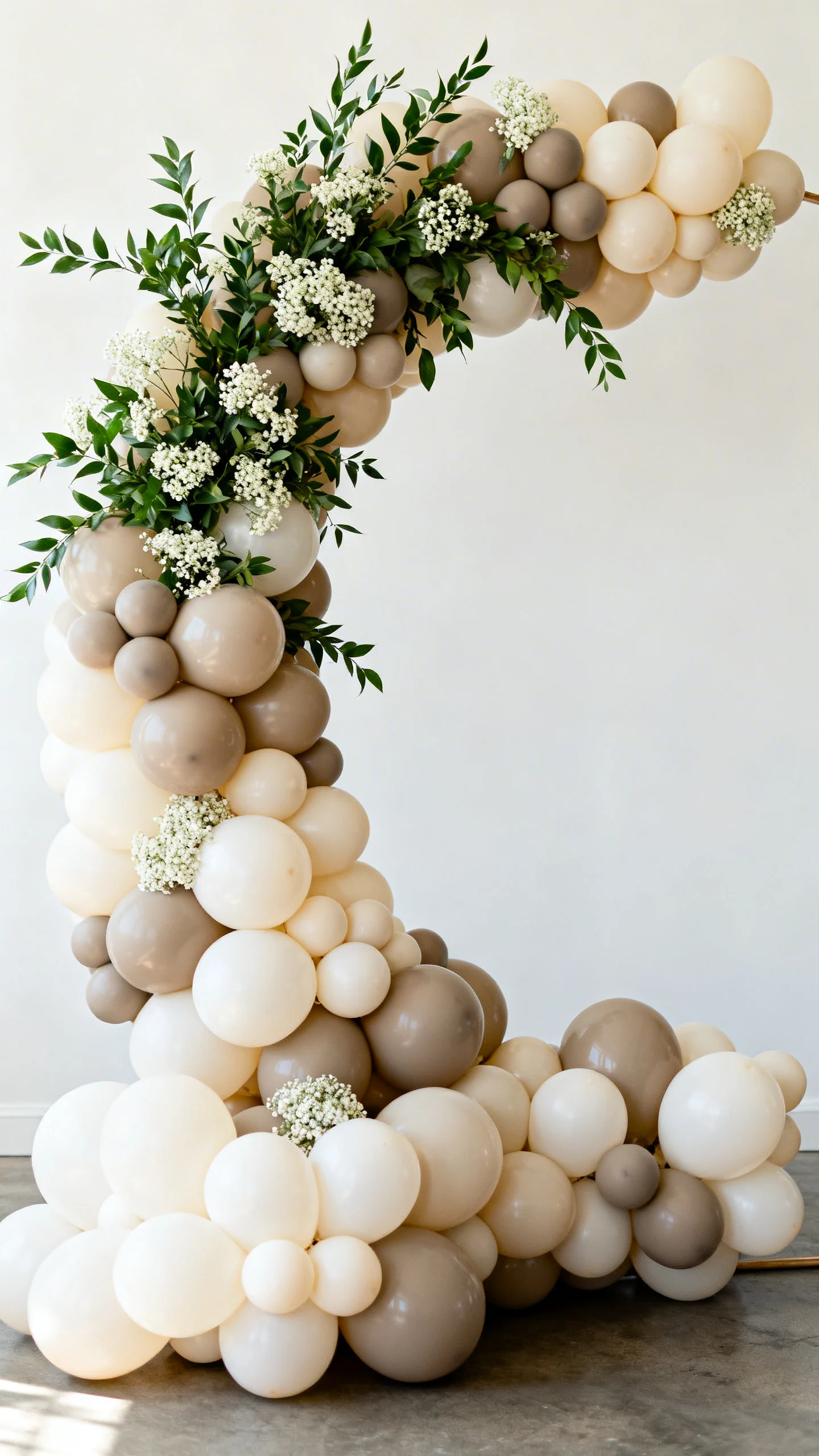
Balloon and floral hybrid garland
For a playful but polished look, combine balloons in matte neutrals with fresh or faux floral accents. The key is a tight color palette—three shades max—to keep it photo-friendly. Add greenery to blend transitions and reduce the “party store” vibe. This is perfect for bridal showers, engagement parties, or a reception photo corner.
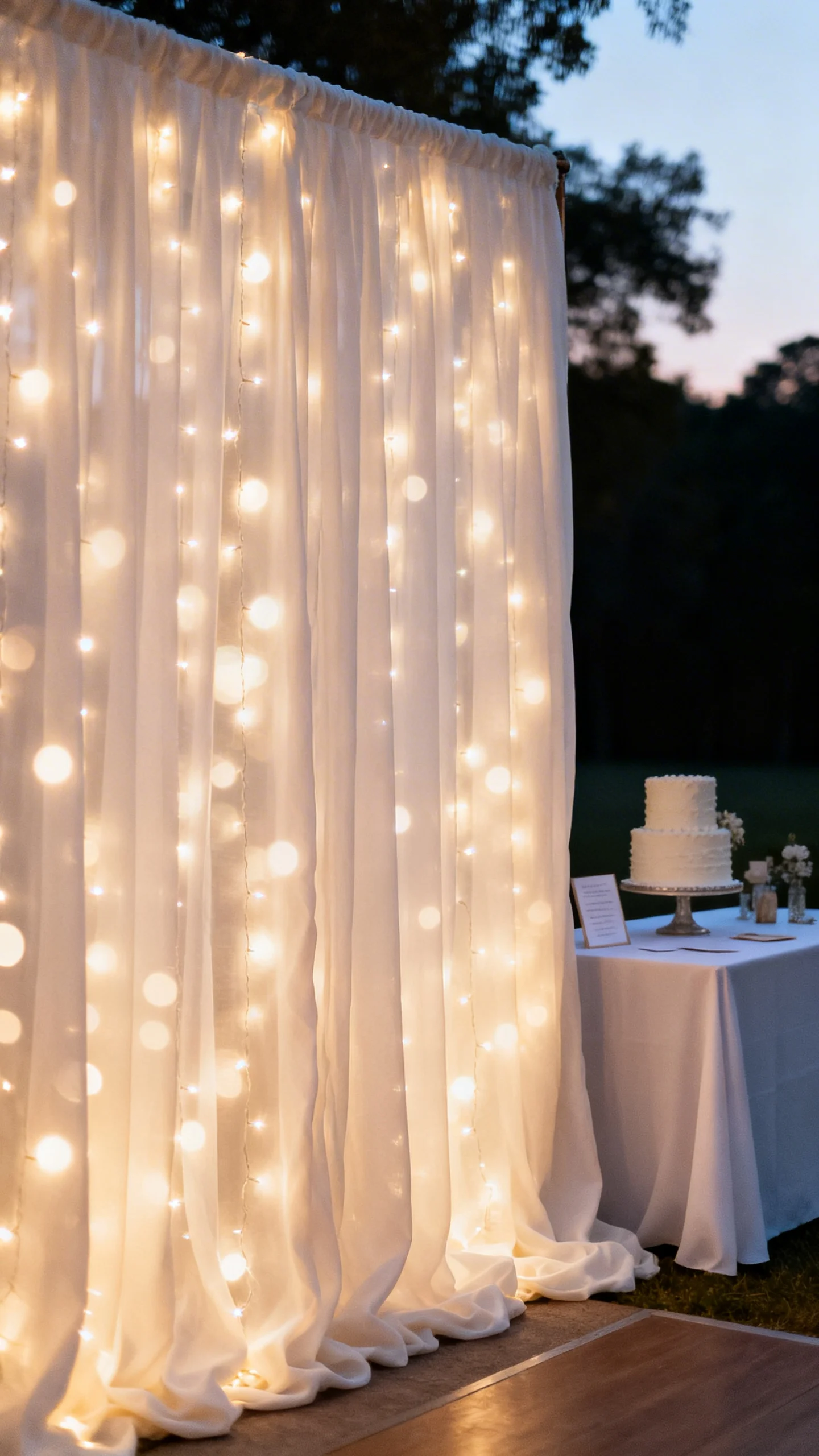
Sheer curtain lights (twinkle without the clutter)
String lights behind a sheer curtain create a soft glow that cameras love, especially after sunset. The fabric diffuses the points of light so the background looks dreamy instead of busy. Use warm-white lights and keep the curtain slightly gathered for texture. This backdrop shines for cake cutting, toasts, and cozy evening portraits.
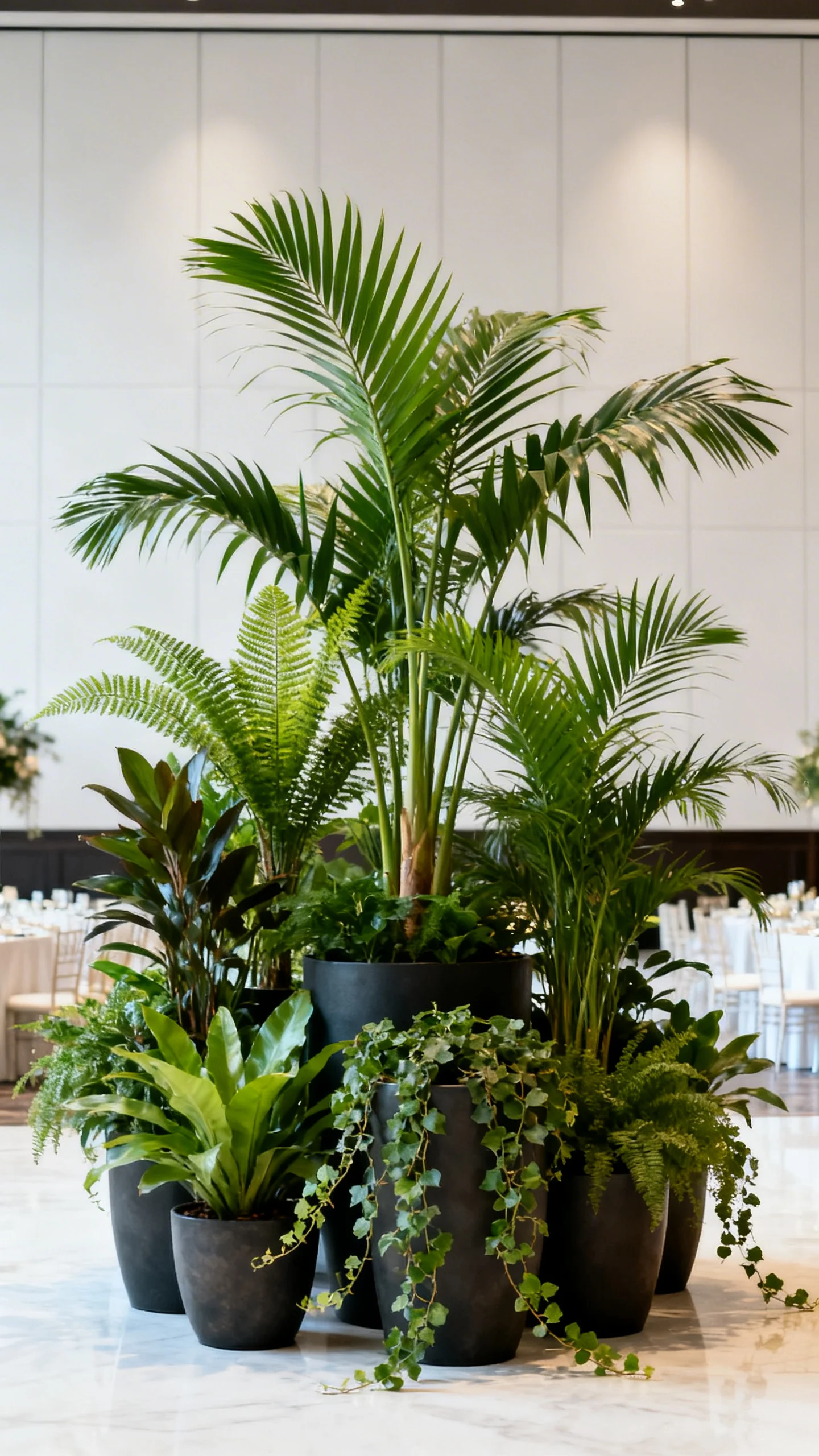
Living plant wall or potted garden backdrop
A living wall or clustered potted plants can look fresh, modern, and unexpectedly luxe in photos. Mix leaf shapes and heights—palms, ferns, and trailing vines—to create depth. It’s a great solution for venues that don’t allow nails or heavy installs because it can be freestanding. Add a small neon-style sign or monogram for a personalized focal point.
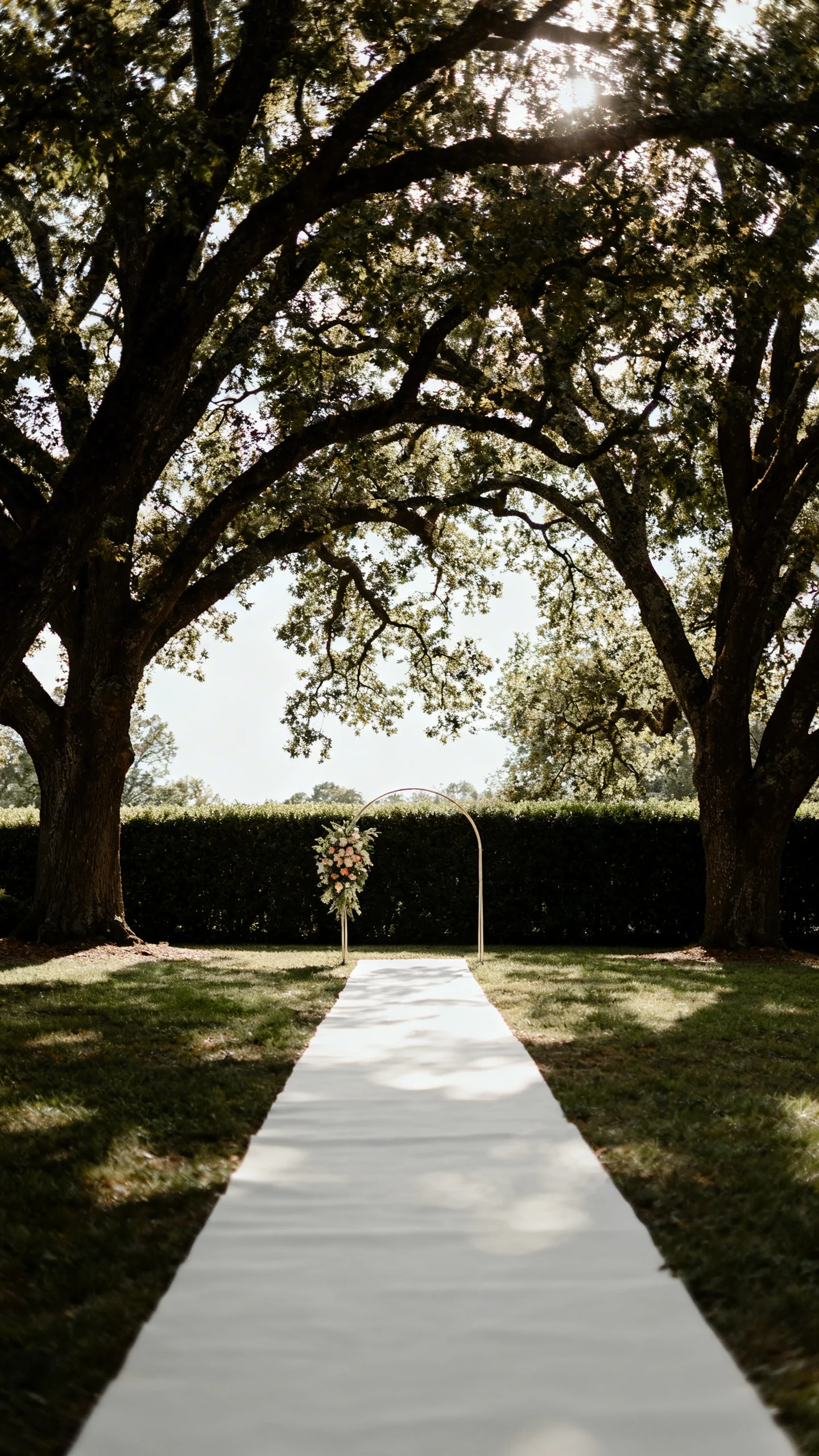
Dramatic ceremony trees and natural framing
If your venue has stunning trees, a hedge, or a garden gate, let nature be the backdrop and style it lightly. A simple floral arrangement at the aisle entrance or a small arch accent can be enough. Photographers love natural framing because it makes images feel layered and timeless. Aim for even lighting by choosing a spot with soft shade or golden-hour light.
FAQ
What makes a wedding backdrop look good in photos?
Dimension and contrast are everything. Layer textures (fabric, greenery, lights) and choose colors that separate you from the background so you don’t visually blend in. Good lighting—soft, warm, and even—matters just as much as the backdrop itself.
How big should a backdrop be for group photos?
For small groups, aim for at least 8 feet wide; for larger bridal party shots, 10–12 feet wide is safer. Height should be around 7–8 feet so it frames standing guests without awkward cropping. If your backdrop is smaller, keep group portraits tighter to avoid seeing the edges.
Are faux flowers noticeable in professional photos?
High-quality faux blooms can photograph beautifully, especially when mixed with real greenery or a few fresh focal flowers. Avoid overly shiny petals and uniform, identical blooms. Texture and variation help faux arrangements read more natural on camera.
Where should we place a photo backdrop at the reception?
Choose a spot with space for a small line and minimal foot traffic, like near the bar entrance or adjacent to the dance floor. Avoid placing it in direct midday sun or under harsh spotlights. If possible, test the area with your phone camera to check shadows and background clutter.
How can we keep a backdrop from looking too busy?
Limit your palette and repeat the same two to three materials throughout the design. Add negative space (like an open arch or a simple curtain) so the eye has a place to rest. If you’re using patterns, keep florals or signage minimal and let one feature be the star.