
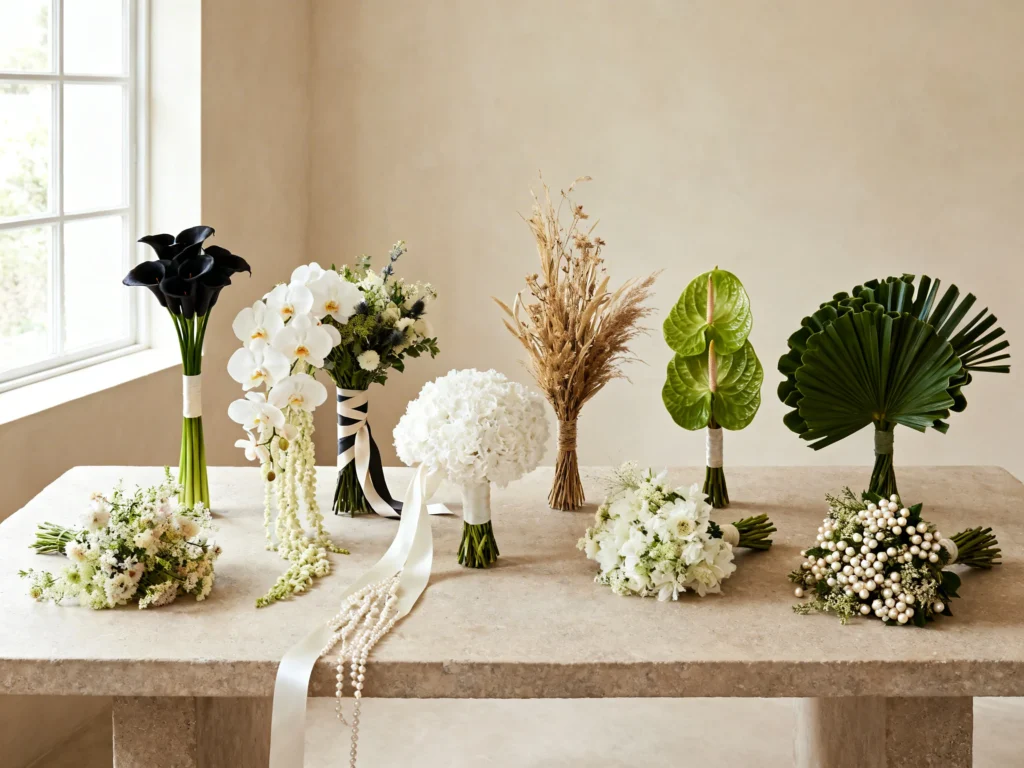
Your bouquet is one of the most photographed details of the entire day—held during the ceremony, framed in close-ups, and tucked into portraits you’ll keep forever. If you want something that feels personal and looks incredible on camera, a few intentional design choices can make all the difference.
Below are unique bridal bouquet ideas that pop in photos, read clearly from a distance, and still feel timeless when you look back years from now.
1) Monochrome “one-color” bouquet
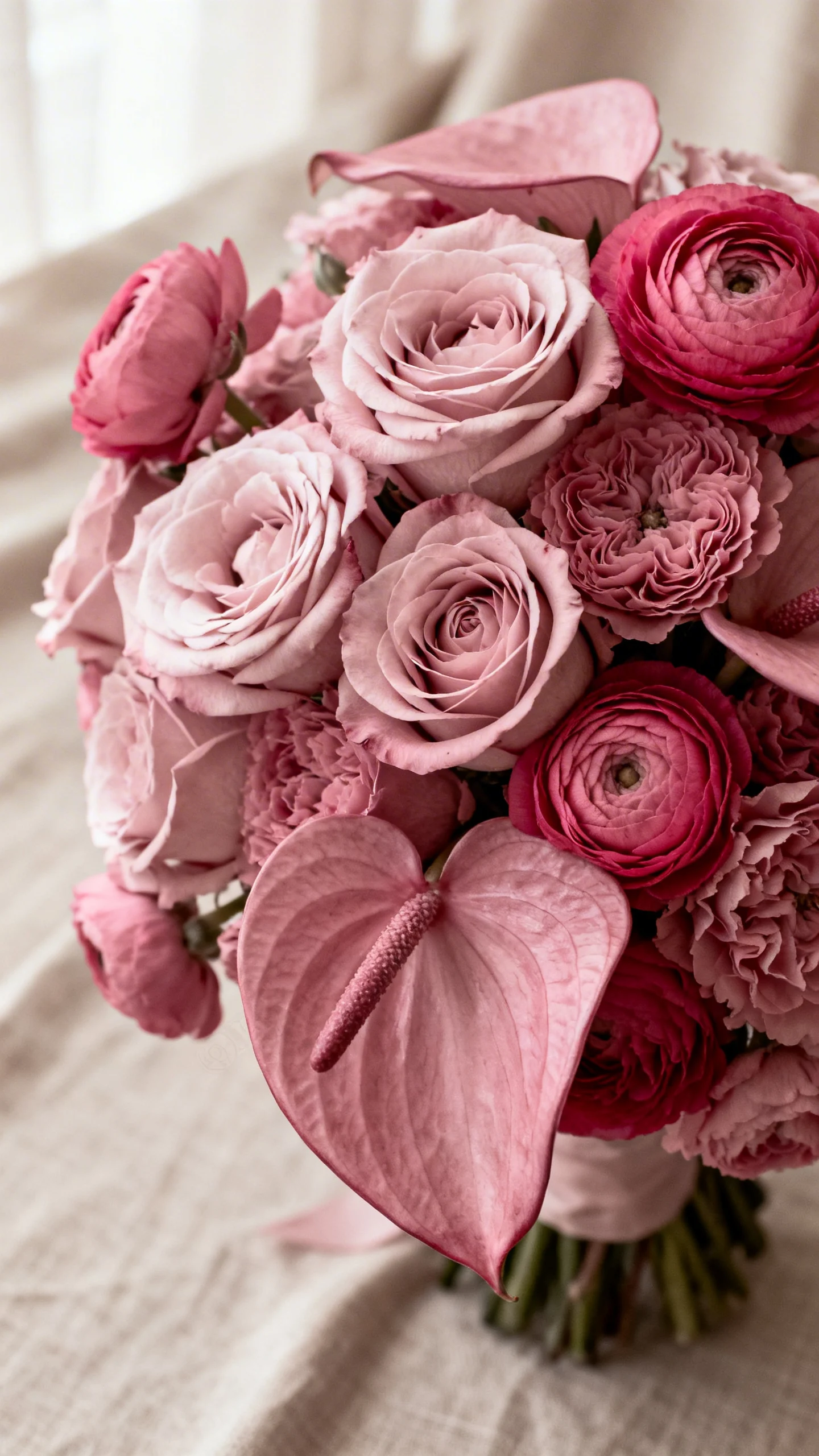
Choose one main color and build your bouquet with multiple blooms in that same shade for a high-impact, editorial look. Photos love the clean color story—especially against a white dress and neutral backgrounds. Mix flower shapes (like roses, ranunculus, and anthurium) to keep it dimensional. Ask your florist to include a range of tones in the same color so it doesn’t look flat.
2) Oversized single-stem statement bloom
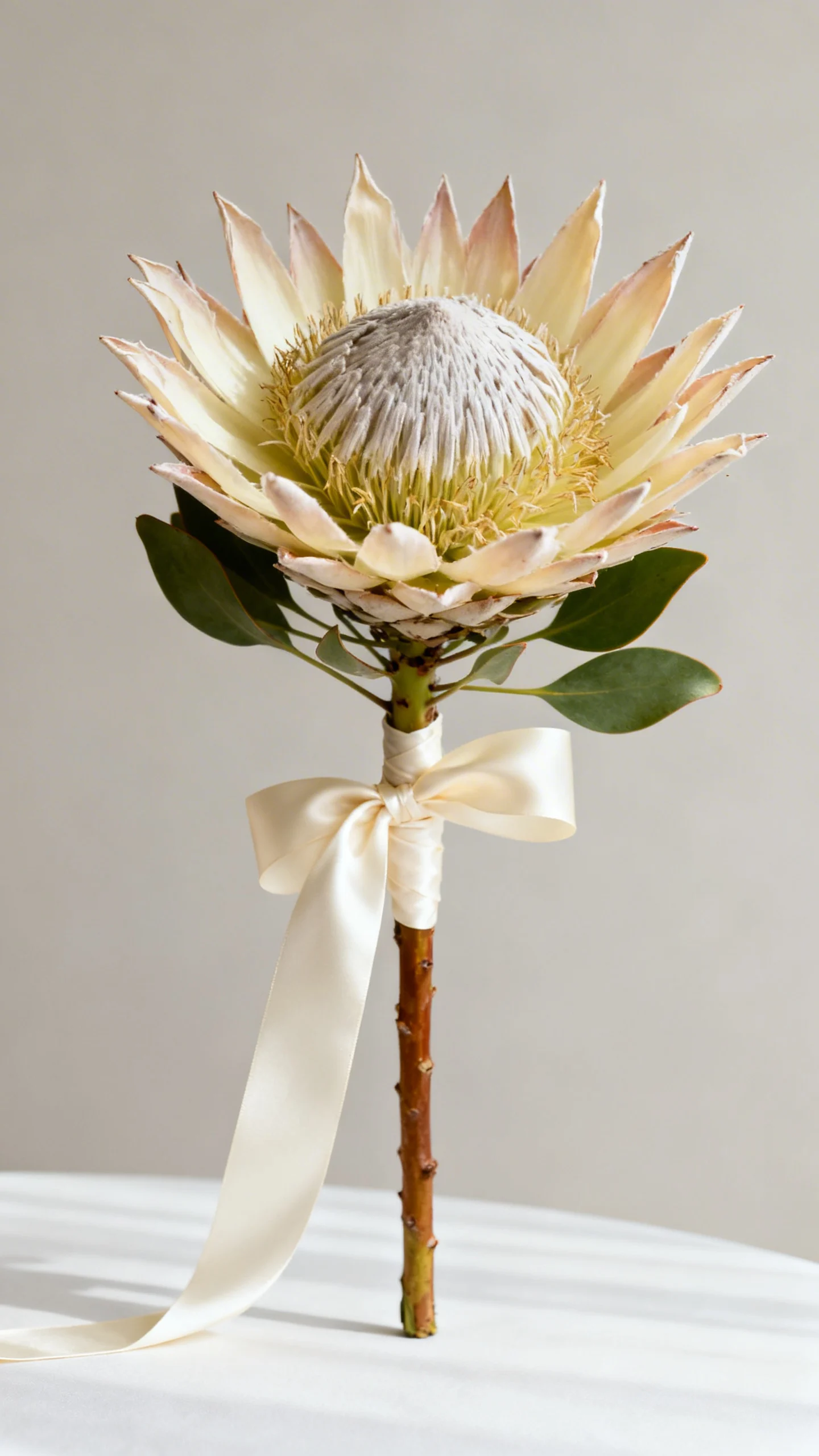
Swap a traditional bundle for one dramatic focal flower, like a king protea, peony, or orchid cluster. This reads instantly in photos and feels fashion-forward without being fussy. Keep the stem long and wrap it with silk ribbon for a clean finish. It’s also a great choice if you want something lightweight and easy to carry all day.
3) Cascading orchid waterfall
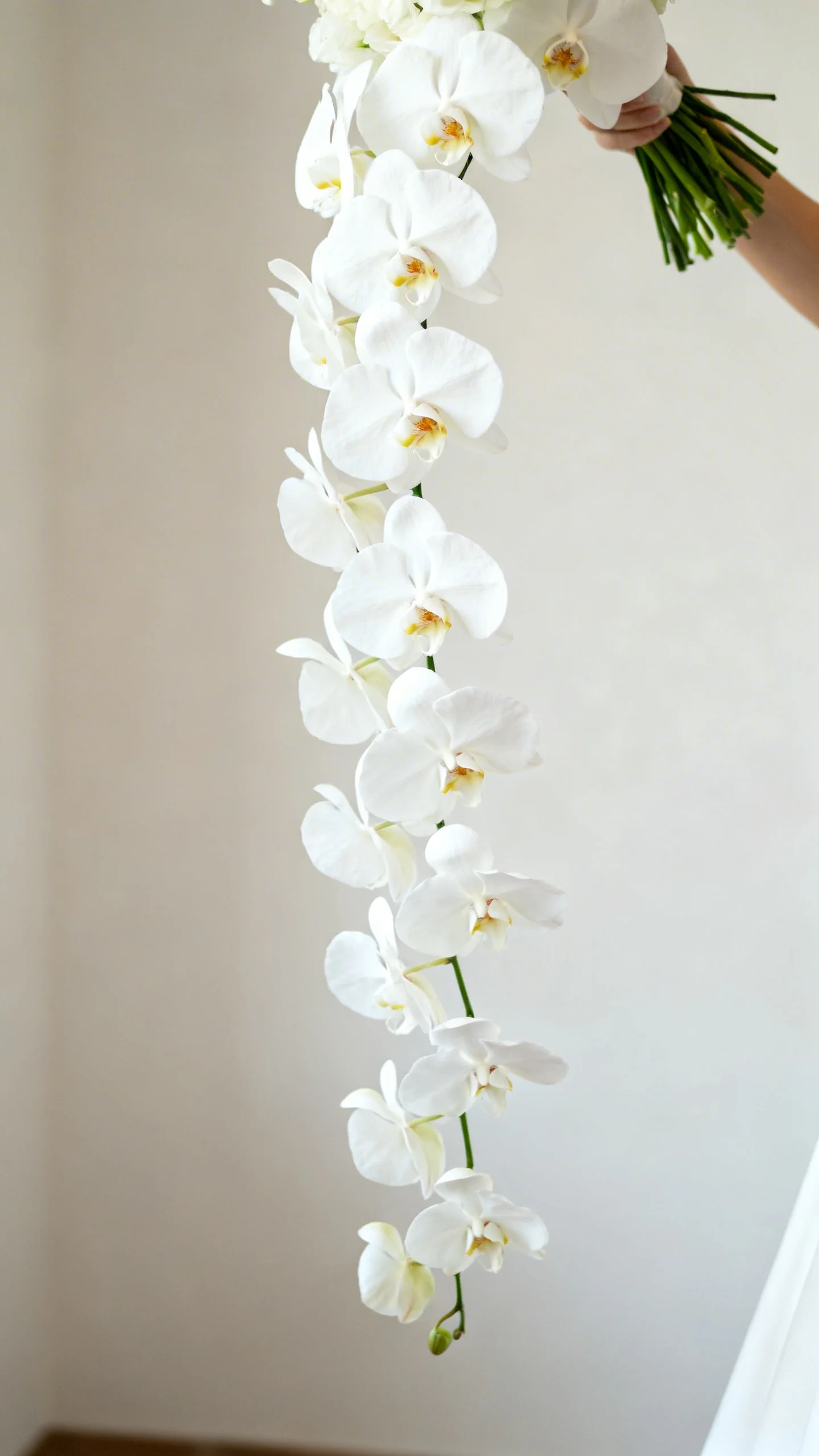
A cascading bouquet creates movement, which looks gorgeous in walking shots and veil-in-the-wind portraits. Orchids photograph beautifully because their petals catch light and show detail even in bright sun. Ask for a slim “waterfall” shape rather than a bulky cascade to keep it modern. Pair it with minimal greenery so the orchids remain the star.
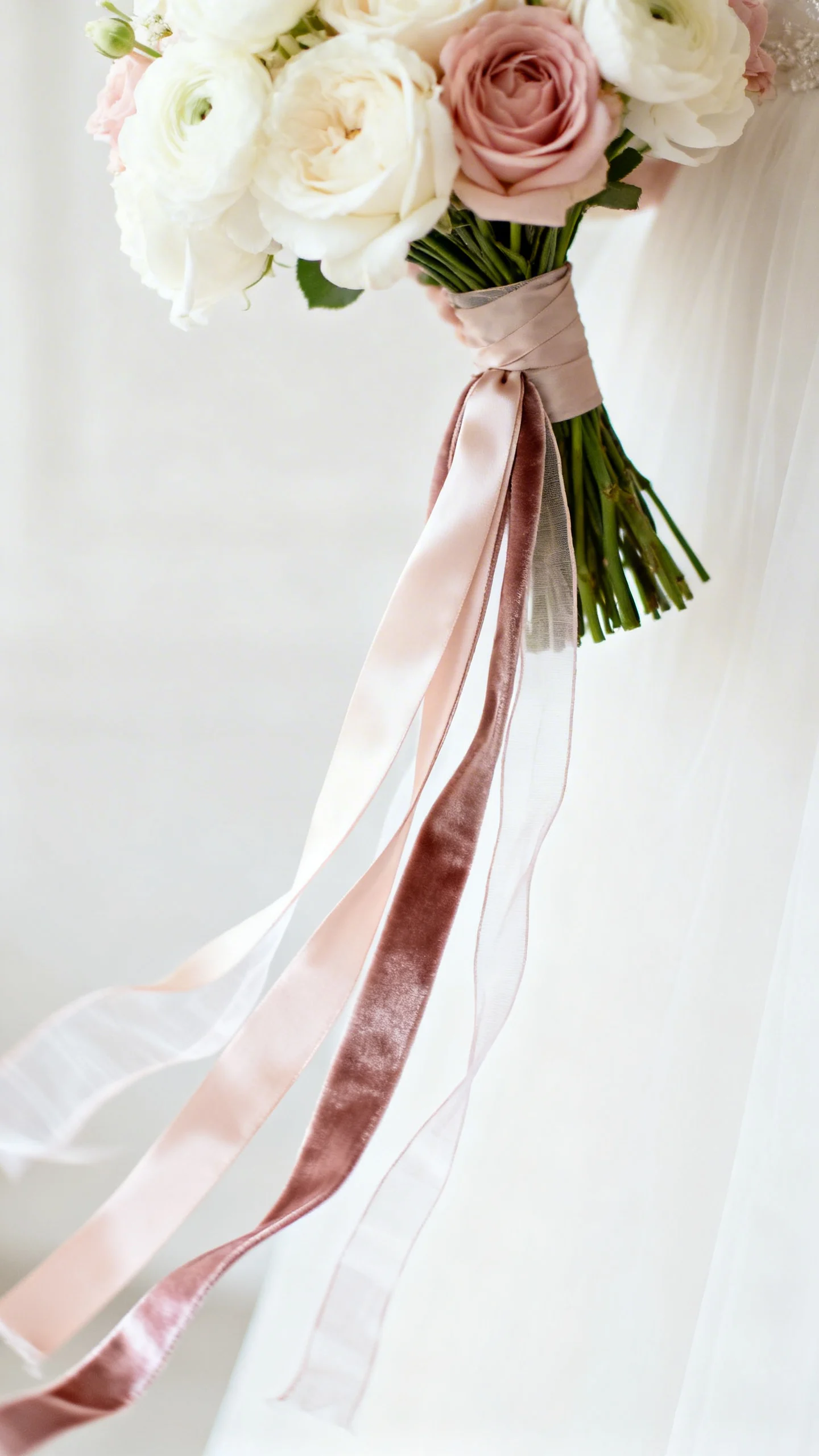
4) Ribbon-forward bouquet with extra-long tails
Long ribbon streamers add instant drama and softness in photos—especially when there’s a breeze or you’re in motion. Choose 2–4 ribbons in mixed textures (silk, velvet, sheer) and coordinating tones for depth. Keep the bouquet itself simple so the ribbons don’t compete with busy florals. Pro tip: pick ribbons that are at least waist-length so they show clearly in full-body shots.
5) Dried + fresh mix for texture and contrast
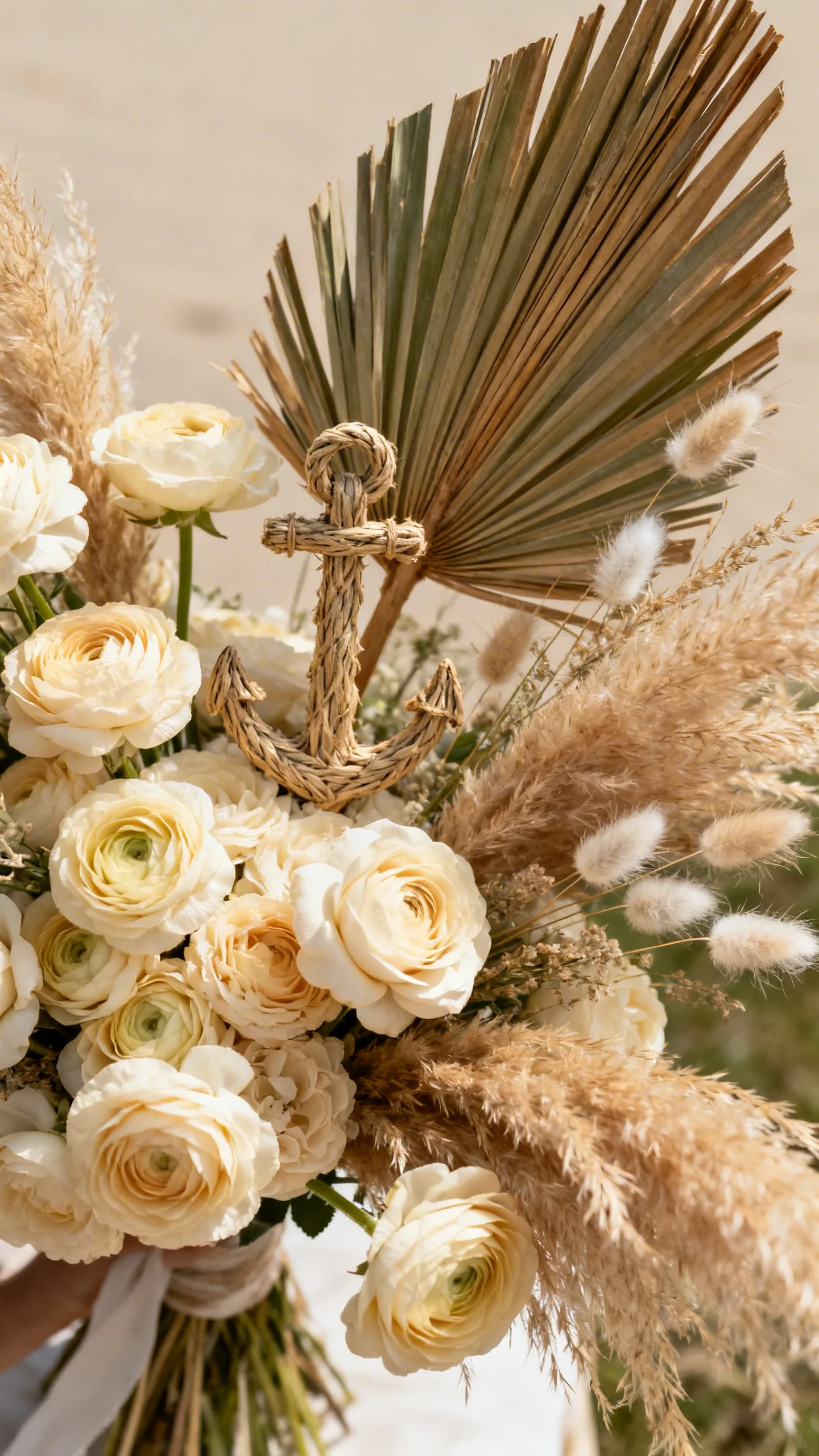
Combining dried elements (like pampas, bunny tail, palm spears, or strawflower) with fresh blooms creates a texture-rich bouquet that photographs with tons of dimension. It’s ideal for outdoor weddings because dried pieces hold up well in heat and wind. Stick to a tight palette so the mix feels intentional, not messy. Ask for one “anchor” dried element repeated throughout for cohesion.
6) Unexpected greenery shape (like a crescent or fan)
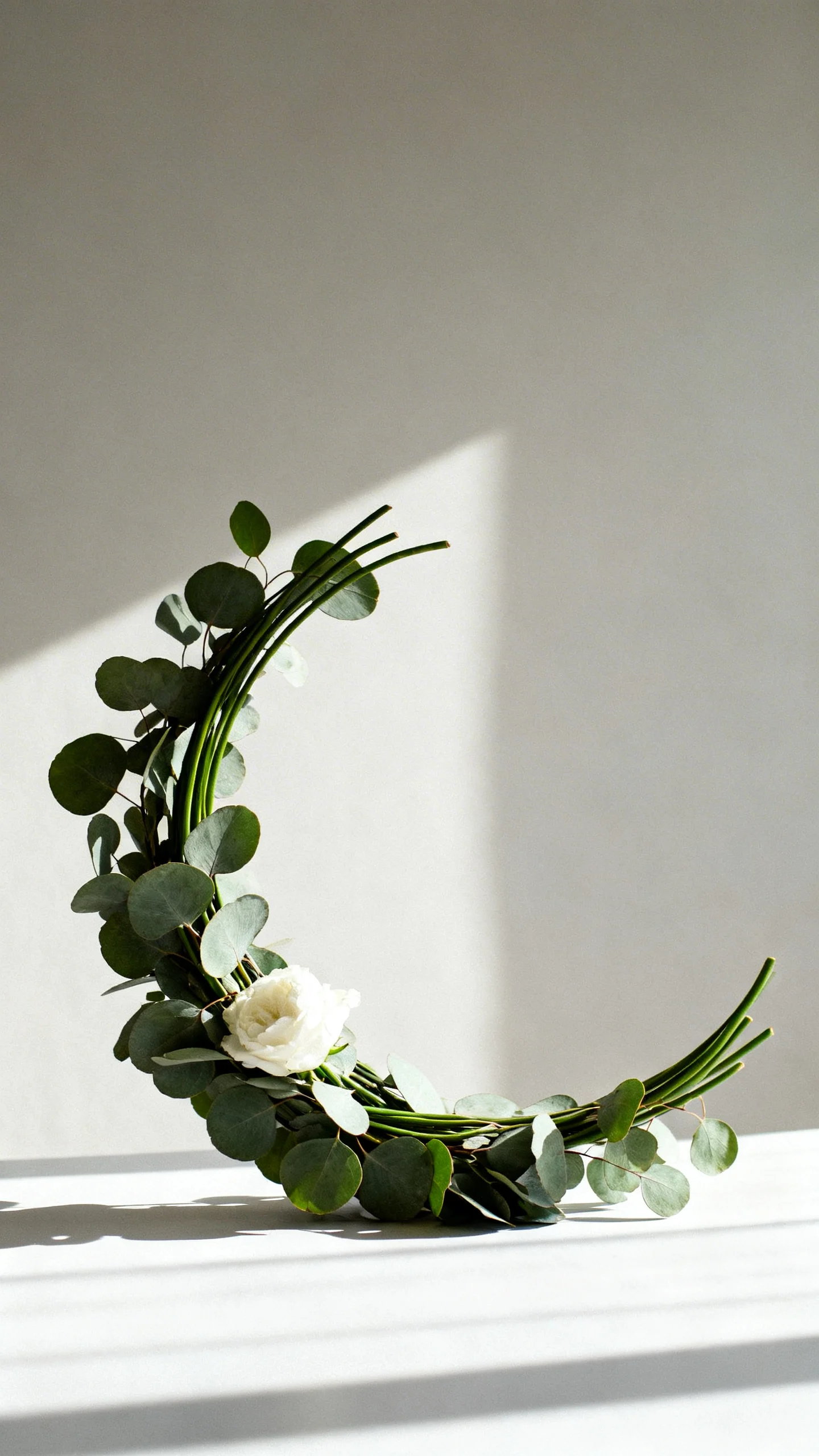
Instead of a round bouquet, try a crescent, asymmetrical sweep, or fan shape built with sculptural greenery. This kind of silhouette stands out immediately in photos and complements modern gowns beautifully. Eucalyptus, ruscus, and ferns can create clean lines without overwhelming the flowers. Make sure your florist plans the balance so it looks purposeful from every angle.
7) Tropical pop with anthurium and glossy leaves
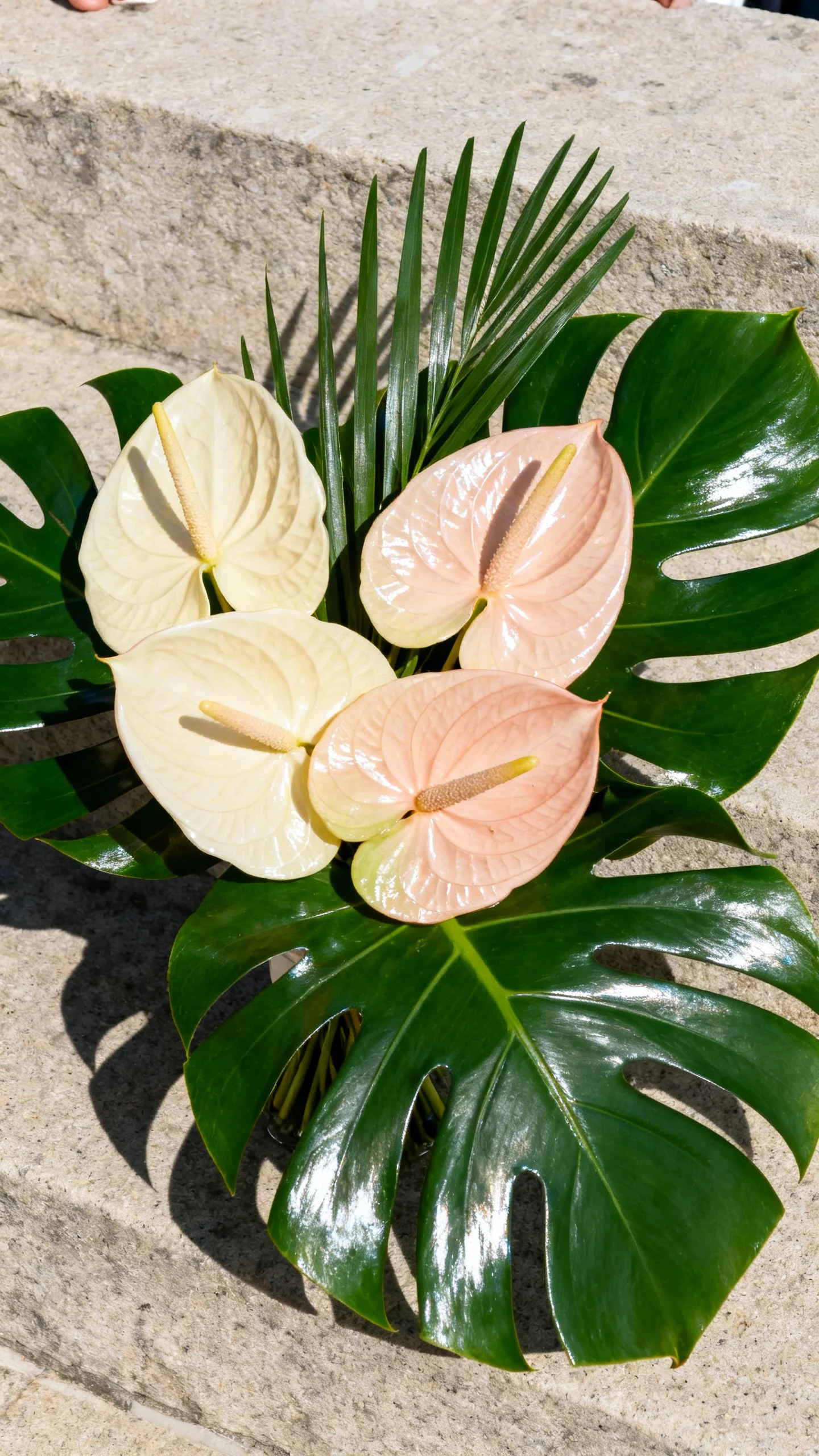
Anthurium has a smooth, reflective surface that photographs like a statement accessory—especially in bold colors or creamy neutrals. Add monstera or philodendron leaves for a sleek, high-contrast look that still feels bridal. This idea is perfect for city weddings, modern venues, or destination celebrations. Keep the bouquet slightly smaller so the tropical elements feel chic, not overpowering.
8) All-white bouquet with heavy texture (not just roses)
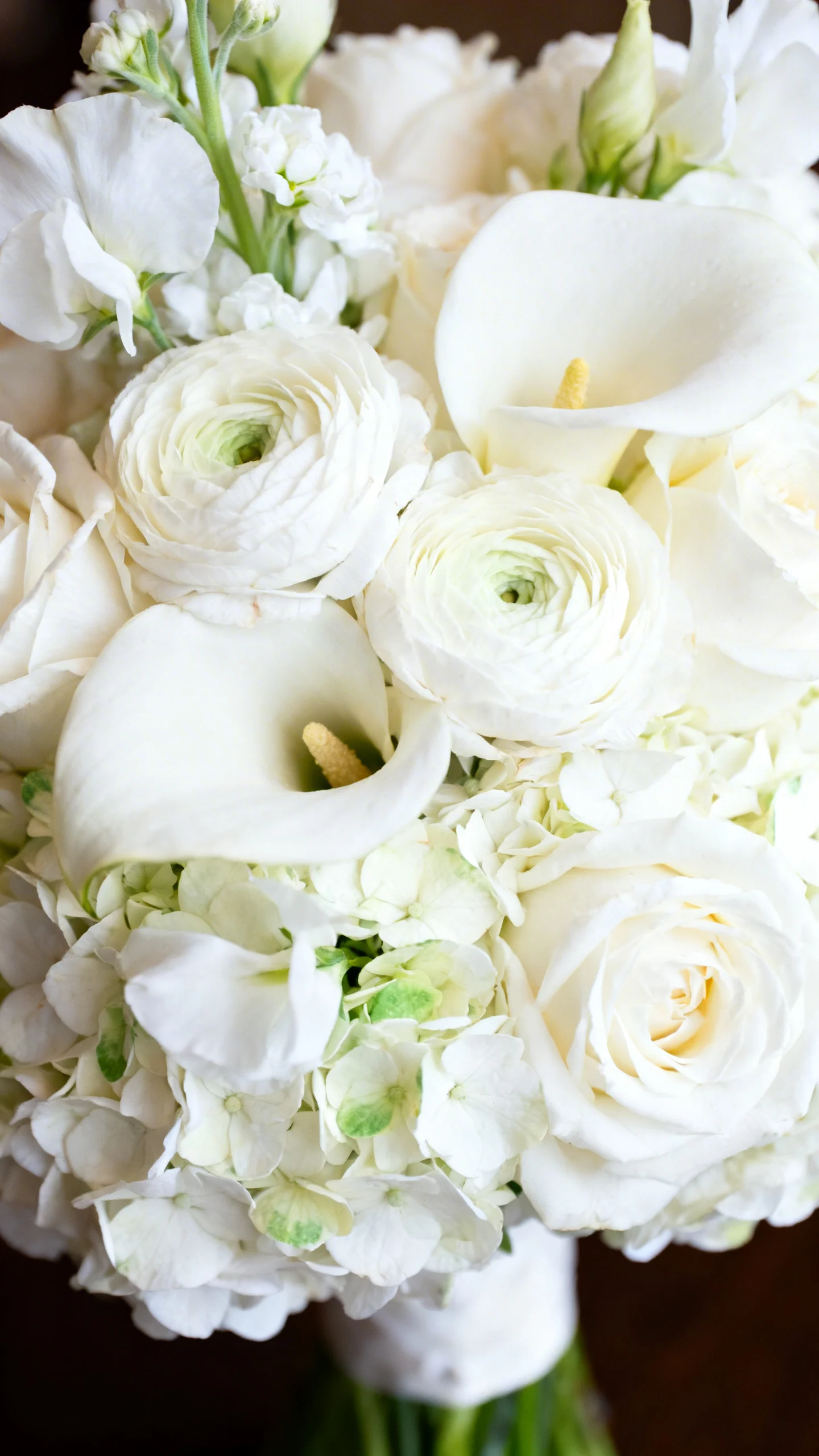
All-white can look stunning in photos when you build it with varied textures: think garden roses, ranunculus, calla lilies, sweet peas, and hydrangea. The key is making the whites intentional—mix ivory, cream, and bright white for dimension against your dress. Add a tiny hint of green or a soft blush center if you want more depth in close-ups. This style reads classic, but the texture makes it feel special.
9) Wildflower-inspired “meadow” bouquet
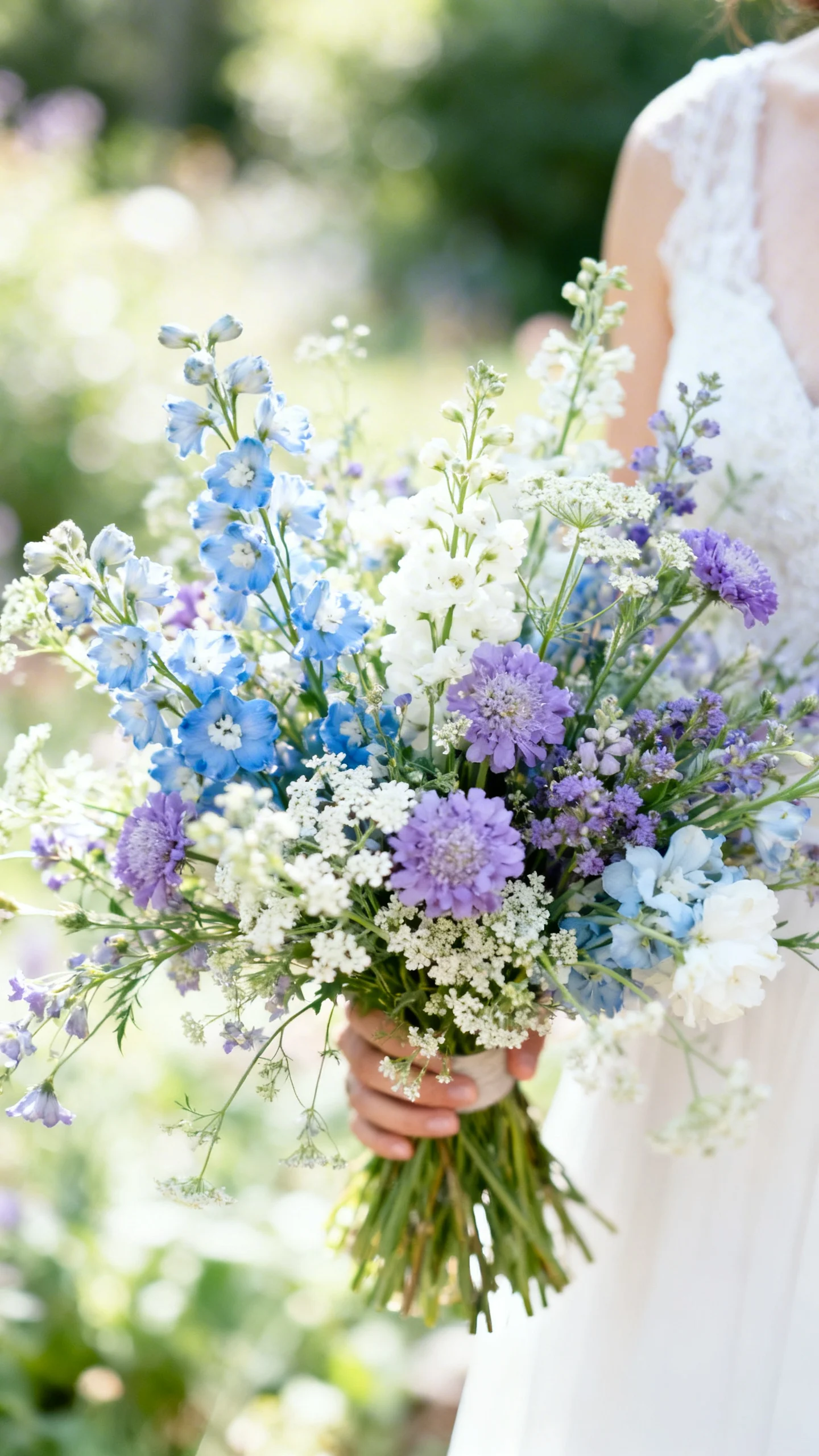
A meadow bouquet looks like it was gathered from a field—airy, varied, and full of personality. It photographs beautifully in natural light because you get little pops of color and delicate shapes. To keep it from looking messy, choose one main color family and repeat a few specific blooms throughout. Have your florist create a slightly structured handle so it stays photogenic from ceremony to reception.
10) Non-floral accents (pearls, berries, or beaded picks)
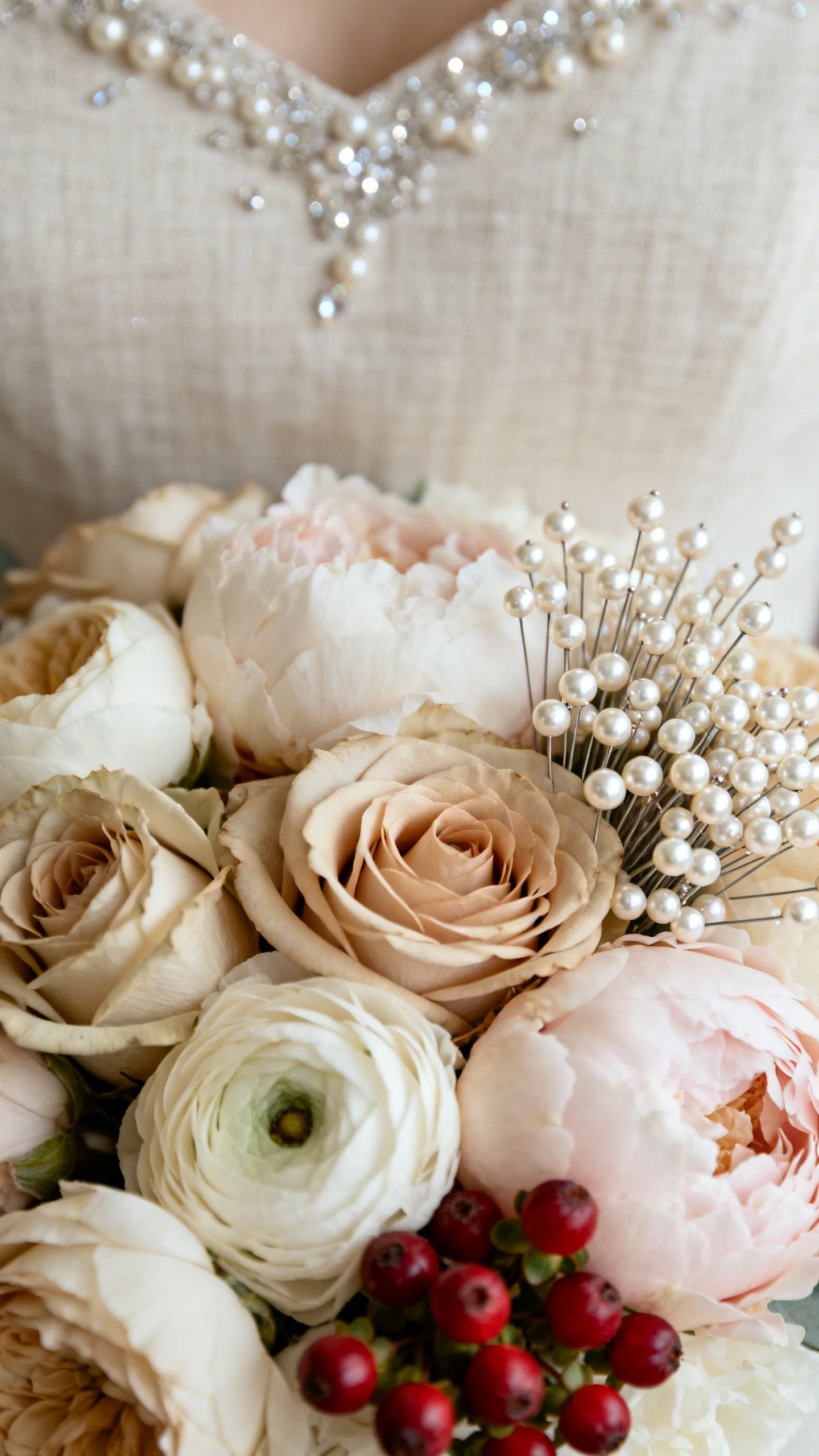
Adding subtle non-floral details can make your bouquet feel customized and extra camera-ready. Pearl pins, delicate beaded picks, or seasonal berries (like hypericum) create sparkle and contrast in close-up shots. Keep accents clustered in one area so they photograph as a deliberate detail. If you love heirloom touches, this is a beautiful way to weave in family jewelry or a meaningful charm without overdoing it.
FAQ
Which bouquet styles photograph best from far away?
High-contrast designs and distinctive silhouettes show up best in wide shots. Monochrome bouquets in a saturated color, cascading orchids, and fan or crescent shapes are all easy to read from a distance. Long ribbons also add movement that photographers can capture even in full-body portraits.
How do I make sure my bouquet doesn’t blend into my dress?
Create contrast with either color, texture, or shape. If you’re wearing an ivory gown, consider deeper greens, a bolder bloom color, or glossy tropical elements. For an all-white bouquet, build in heavy texture and mixed tones (cream/ivory/bright white) so it doesn’t disappear on camera.
What bouquet size looks best in photos?
Most people photograph best with a bouquet proportionate to their torso—large enough to read clearly, but not so big it hides your waistline. If you’re petite, consider a slimmer cascade or a statement bloom instead of an oversized round arrangement. For taller frames or dramatic gowns, an elongated or slightly larger bouquet can balance the look.
Are dried bouquets still photogenic up close?
Yes—dried elements can look incredibly detailed in close-ups because of their texture. The trick is to mix them with fresh blooms (or at least a few fresh accents) so the bouquet still feels lively and bridal. Ask your florist to avoid overly brittle pieces that might shed during the day.
How can I keep my bouquet looking fresh for photos all day?
Keep it out of direct sun whenever possible and ask your florist for a hydration plan, especially for delicate flowers. Assign a bridesmaid to hold it during downtime and avoid setting it flat on rough surfaces. If your timeline includes outdoor portraits, choose hardy blooms (or add dried elements) so it stays photo-ready from ceremony to send-off.