
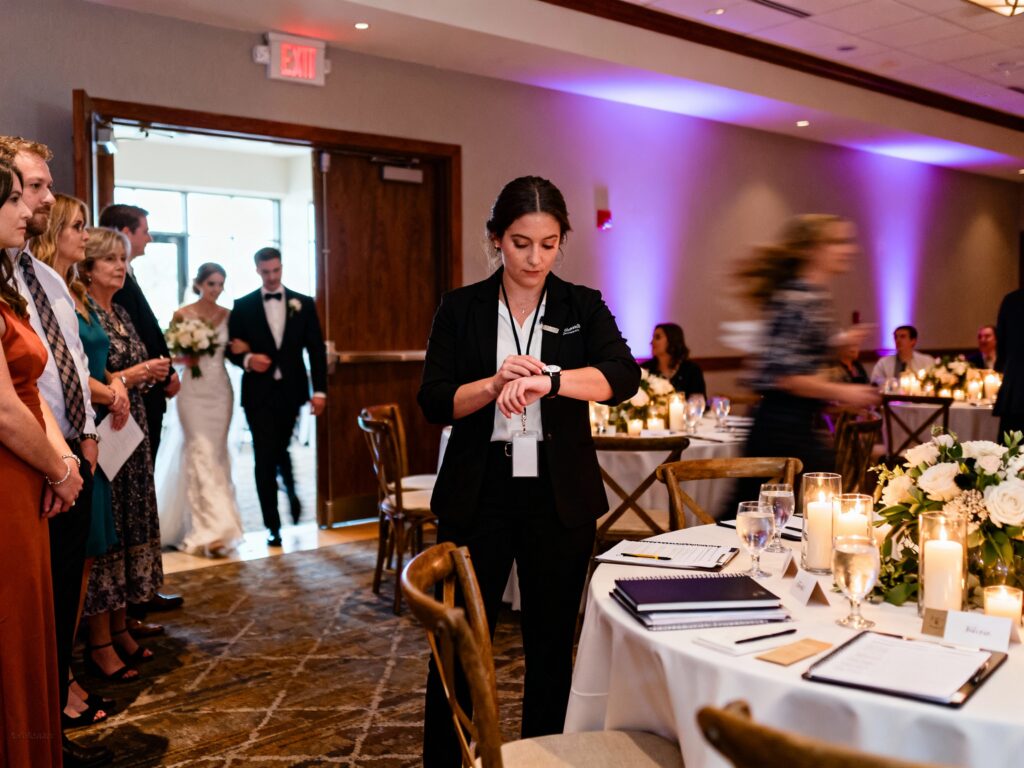
Your reception can have the prettiest tablescapes, the dreamiest lighting, and the best playlist—then feel weirdly chaotic if the timeline is off. The good news: most “the night went sideways” moments come from a few super-fixable timeline mistakes. Here are the big ones to avoid (and what to do instead) so your reception feels effortless, elevated, and fun.
1) Underestimating How Long Guests Need to Transition
The vibe killer: guests are told “cocktail hour starts at 5,” but the ceremony ends at 4:55, the venue flip isn’t done, and everyone is confused about where to go.
Fix it
- Build in 10–15 minutes for walking, greeting, bathroom breaks, and moving from ceremony to cocktails (especially for large venues).
- Make signage cute and clear: “Cocktails This Way” with arrows, and add a mini schedule on your welcome sign.
- Assign a point person (planner/coordinator/venue manager) to cue doors opening and guide guests.
2) Scheduling Too Many “Big Moments” Back-to-Back
If you stack grand entrance → first dance → parent dances → speeches with zero breathing room, it can feel like guests are watching a program instead of having a party. Also, your photographer and DJ need a beat to reset.
Fix it
- Spread moments out so the night has a natural rhythm: one moment, then food or mingling, then another moment.
- Use dinner as a cushion for toasts (more on that below) and keep the dance floor energy for later.
- Choose your “must-haves” and cut anything that feels like it’s only there because tradition said so.
3) Letting Cocktail Hour Run Too Long (or Too Short)
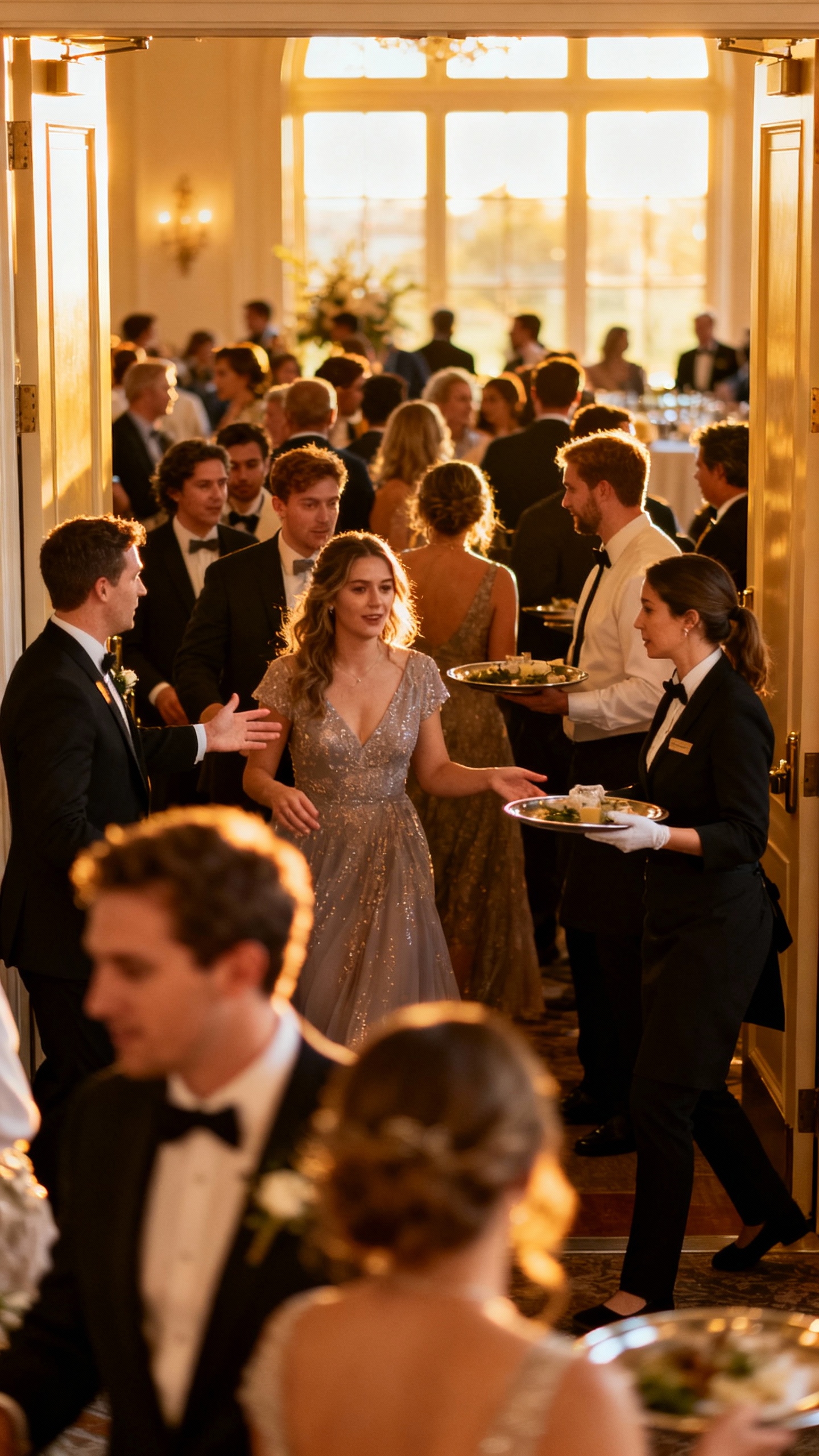
Cocktail hour is where your wedding looks like a magazine: signature drinks, passed apps, soft music, gorgeous golden-hour photos. But if it stretches to 90+ minutes without enough food, guests start getting antsy. If it’s too short, no one actually enjoys it.
Fix it
- Aim for 60 minutes (75 max if you truly need it for photos or a room flip).
- Match the menu to the timing: longer cocktail hour = more substantial bites.
- Add a simple anchor activity: live musician, curated lounge seating, or a champagne wall moment to keep it intentional.
4) Not Accounting for Sunset (and the Lighting Shift)
Reception aesthetics depend on light more than people realize. If you planned golden-hour portraits but scheduled speeches at the same time, you’ll either miss the glow or pull guests into a pause later.
Fix it
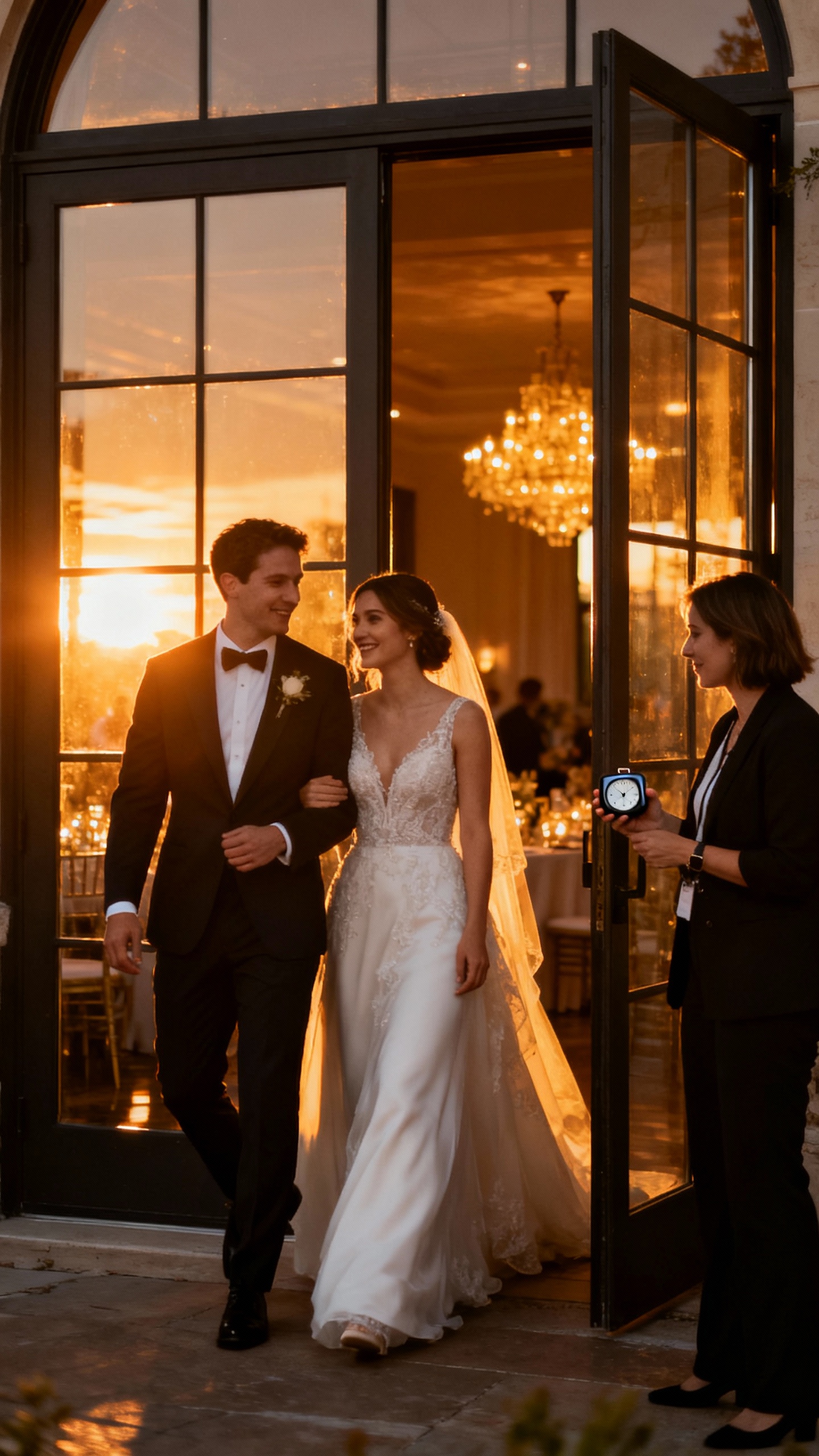
- Check your sunset time and build a 15–20 minute pocket for couple portraits.
- Plan your lighting cues: candles lit before grand entrance, bistro lights on at dusk, spotlight ready for dances.
- Tell your DJ and photographer your must-have lighting shots (cake cut under chandeliers, sparkly exit, etc.).
5) Serving Dinner Too Late
If dinner doesn’t hit until 8:30, guests are hangry, drinks hit harder, and the dance floor can get… unpredictable. Even with apps, a late meal shifts the whole energy.
Fix it
- Serve dinner within 90 minutes of ceremony end when possible.
- If you must delay dinner, add heavier cocktail hour stations (sliders, charcuterie cones, mini bowls).
- Keep the bar balanced with water stations and a visible coffee/tea setup so the night stays chic, not messy.
6) Toast Timing That Hijacks the Flow
Long speeches can derail the mood, especially if they happen after dinner when people want to move. Or worse: before dinner, when everyone’s staring at their plates.
Fix it
- Do toasts during salad or right after entrees are served so guests are occupied and happy.
- Cap it: 2–4 toasts, 2–3 minutes each.
- Have your DJ/emcee give structure (“We’ll hear from X and Y, then we’re right back to dinner”).
7) Not Padding Time for Bustle, Bathroom, and Outfit Tweaks
Your dress bustle, a lipstick refresh, swapping heels, pinning a boutonniere back on—these tiny things add up, and they always happen right before a major moment.
Fix it
- Add 10-minute buffers before grand entrance, first dance, and cake cutting.
- Create a “quick fix” station in the getting-ready room: safety pins, fashion tape, blotting papers, mini deodorant.
- Assign one VIP helper (bridesmaid/mom/attendant) who knows your bustle and can move fast.
8) Opening the Dance Floor Without a Plan
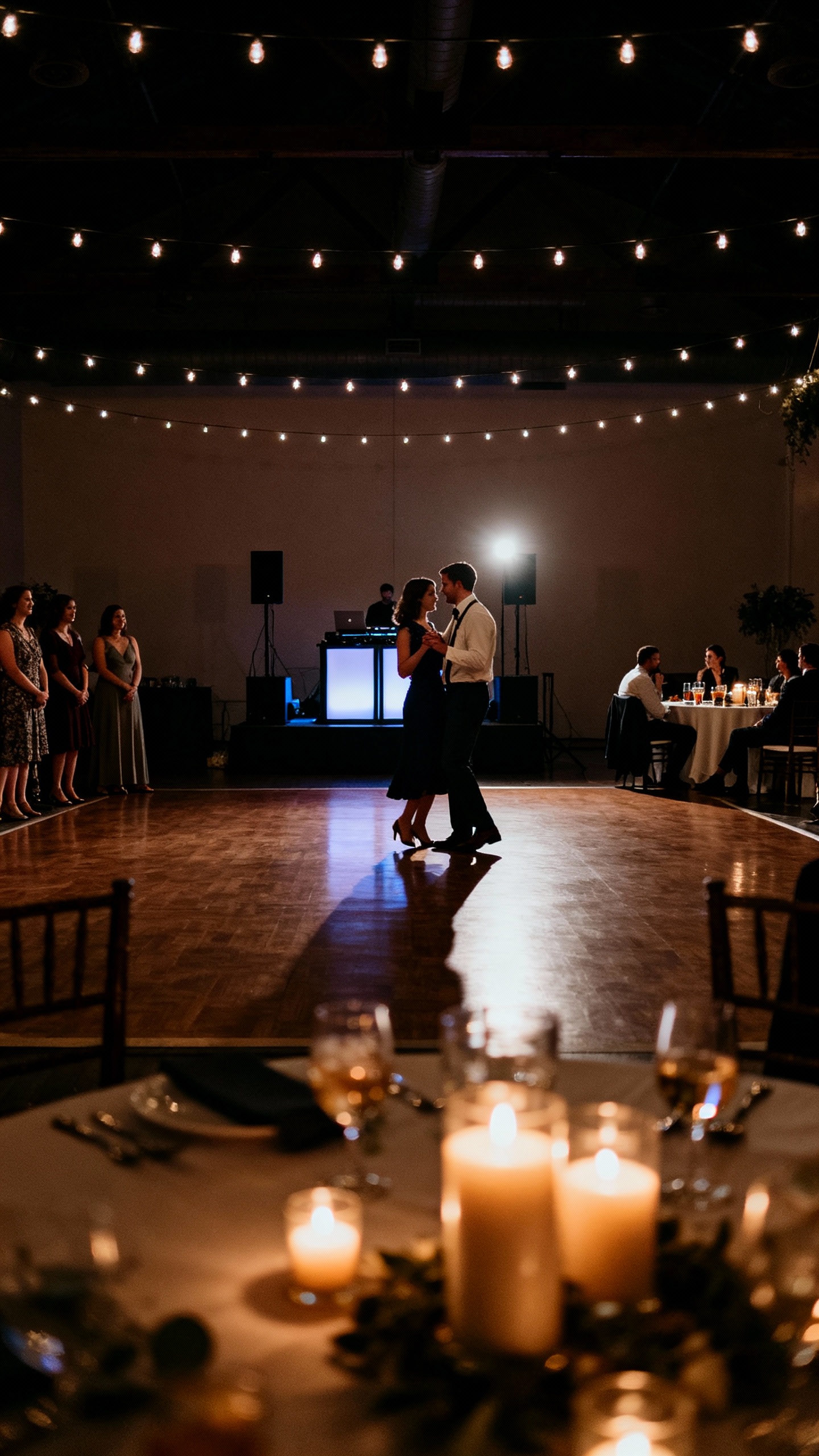
If you do one slow song and then… nothing cohesive, guests hesitate. The dance floor energy needs a confident launch.
Fix it
- Do a 3-song kickoff: one crowd-pleaser, one sing-along, one dance classic.
- Keep formal dances tight (short versions are totally okay).
- Schedule late-night food about 60–90 minutes after dancing starts to keep people going.
9) Planning a Grand Exit Too Early
An exit at 9:45 can make the night feel abruptly over, especially if the party was just peaking. Guests may start leaving early because they assume that’s the end.
Fix it
- Decide if you want a “photo exit” (for pics) and a real exit later—both can exist.
- Put the exit at the true end or clearly tell guests it’s staged if you’re continuing the party.
- Coordinate the visuals: sparklers, confetti, ribbon wands—whatever matches your aesthetic and venue rules.
Wrap-Up
The best reception timelines feel like a playlist: smooth transitions, the right pacing, and a couple of iconic highlights. Add buffers, protect dinner timing, respect the light, and keep moments intentional. Your guests will feel taken care of—and you’ll actually get to enjoy your own night.
FAQ
What’s the biggest reception timeline mistake that throws the night off?
Serving dinner too late. It affects energy, alcohol pacing, and how long guests stay on the dance floor.
How long should cocktail hour be to keep the vibe right?
About 60 minutes. If it needs to be longer, increase the amount and heartiness of food so guests don’t feel stuck waiting.
When is the best time to do speeches?
During dinner (salad or once entrees are down) with a firm time limit. It keeps the flow moving and guests comfortable.
Do we need buffer time in the reception timeline?
Yes. Add 10–15 minutes before major moments for bustle, touch-ups, and transitions so the schedule doesn’t domino.
How do we time sunset photos without disrupting the party?
Check sunset time in advance and schedule a 15–