
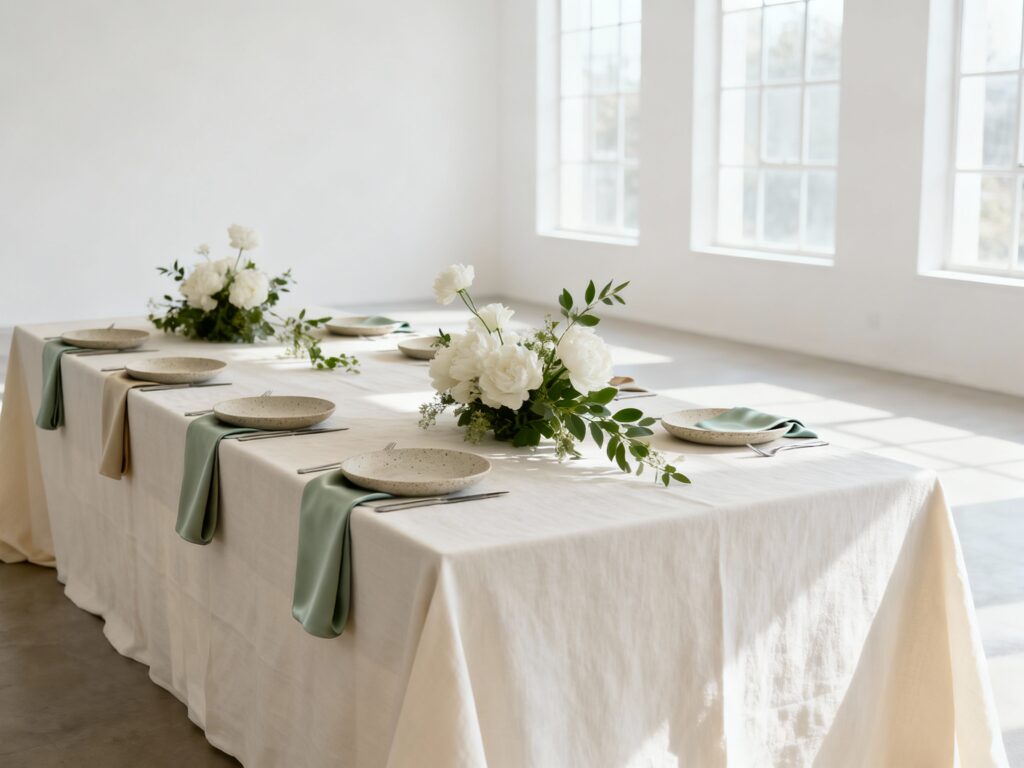
If you’re craving a wedding vibe that feels calm, elevated, and timeless (without looking bare), a simplistic aesthetic is the move. Think clean lines, intentional details, and a layout that photographs like a dream from every angle.
These five tips are the ones planners lean on when they want that “effortless” look that’s actually very curated.
Top 5
1) Choose a Tight Color Palette (and Actually Stick to It)
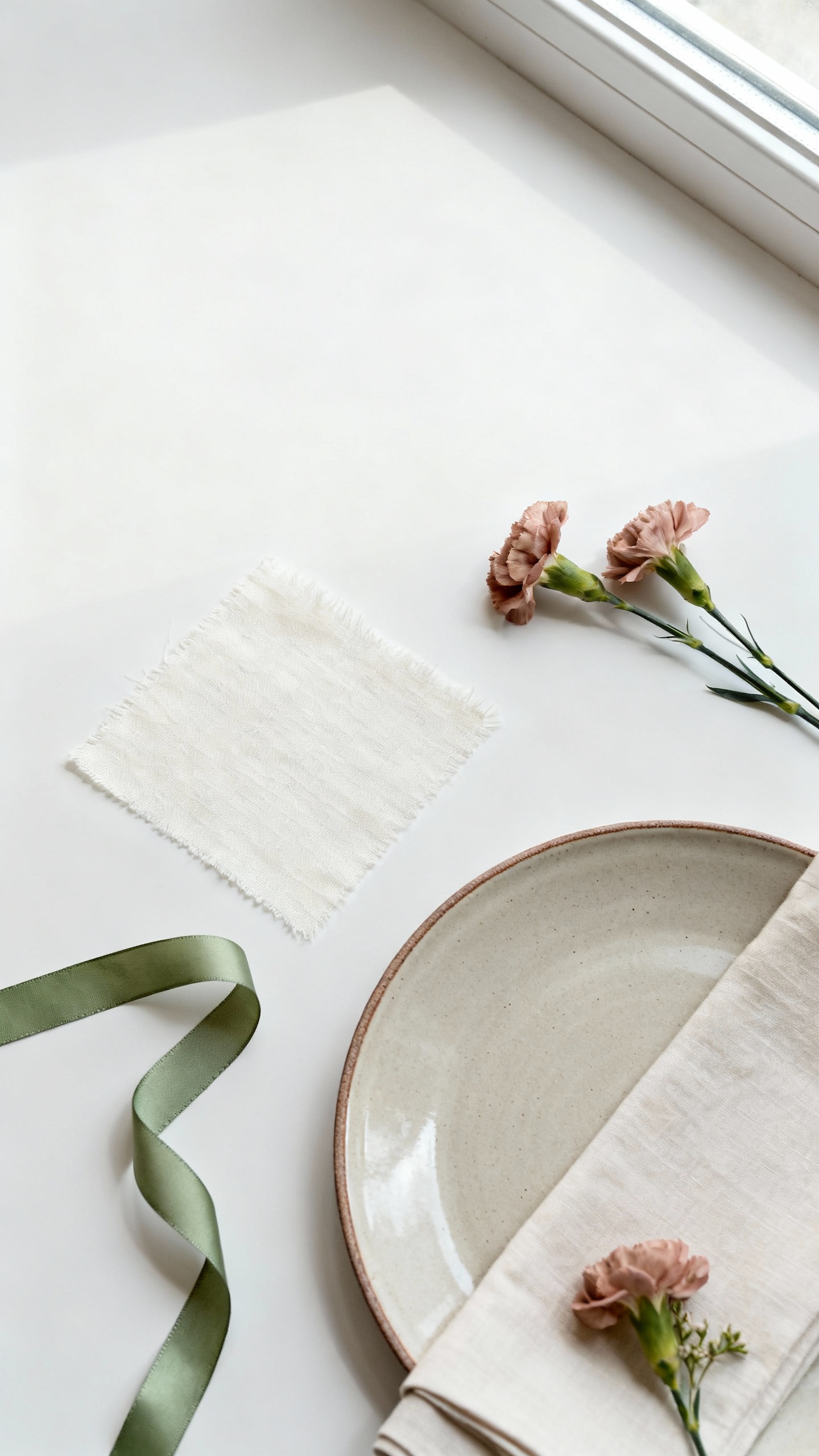
Pick 2–3 main colors plus one neutral, then repeat them everywhere: linens, florals, stationery, and bridal party details. Clean weddings feel cohesive because nothing is competing for attention. If you’re unsure, start with a neutral base (ivory, white, sand, soft gray) and add one muted accent (sage, dusty blue, blush, or black). This one decision makes every photo look instantly more “together.”
2) Let Negative Space Be Part of the Design
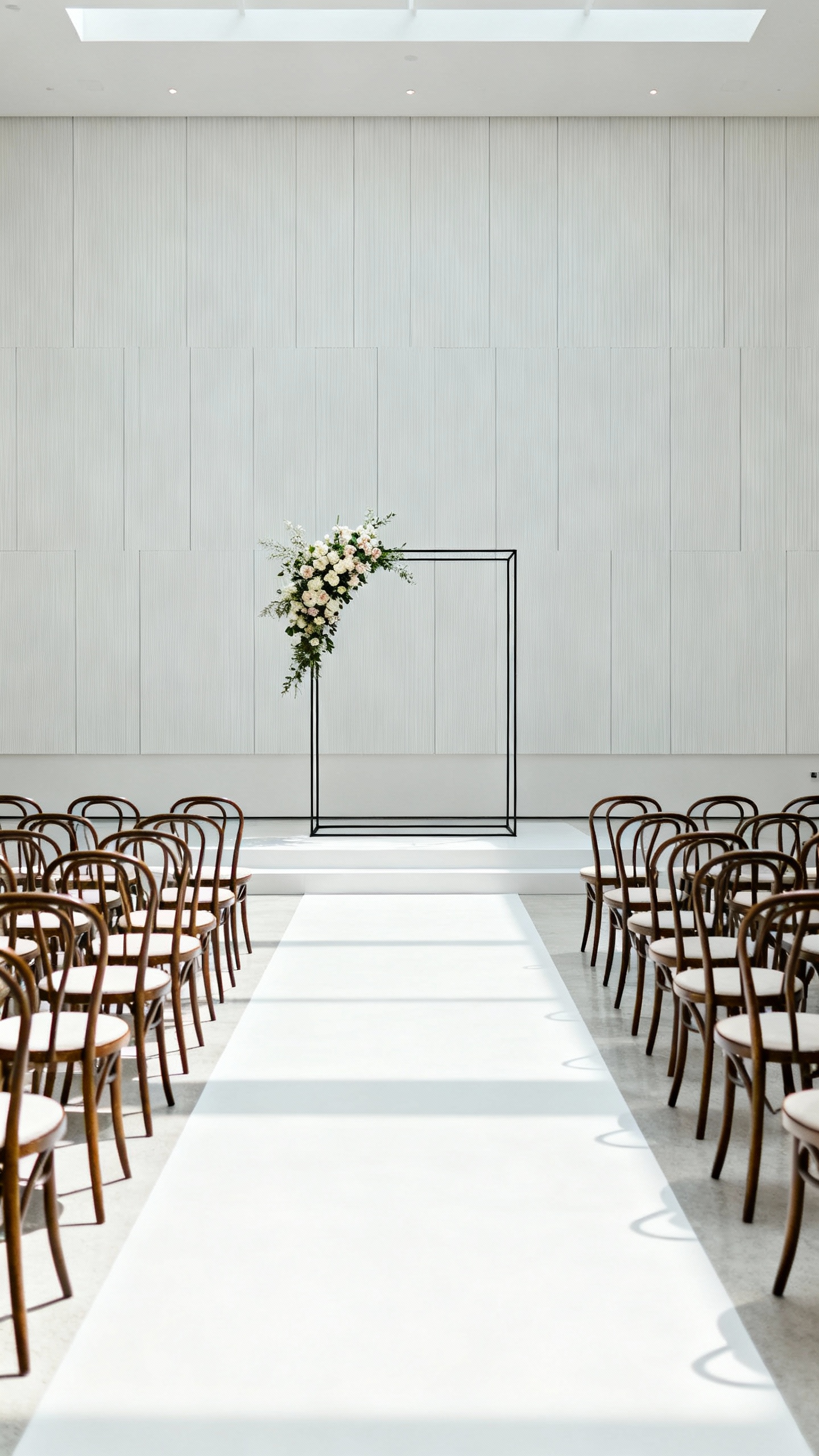
A simplistic aesthetic isn’t about having less beauty—it’s about giving the beauty room to breathe. Avoid filling every surface with décor; choose a few focal moments (ceremony arch, sweetheart table, entry vignette) and keep the rest intentionally open. Negative space reads luxe and modern, especially in wide venue shots. Bonus: it also makes setup and teardown so much smoother.
3) Use One “Hero” Texture and Keep the Rest Smooth
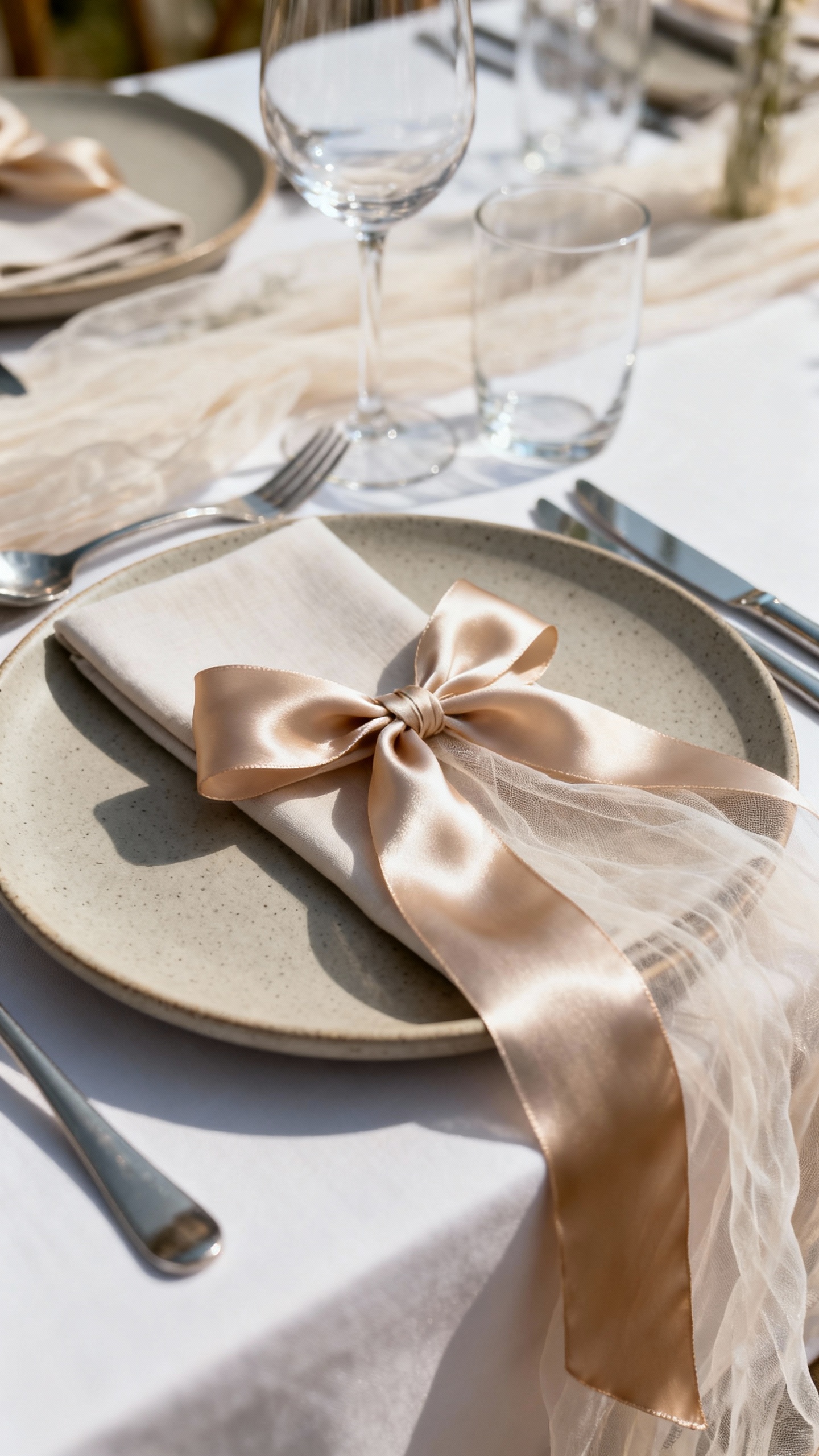
Texture is how a clean wedding still feels warm, not sterile. Pick one standout texture—like matte satin bridesmaid dresses, raw silk ribbons, stoneware plates, or soft gauze table runners—and let it shine. Pair it with simpler supporting materials (crisp linens, clear glass, minimal flatware) so the overall look stays polished. This creates dimension without visual clutter.
4) Go Minimal on Florals, Maximal on Shape
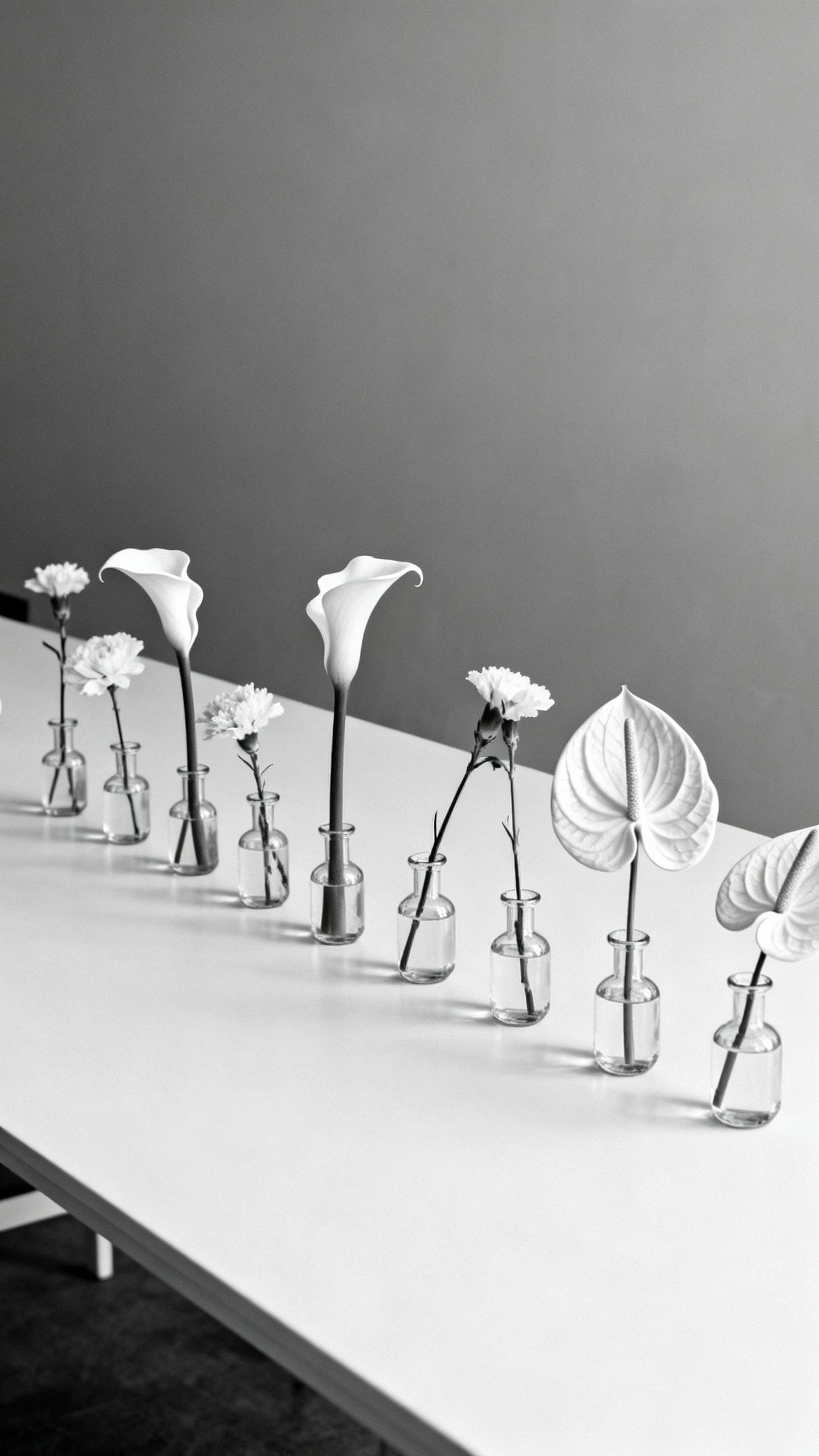
Instead of packing in tons of blooms, focus on clean floral shapes: bud vases in a tidy grid, a single grounded ceremony arrangement, or a streamlined greenery runner. Choose 1–2 flower varieties (like roses + ranunculus, or tulips alone) for a modern, editorial feel. Keep stems and palettes consistent, and ask your florist for intentional spacing. The result looks expensive, even when you’re being budget-smart.
5) Make Signage and Stationery Match Your “Clean Look” Rules
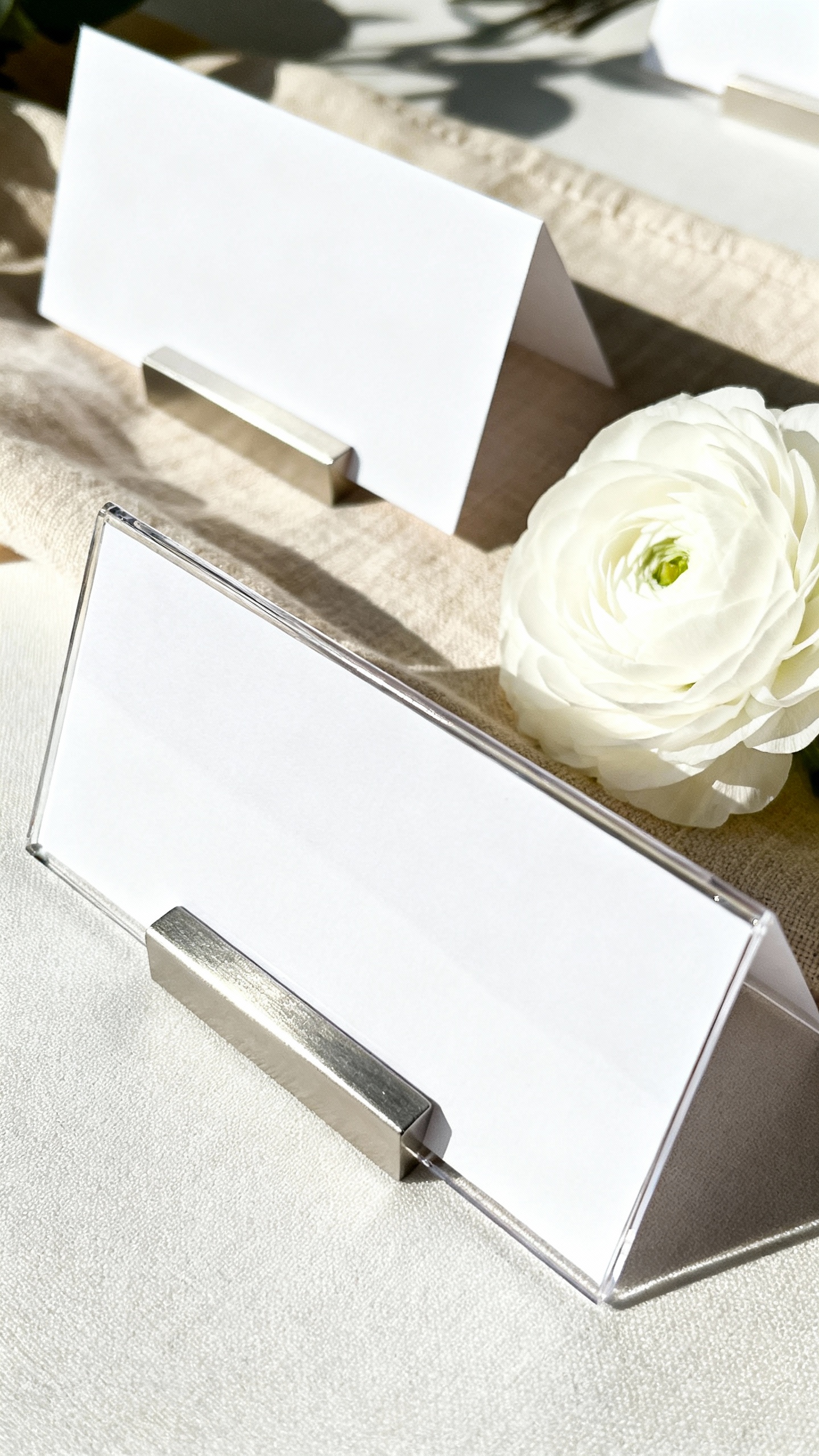
Minimal weddings can get messy fast if fonts, paper tones, and signage styles are all over the place. Stick to one font pairing (one serif + one sans serif is classic), one paper color, and one display style (frames, stands, or clips—pick one). Use plenty of margin on your designs and keep wording short. When in doubt: fewer words, larger type, and whitespace always wins.
FAQ
How do I make a simplistic wedding look feel warm, not cold?
Use soft neutrals, candlelight, and one cozy texture (like linen, raw silk, or matte ceramics). Warmth comes from lighting and materials more than from adding extra décor. A simple space with layered glow and a few intentional details will feel inviting and elevated.
What’s the easiest way to avoid a “cluttered” look in photos?
Create a few styled zones instead of decorating everything: ceremony, escort card area, bar, and head table are the big ones. Keep tables clean by limiting centerpieces to one concept repeated consistently. Also, hide practical items (extra chairs, boxes, vendor bags) in a designated storage corner.
Can I still have color with a clean wedding aesthetic?
Absolutely—clean doesn’t mean all-white. The key is choosing one color moment and repeating it in small, consistent ways (napkins, bouquets, invitations, or bridesmaid dresses). Muted tones and solid blocks of color photograph especially well for a simplistic look.
What kind of venues naturally fit a simplistic wedding style?
Modern spaces with good natural light, clean architecture, and neutral walls are ideal—think galleries, greenhouses, minimalist barns, lofts, and coastal venues. That said, you can simplify any venue by focusing on cohesive linens, streamlined florals, and consistent signage. The goal is to enhance the venue, not fight it.
How do I keep a minimal look while staying on budget?
Spend on a few high-impact choices: great photography, consistent linens, and well-designed stationery/signage. Save by reducing variety—fewer flower types, fewer décor styles, fewer color changes. A simplistic aesthetic is budget-friendly when you commit to repetition and skip “extra” items that don’t photograph or add meaning.