
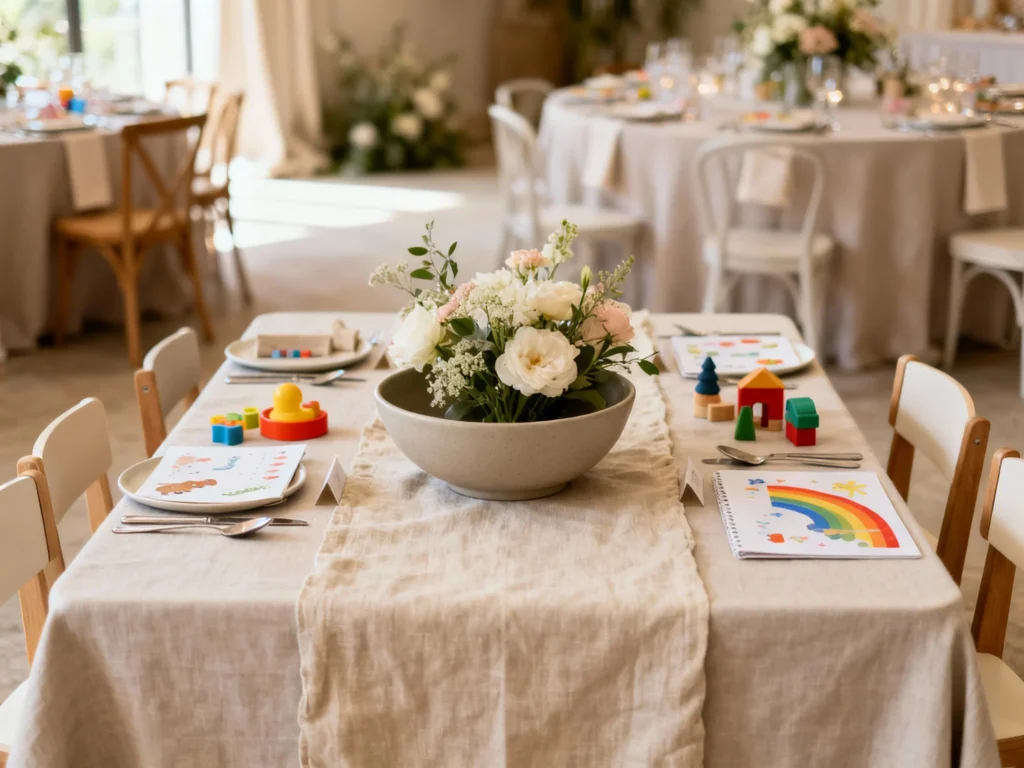
The kids’ table can absolutely look like it belongs at your wedding—not like it wandered in from a preschool craft room. With a few intentional choices, you can keep it fun, functional, and fully on-theme while still making parents feel like you thought of everything.
Below are polished, theme-friendly ideas that photograph well, keep little guests happy, and help your reception feel cohesive from the head table to the tiniest place setting.
Match the linens to your main tables (then scale the styling)
Start with the same tablecloth color or texture you’re using for guest tables so the kids’ area feels intentionally placed. If your design is layered, mimic it with a simpler version: one linen, one runner, one small centerpiece. Keep napkins the same color family to tie everything together. This creates instant cohesion even if the kids’ table is in a separate corner.
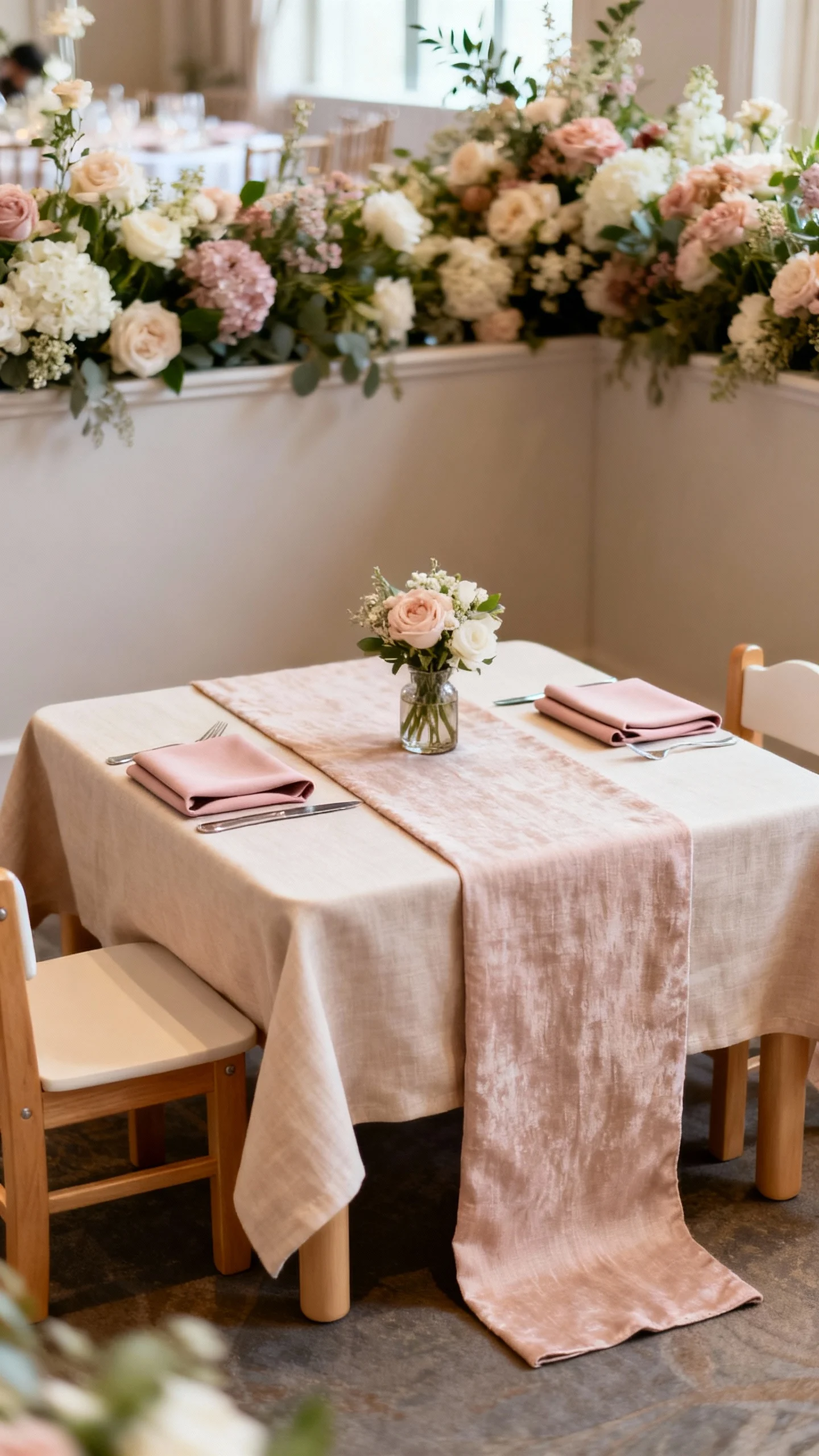
Use a low, unbreakable centerpiece that still looks elevated
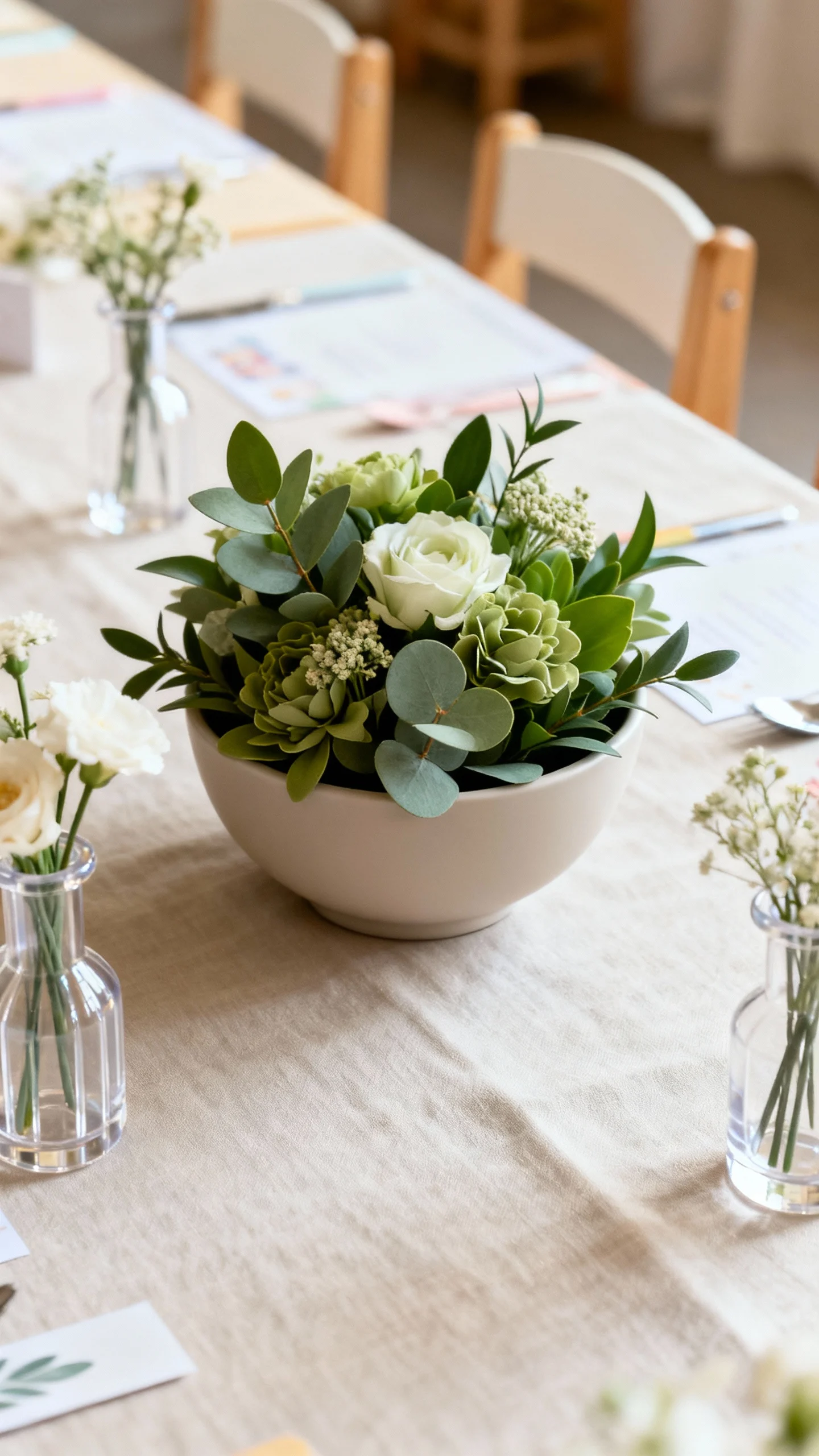
Skip tall vases and anything glass, but don’t skip style. Try a low faux-floral arrangement in a matte ceramic bowl, a small greenery garland, or a cluster of bud vases swapped for acrylic. Keep height under 8 inches so kids can see each other and parents can spot faces easily. A low centerpiece also keeps the table from feeling cluttered once coloring pages and cups arrive.
Swap paper placemats for personalized activity “menus”
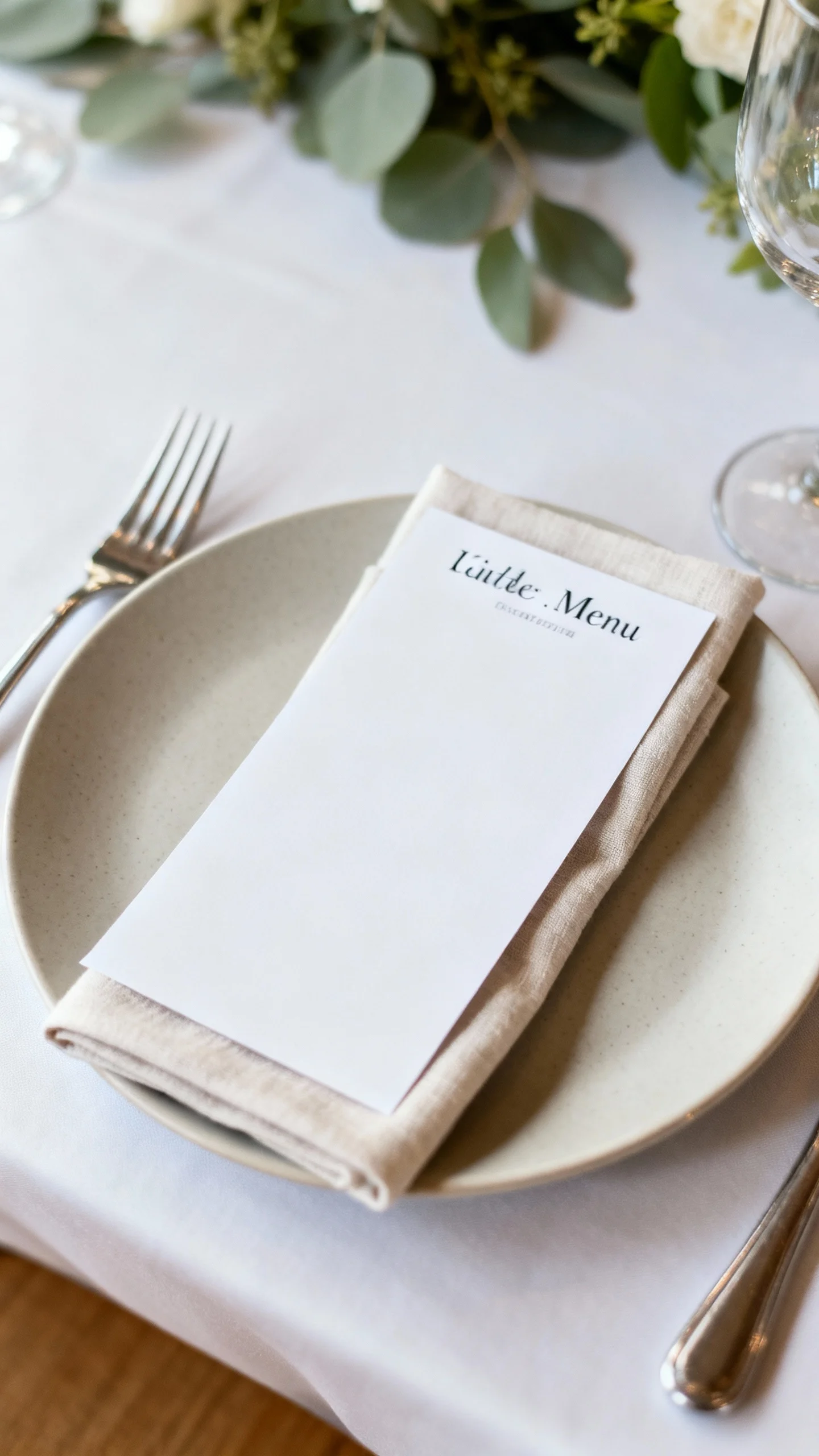
Design a one-page activity sheet that matches your stationery suite: same fonts, same colors, same level of polish. Add a mini crossword about the couple, wedding-themed I-Spy, or a “draw the cake” box. Place it at each seat like a menu for a grown-up feel. It reads as wedding detail first, activity second.
Pick one tidy activity per child, not a pile of distractions
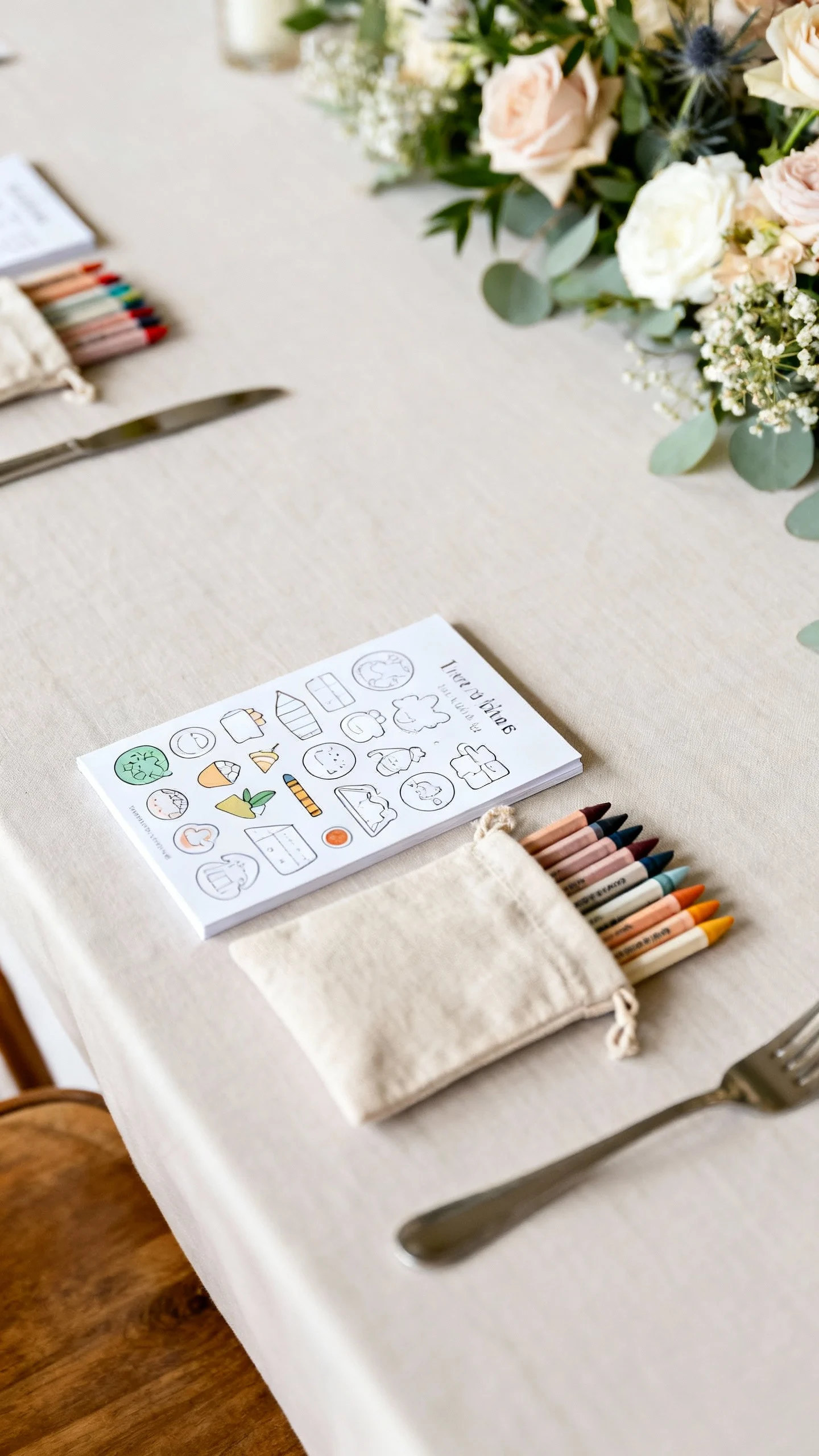
Multiple crafts look chaotic fast, especially in photos. Choose a single, contained item like a small coloring booklet, sticker sheet, or wedding-themed game card set. Add a small pouch of crayons or colored pencils that match your palette (neutrals and soft tones photograph best). When the activity is curated, the table looks styled even mid-reception.
Upgrade the “kids favor” into a mini welcome kit
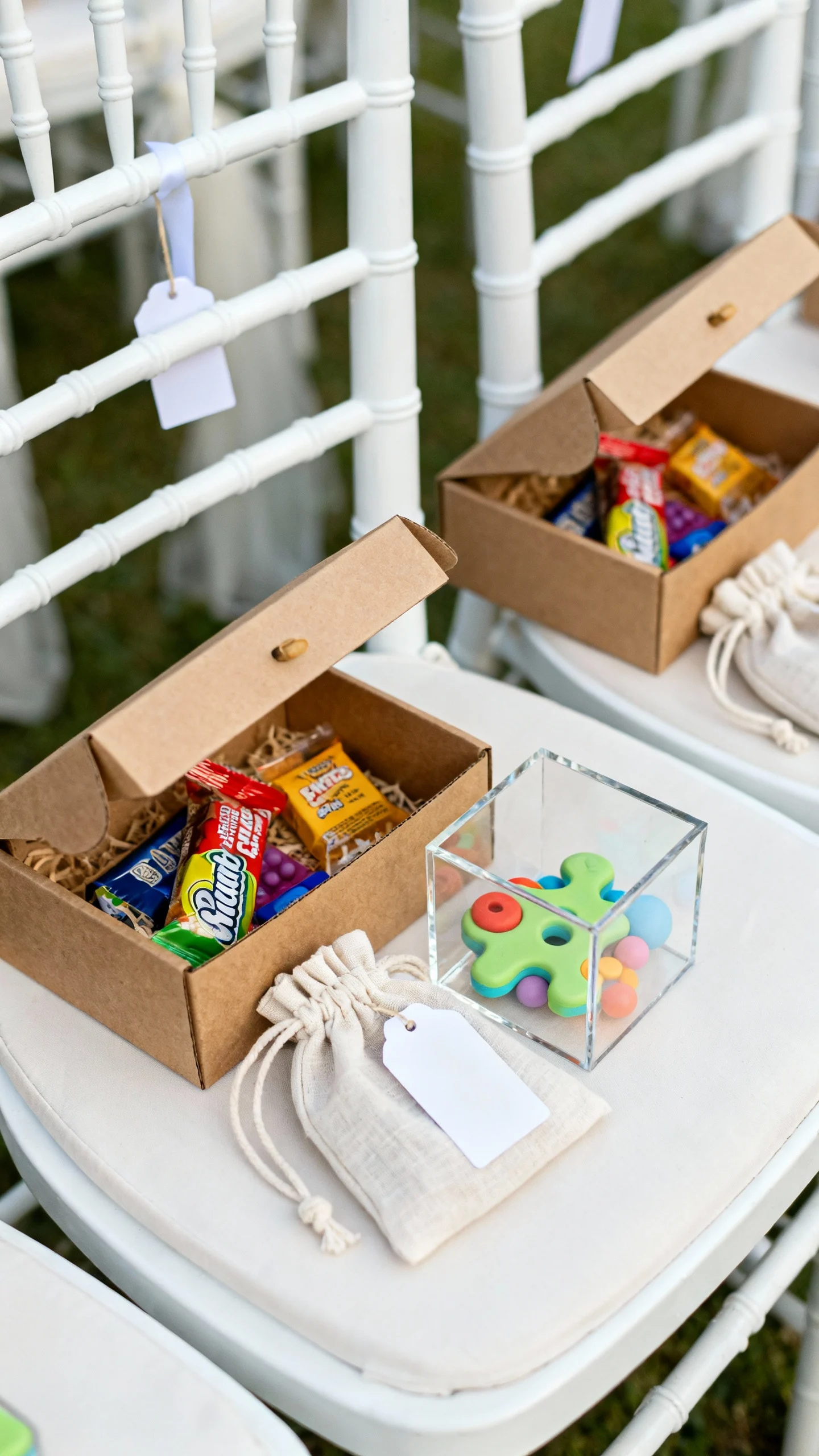
Instead of tossing toys on the table, package everything in a cohesive way: kraft boxes, acrylic cubes, or linen drawstring bags. Include three practical items—snack, activity, and a small comfort piece like a mini bubble wand or fidget—so it feels thoughtful, not random. Add a name tag that matches escort cards to keep the look consistent. Bonus: parents love a grab-and-go kit for the ride home.
Choose kid-friendly place settings that still fit your aesthetic
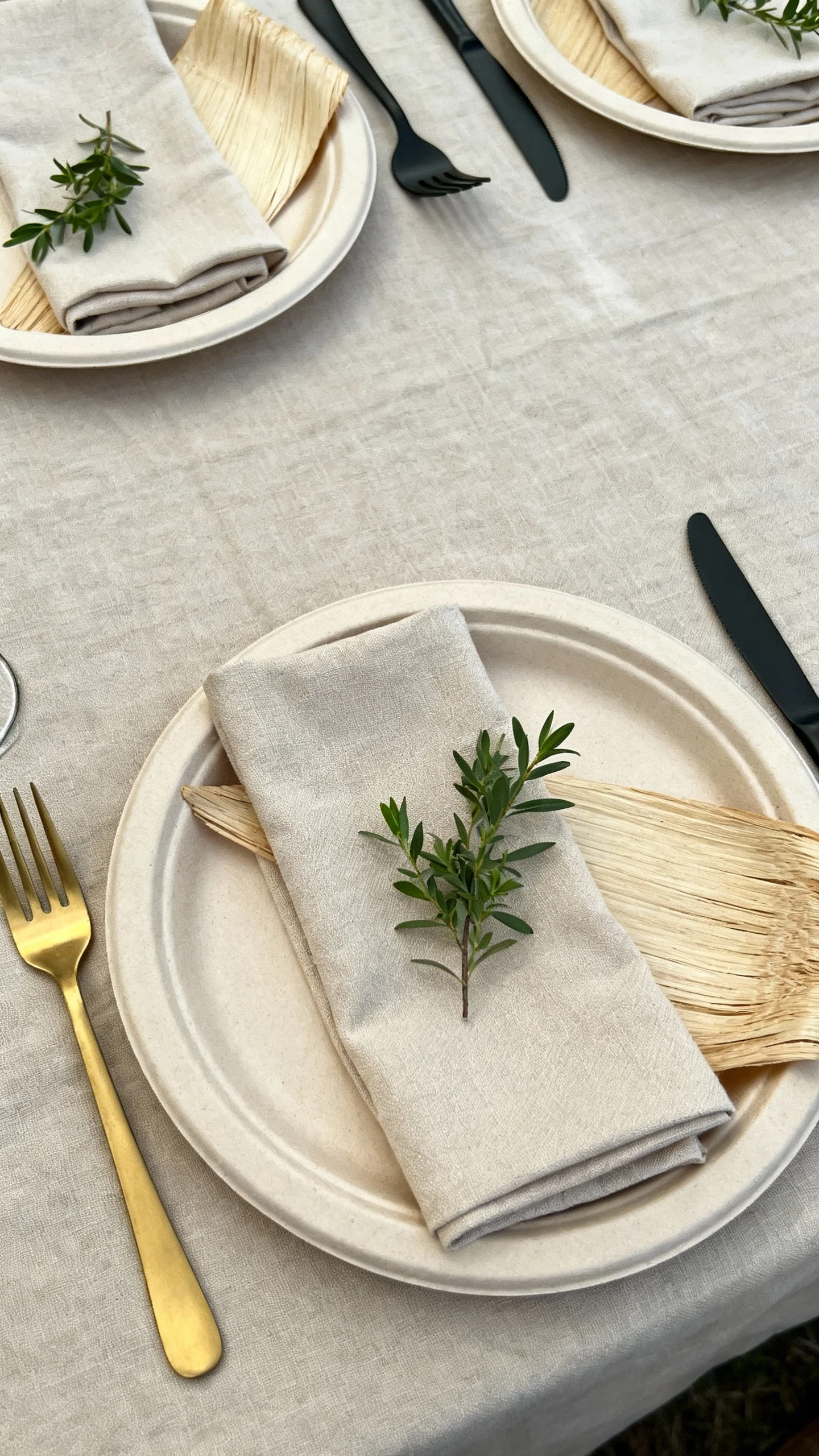
Avoid cartoon plates and go for compostable palm-leaf plates, neutral paper goods, or simple melamine that matches your color story. If your wedding is formal, use the same style flatware with smaller portions, or choose sleek disposable cutlery in gold or matte black. Add a napkin fold or a small sprig of greenery for a “real place setting” moment. The goal is practicality without breaking the visual vibe.
Create a mini signage moment that looks like part of the decor
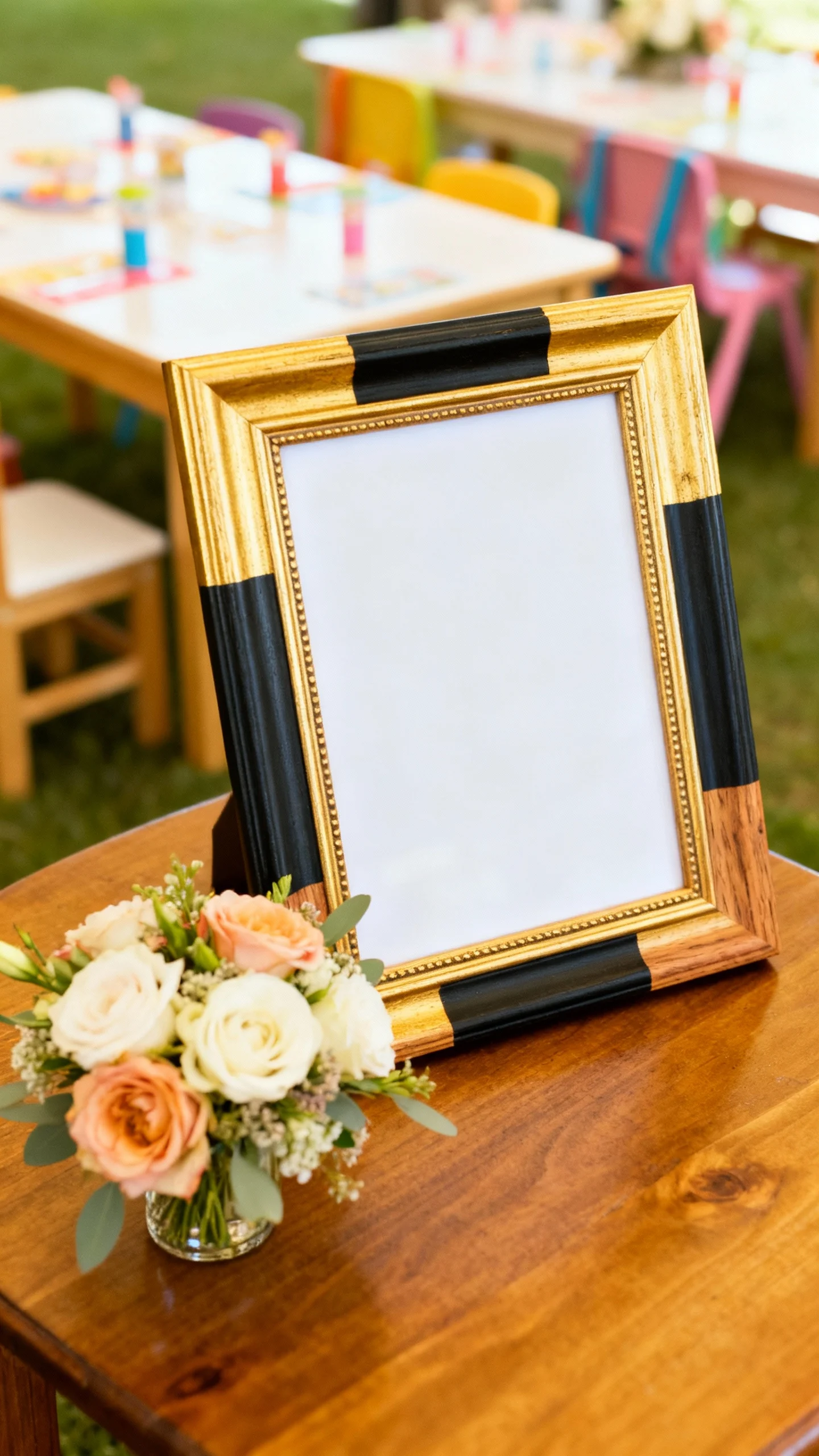
A simple sign instantly makes the kids’ area feel planned: “Little Guests,” “Junior VIPs,” or “Kids’ Table” in your wedding font. Place it in the same frame style used elsewhere—gold, black, or wood—so it blends. Add a small arrangement beside it to anchor the vignette. This also helps guests find the table quickly without an announcement.
Use a soft color palette with one playful accent
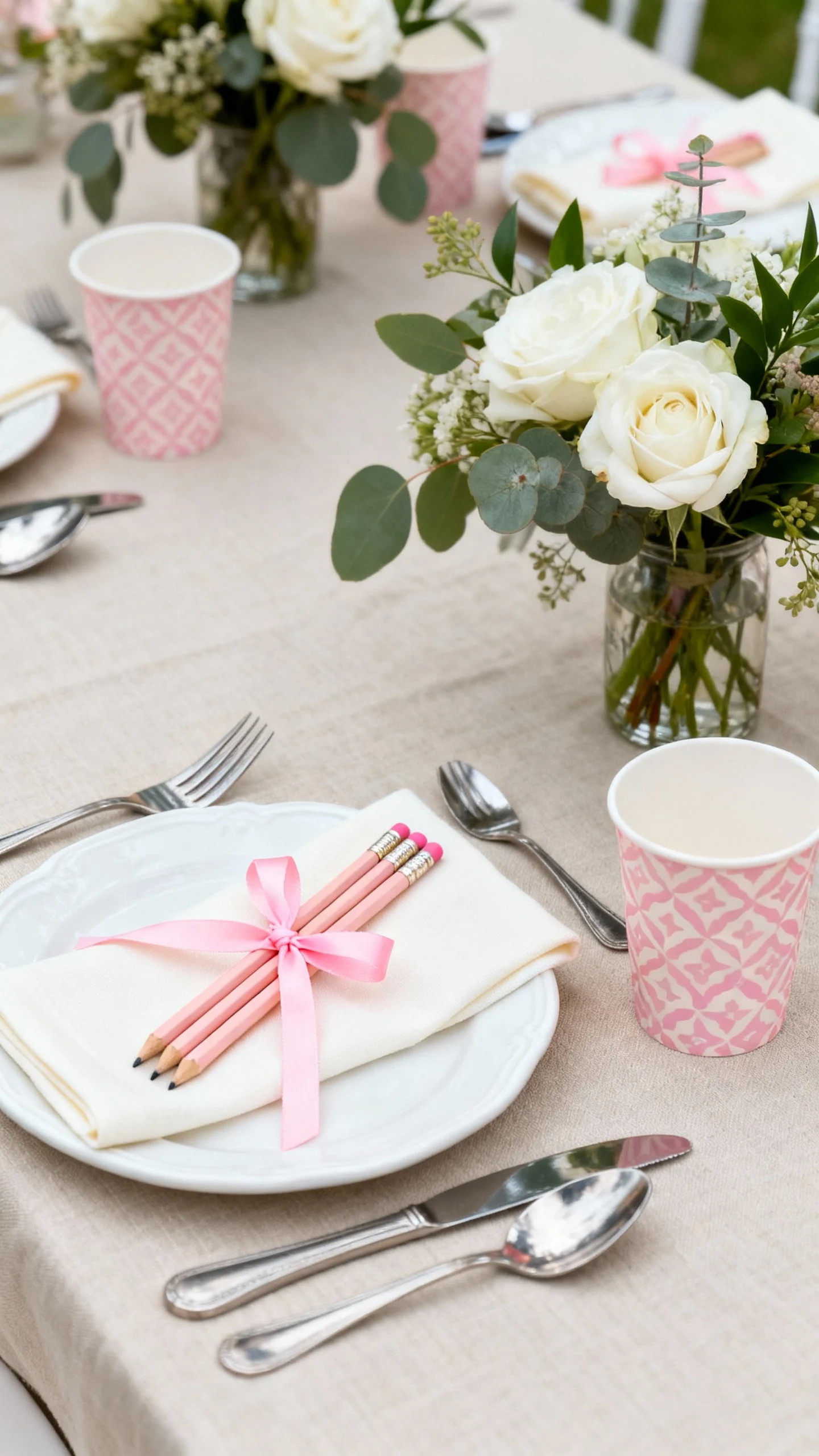
Kids love color, but weddings look best with restraint. Keep the base neutral or aligned with your wedding palette, then add one fun pop: a bright pencil set, a bold ribbon, or patterned cups. Limiting the accent color keeps the table from feeling like a rainbow explosion. It’s the easiest way to make “kid-friendly” still look grown-up.
Set up a nearby “activity cart” to keep the table photo-ready
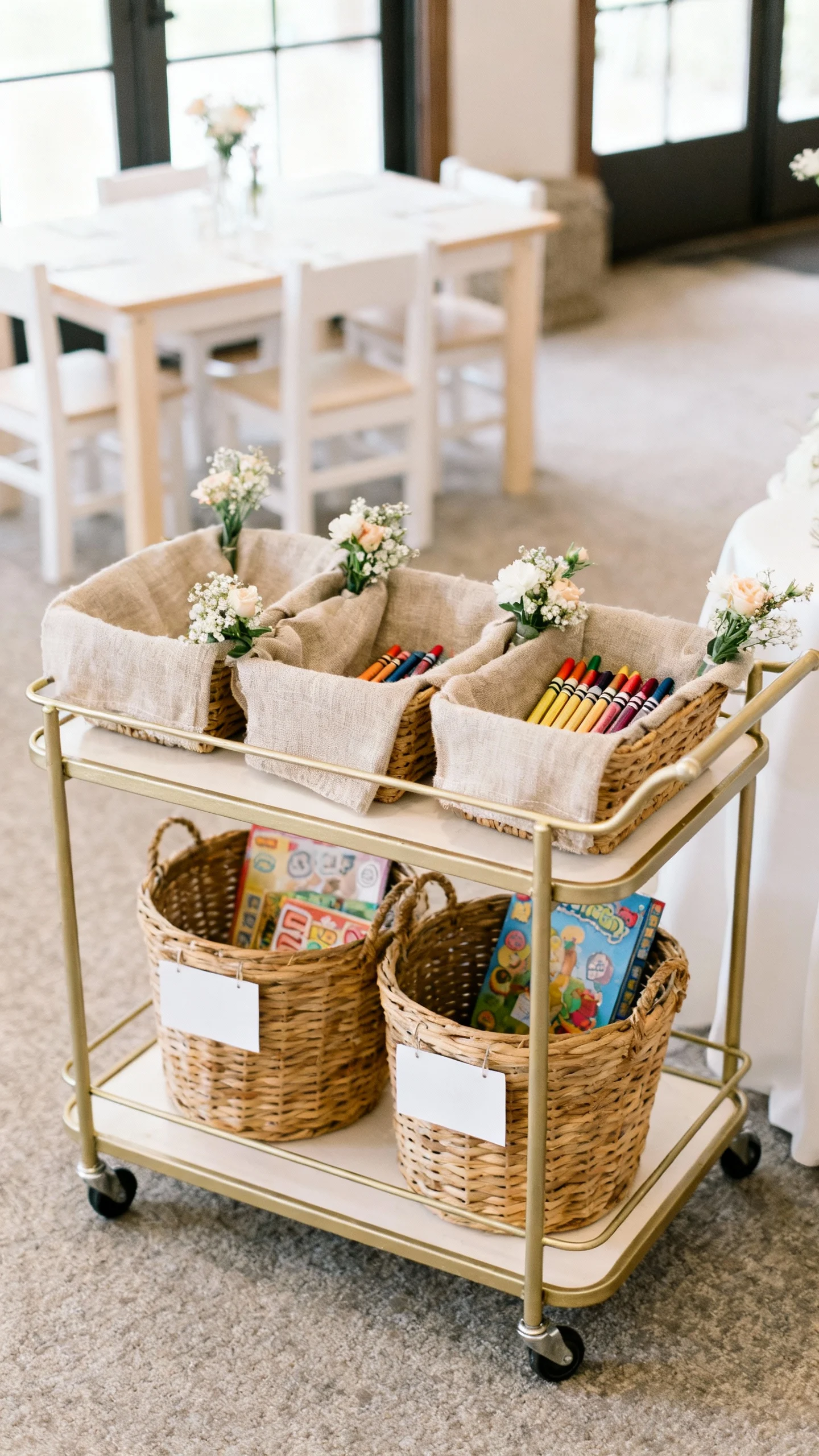
If everything lives on the tabletop, it will look messy within minutes. Use a small bar cart or side table styled like the rest of your reception—linen, small florals, and labeled baskets. Keep refills (crayons, wipes, extra games) off the main surface and restock as needed. Your photographer will thank you, and so will the cleanup crew.
Plan lighting and placement like it’s a real design zone
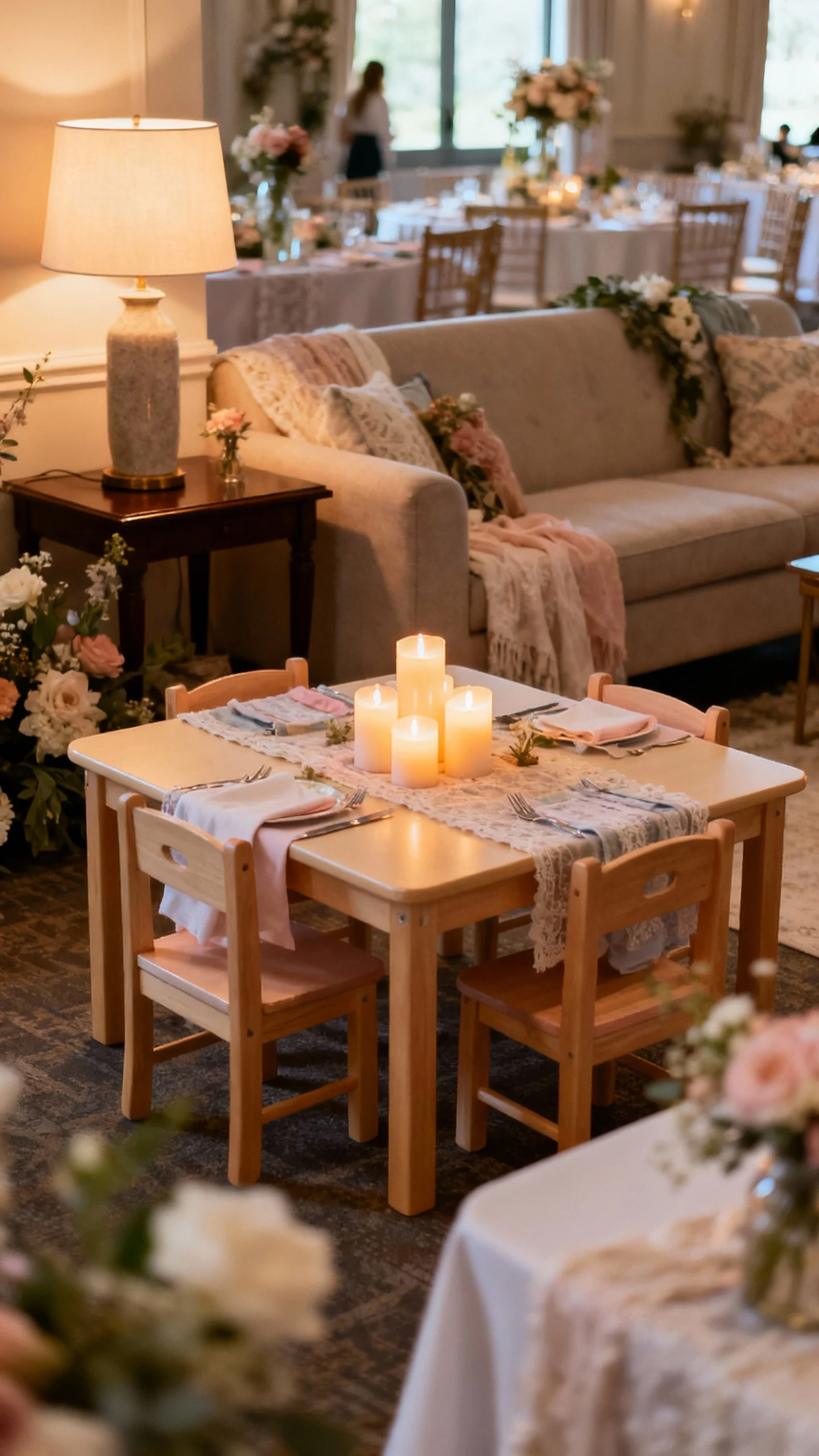
Put the kids’ table where it feels included but not in a high-traffic collision zone—near family seating is ideal. If the reception is dim, add a small battery candle cluster or a single shaded lamp on a nearby side table (nothing hot or tippy). Good lighting makes the space feel intentional and helps parents keep an eye out. Placement plus lighting turns the kids’ area into part of the overall layout, not an afterthought.
FAQ
How do I keep the kids’ table from looking messy in photos?
Start with a clean base (matching linens and a low centerpiece), then limit tabletop items to one activity and one place setting per child. Put backups on a nearby cart so clutter stays off the table. If possible, ask your coordinator to do a quick reset before key moments like grand entrance or dinner service.
What are the best wedding-appropriate activities for a kids’ table?
Choose contained activities that don’t shed glitter or require lots of parts: themed coloring pages, sticker sheets, mini card games, or a simple scavenger hunt. Personalized activity “menus” are especially polished and easy to print. Avoid messy paint, slime, or anything that can stain formalwear.
Should the kids’ table have assigned seats?
If you have a small group of children or a formal seating plan, assigned seats help everything feel organized and reduce confusion for parents. Place cards or name tags also make the setup look more intentional. For very casual weddings, you can skip assignments and still keep it cohesive with matching supplies and a clear sign.
What if my theme is very black-tie—can a kids’ table still fit?
Yes—stick to the same palette, upgraded paper goods, and sleek disposable or durable tableware. Use low florals or greenery, simple signage in your wedding font, and a curated activity sheet instead of colorful toys. The fun can be in the content, not the color chaos.
How many kids’ tables do I need?
As a general rule, plan one table for every 6–10 children depending on ages and chair size. Mixed ages may need extra spacing so older kids aren’t cramped and younger kids have room for activities. If you’re expecting a wide age range, consider two zones: a seated table for older kids and a soft, supervised corner nearby for toddlers.