
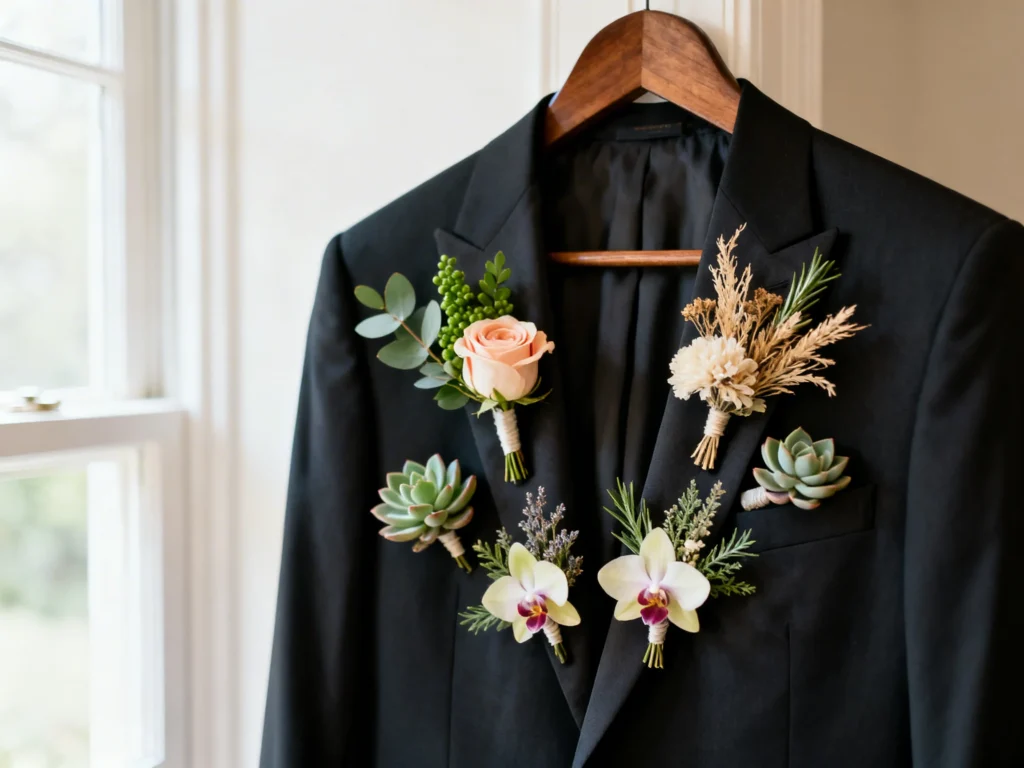
A boutonniere might be small, but it’s one of the quickest ways to make the groom’s look feel intentional and personal. The best designs don’t just “match the flowers”—they match his vibe, the venue, and the overall wedding style.
Below are boutonniere wedding ideas that pair beautifully with specific groom aesthetics, with practical tips so the look feels polished from aisle to after-party.
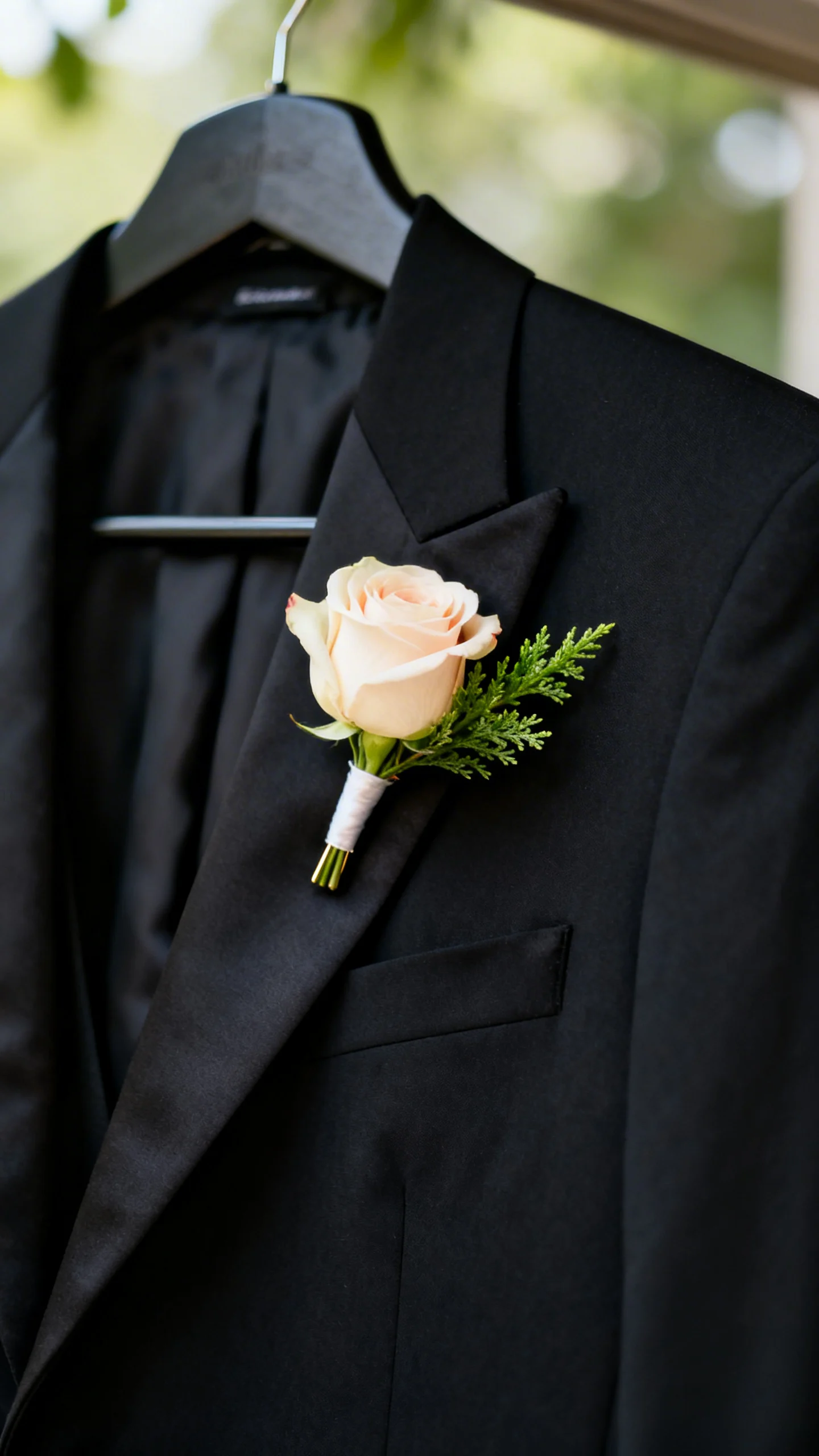
Classic rose boutonniere for the timeless groom
A single rose (or rosebud) is clean, traditional, and always in style. Choose a shade that appears in the bouquet or bridesmaids’ dresses for effortless coordination. Add a small sprig of greenery for texture without clutter. This look shines with a black tux, navy suit, or a formal ballroom vibe.
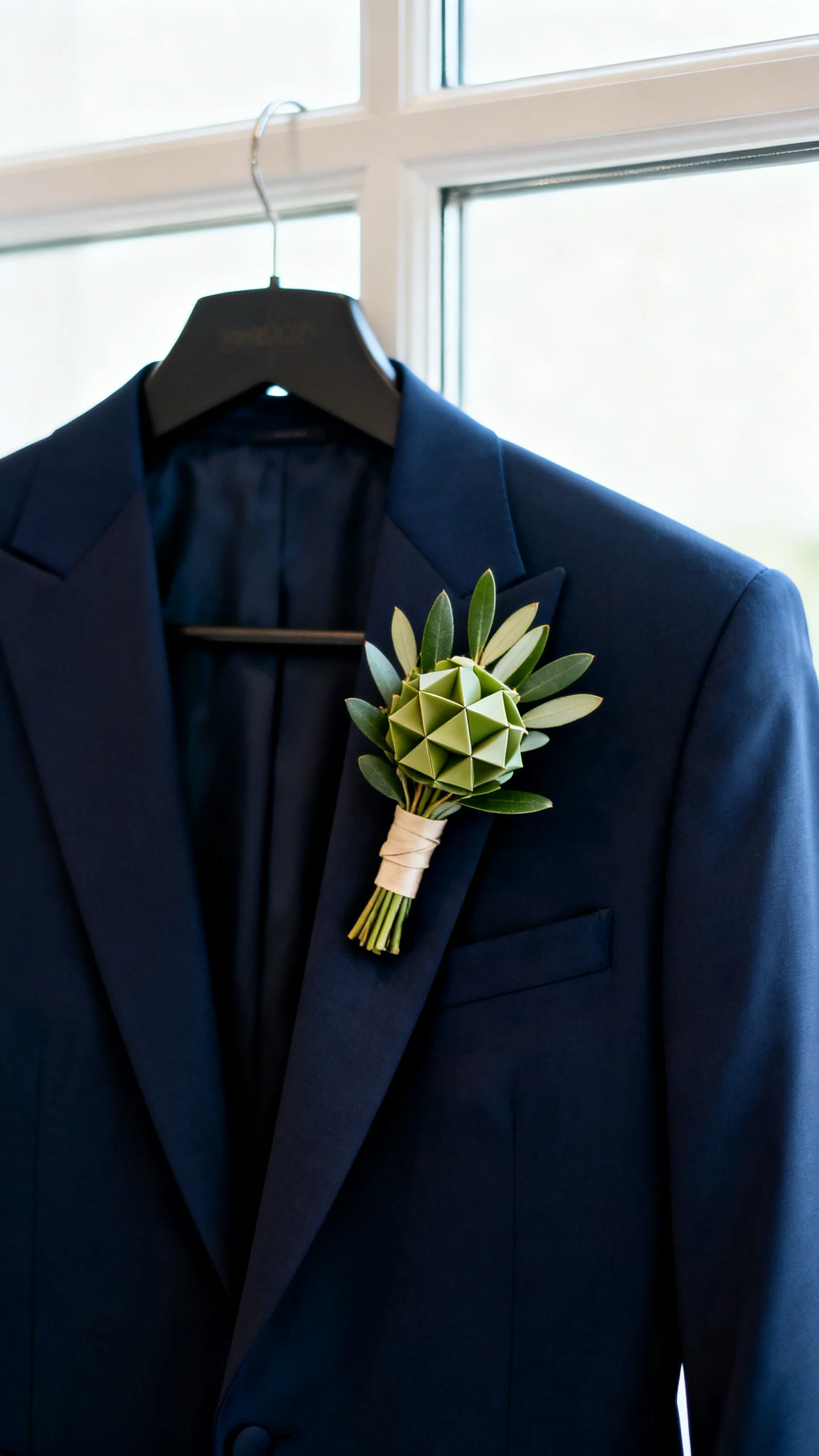
Minimal greenery boutonniere for the modern groom
If he loves sleek lines and a pared-back look, skip big blooms and go for structured greenery like olive, ruscus, or eucalyptus. Keep it tight and geometric, with a simple wrap in matching ribbon. This style pairs beautifully with a crisp white shirt, slim lapels, and modern venues. Bonus: it photographs sharp and never feels fussy.
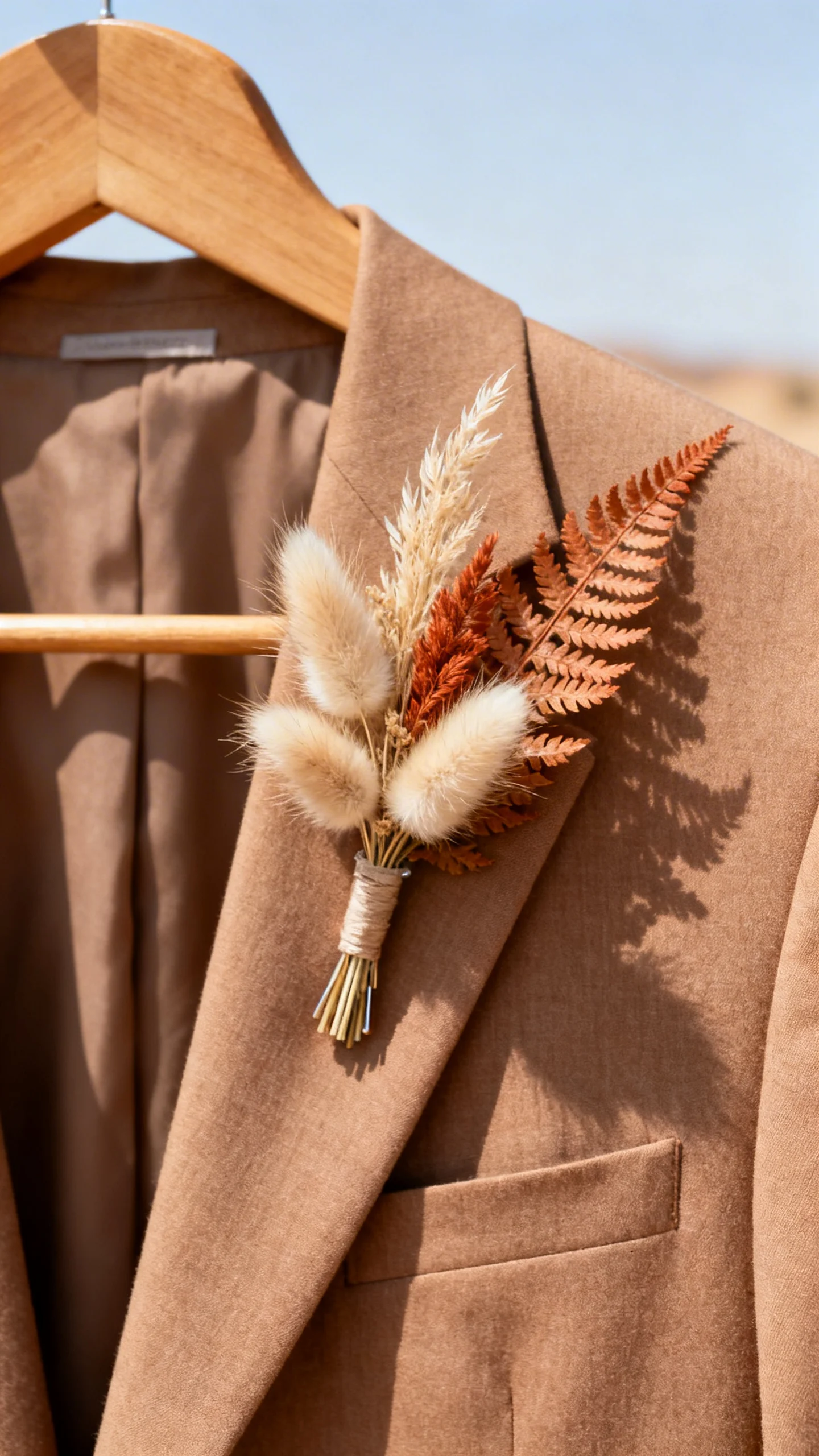
Textural dried boutonniere for the boho groom
Dried elements like bunny tail grass, pampas accents, or preserved fern create that relaxed, artsy vibe. Stick to warm neutrals or muted earth tones to keep it elevated instead of rustic. Ask your florist to secure everything firmly so it doesn’t shed or droop. It’s perfect for desert ceremonies, outdoor weddings, and linen-heavy styling.
Wildflower boutonniere for the garden-romantic groom
A small cluster of wildflowers feels charming and natural, especially for spring and summer weddings. Include one “hero” bloom plus tiny supporting flowers for a balanced shape. To avoid looking messy, keep the overall size compact and the stems neatly wrapped. This is ideal for garden venues, countryside celebrations, and soft color palettes.
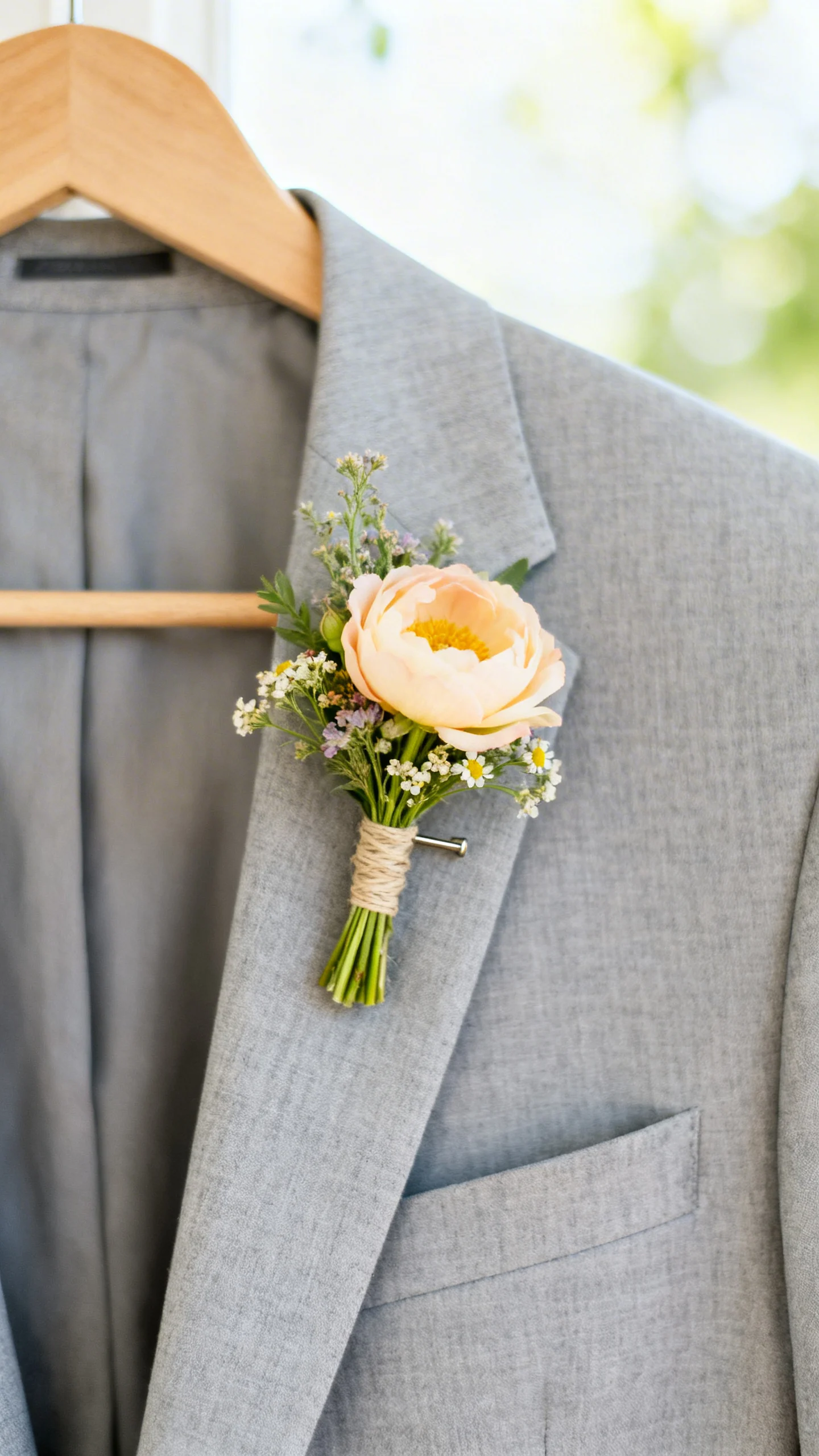
Orchid boutonniere for the fashion-forward groom
Orchids instantly read upscale and editorial, especially when styled as a single bloom with minimal greenery. White, blush, or deep plum orchids can match anything from a classic tux to a statement suit. Keep the wrap clean—think satin ribbon or a sleek thread finish. This choice is especially striking for modern black-tie, city venues, or luxe tropical themes.
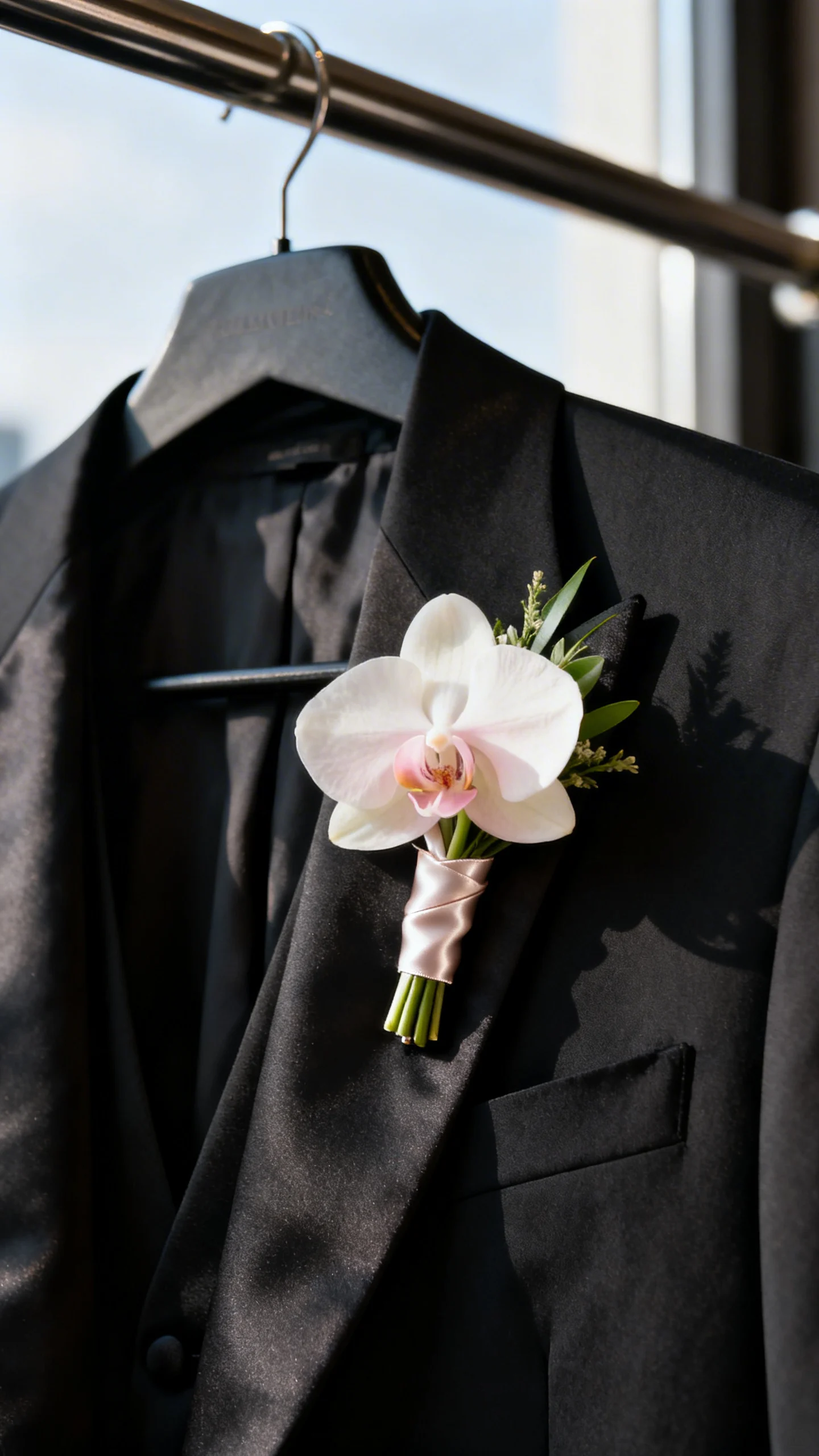
Monochrome boutonniere for the groom who loves a clean palette
A monochrome boutonniere uses one color family for a crisp, intentional look. Try all-white for a timeless feel, dusty blue for a cool modern mood, or all-burgundy for dramatic fall weddings. Vary texture instead of color by mixing petal shapes and a touch of tonal greenery. It’s a simple way to make the groom’s style feel curated and cohesive.
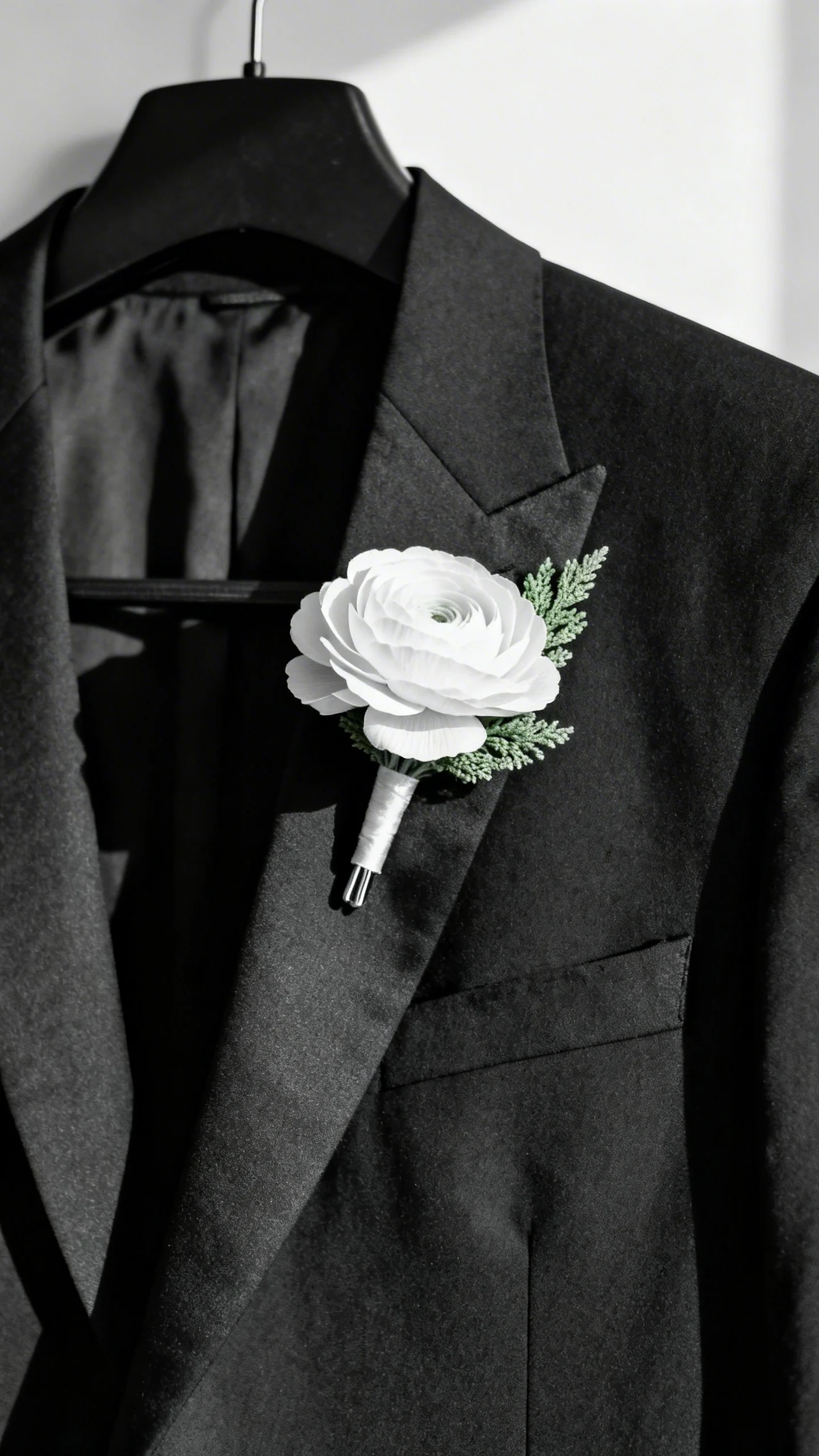
Herb-forward boutonniere for the foodie groom
Incorporate herbs like rosemary, thyme, or bay leaf for a fresh, fragrant twist. Pair the herbs with a small bloom or keep it all-green for an understated look. This works beautifully for vineyard weddings, farm-to-table receptions, or Italian-inspired styling. Ask for a light misting before photos so it stays vibrant.
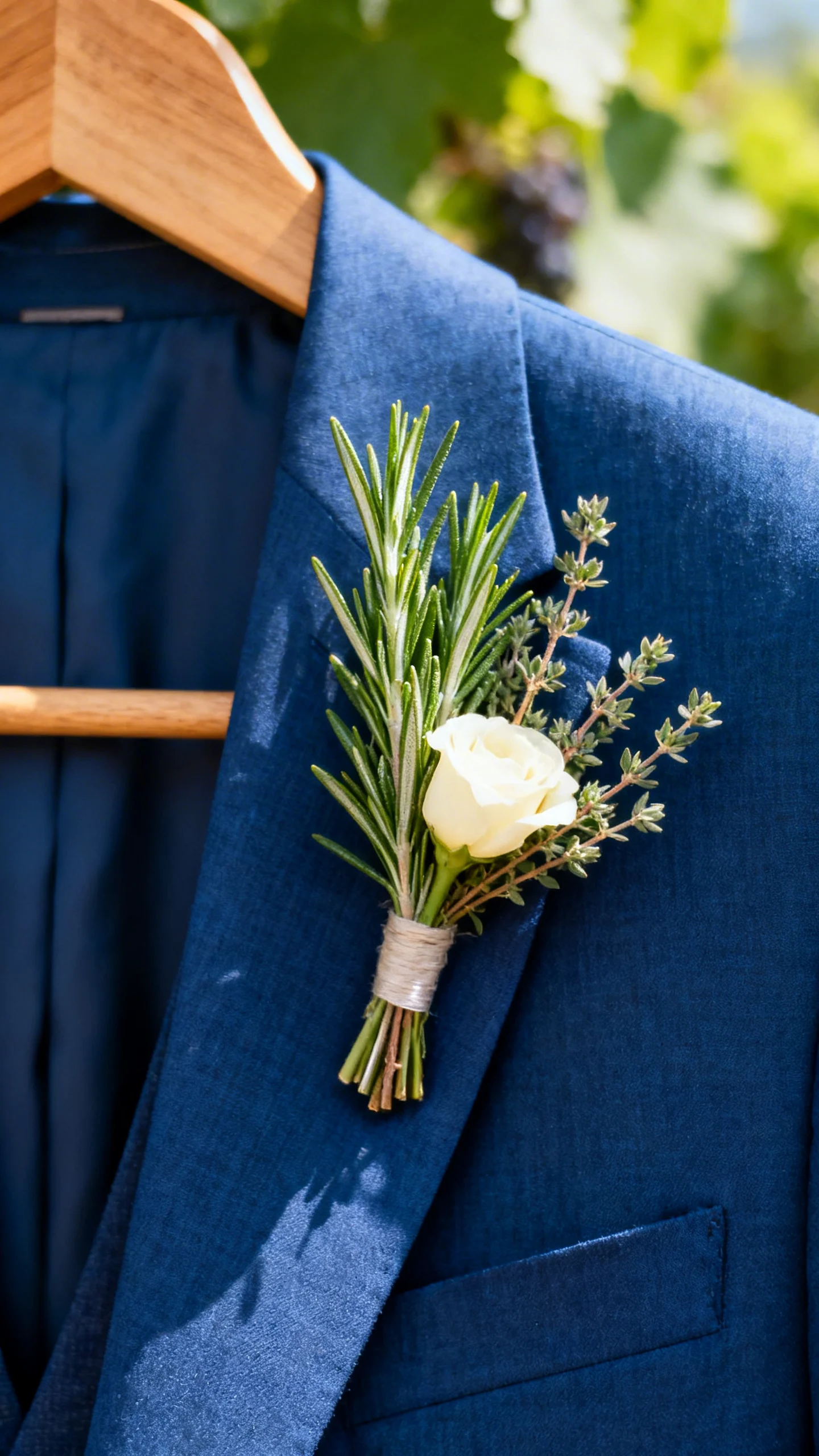
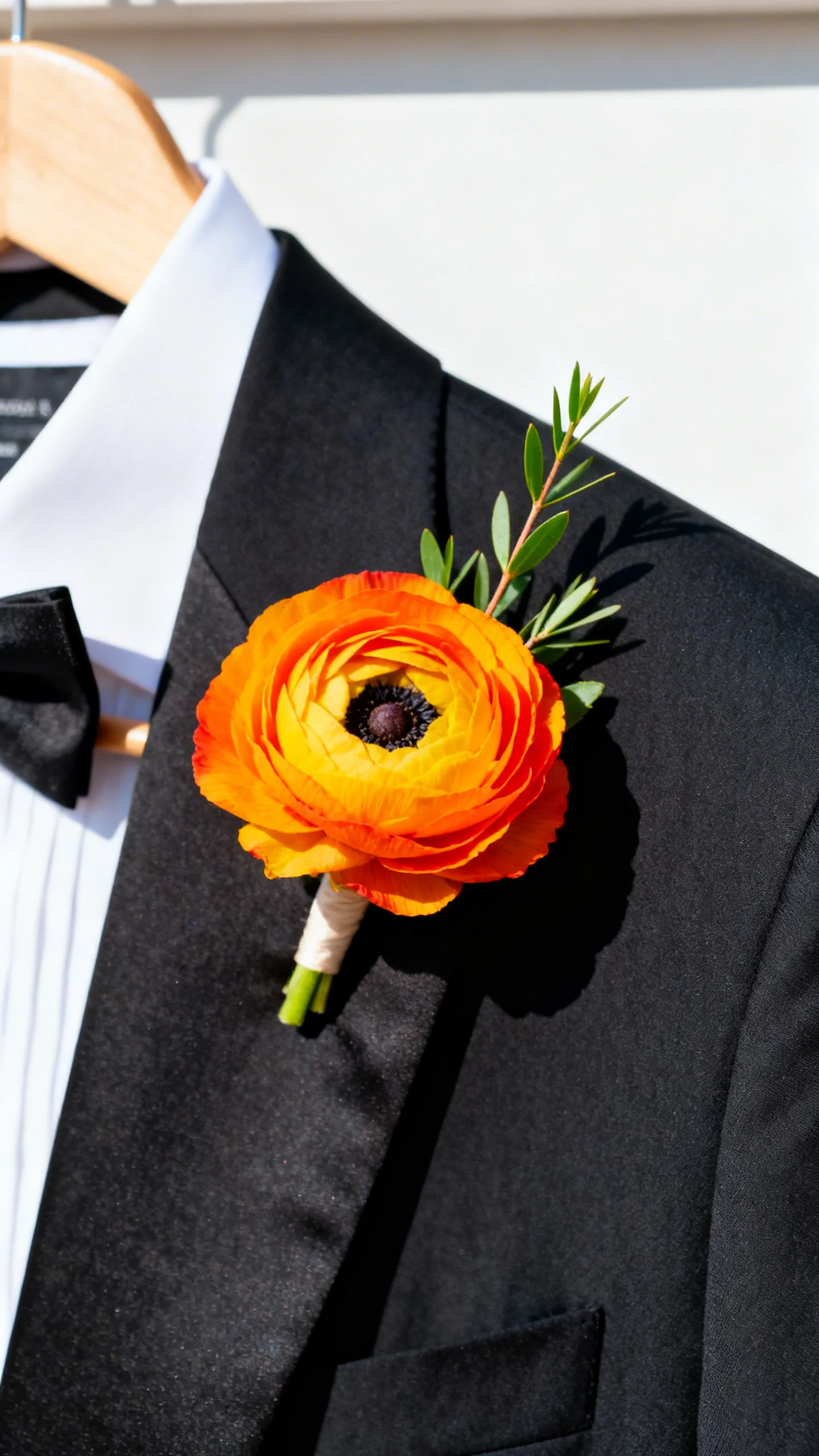
Bold color pop boutonniere for the confident groom
If he loves a standout detail, choose one bright bloom—like ranunculus, anemone, or a mini dahlia—in a vivid shade. Keep everything else neutral so the color looks intentional rather than random. Tie the pop back to a pocket square, tie, or the wedding stationery for cohesion. It’s especially fun for playful palettes and stylish indoor venues.
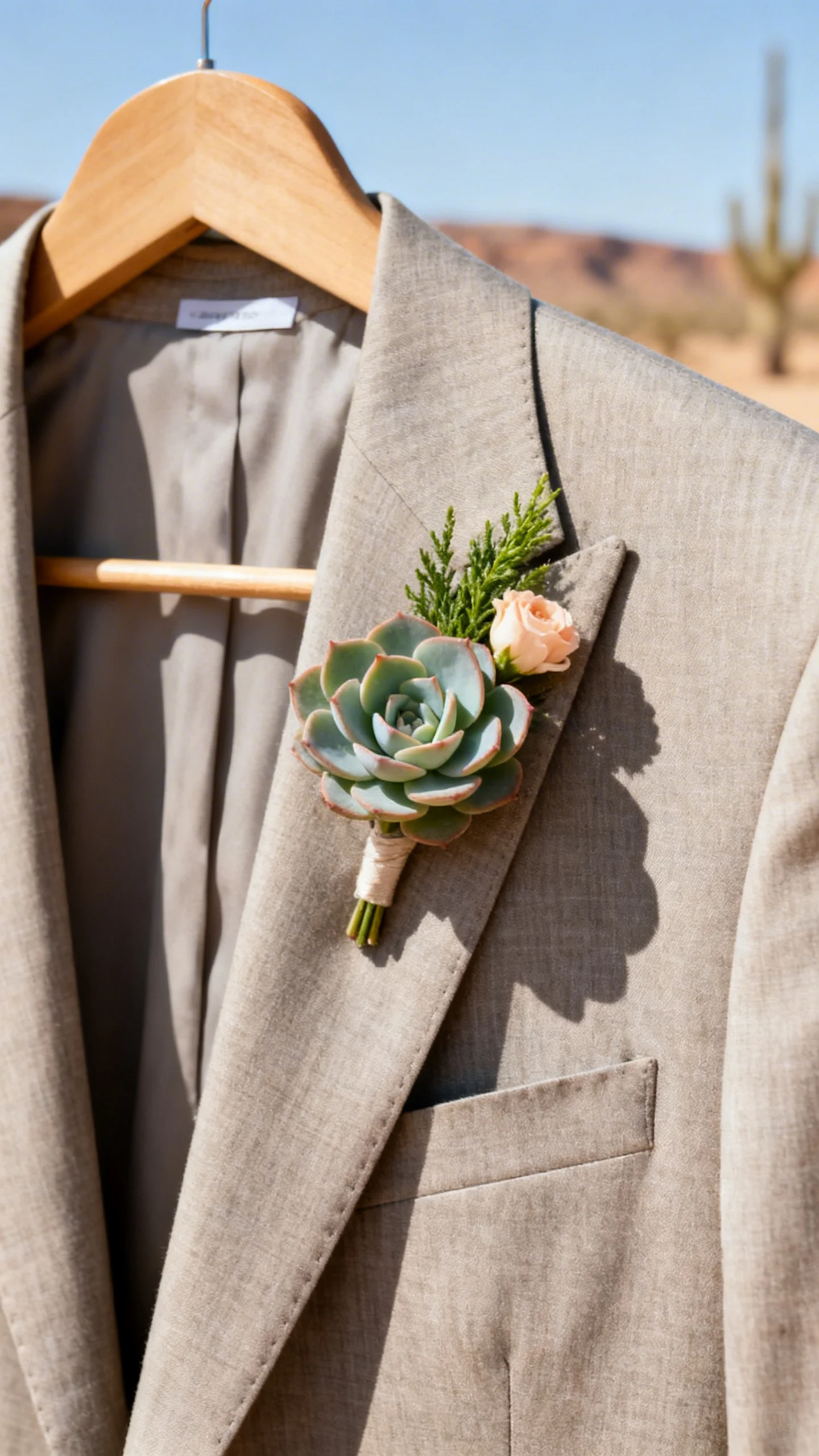
Succulent boutonniere for the low-maintenance groom
Succulents are sturdy, structured, and ideal for long wedding days or warm weather. Pair a small succulent rosette with a bit of greenery and a tiny bloom for softness. Make sure it’s lightweight and pinned securely so it doesn’t pull on the lapel. This look fits modern, desert, and outdoor weddings where durability matters.
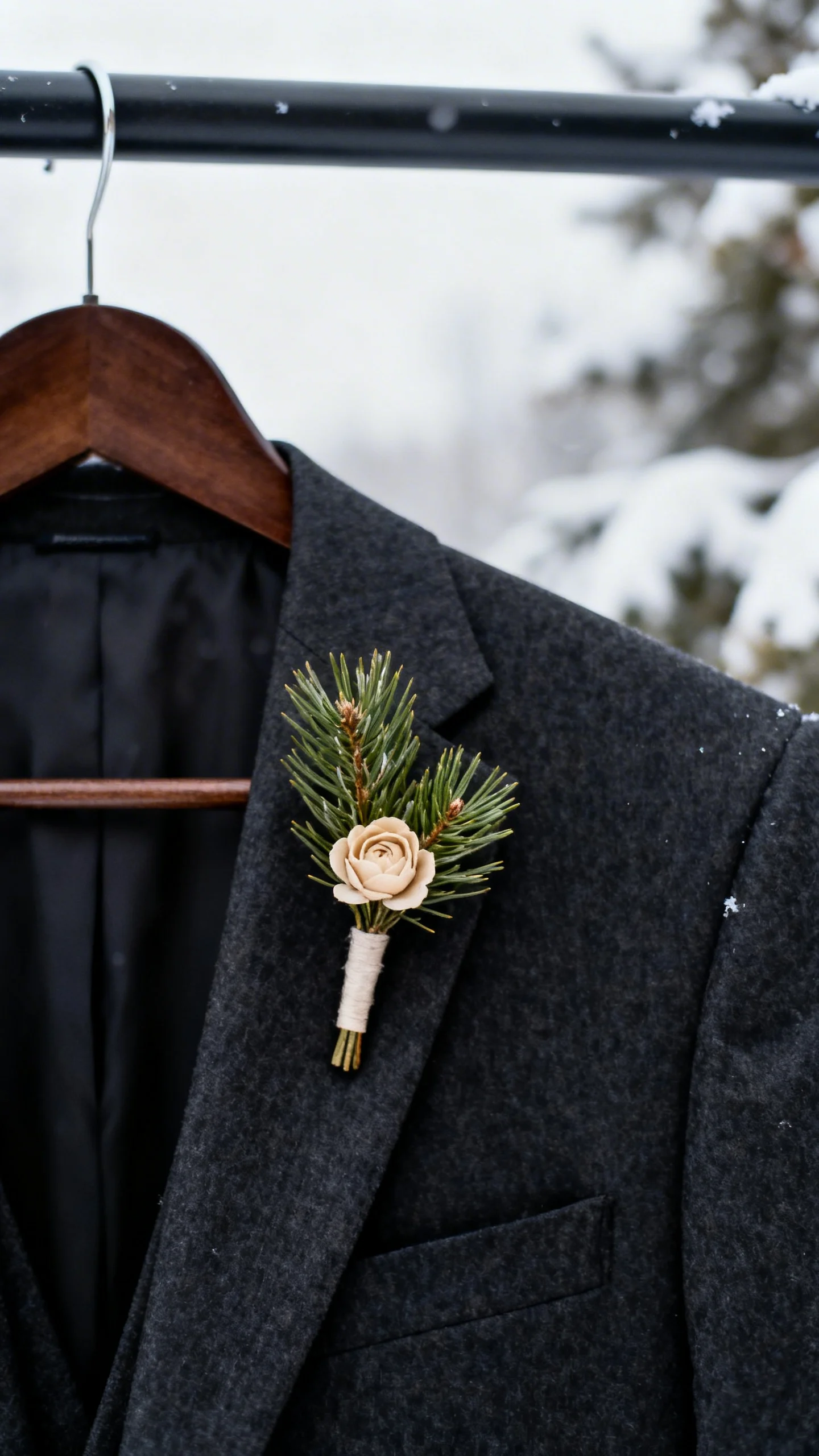
Seasonal accent boutonniere for the nature-inspired groom
Lean into the season with a subtle accent: a tiny pine sprig for winter, a berry detail for fall, or a fresh bud for early spring. Keep the accent small so it reads refined, not costume-like. Use colors already present in the florals to avoid clashing. It’s a smart way to make the groom’s style feel connected to the date and setting.
FAQ
How do I make the boutonniere match the groom’s style without matching everything exactly?
Focus on one shared element: color, texture, or mood. For example, a modern groom can wear minimalist greenery that still uses the wedding’s main color in the wrap or a tiny bloom. The goal is coordination, not a copy of the bouquet.
Which lapel should a boutonniere go on?
Traditionally, it’s worn on the left lapel (over the heart). The stems should point downward, and the bloom should sit above the pocket area. A florist can also add a pin backing to make placement easier and more secure.
How big should a boutonniere be?
Keep it proportionate to the groom’s frame and lapel width—generally compact and neat. If it’s too large, it can look bulky in photos and pull the fabric. A clean, smaller design usually reads more elevated.
Do boutonnieres need to match the groomsmen exactly?
Not necessarily. A great approach is giving the groom a slightly elevated version—one special flower, a different texture, or a more refined wrap—while keeping the same palette for the wedding party. That creates a clear “lead” look without feeling mismatched.
How do we keep boutonnieres fresh until photos and the ceremony?
Store them in a cool place, away from direct sun and heat, and avoid sealing them in an airtight container. If your florist provides a small hydration method, follow their instructions carefully. Pin them on close to photo time to reduce wilting and crushing.