
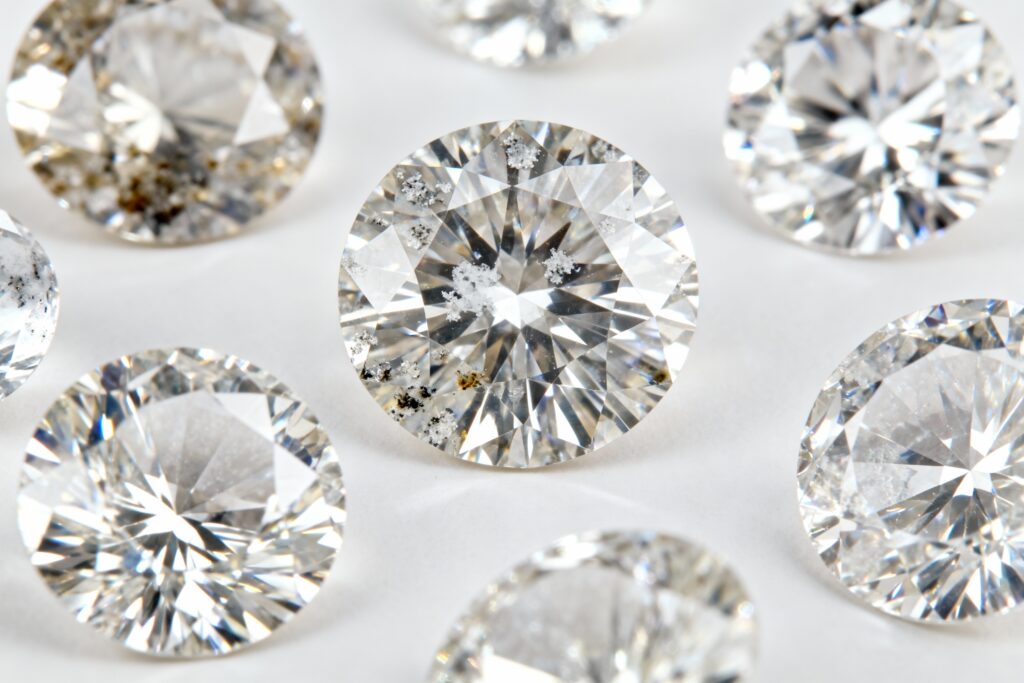
You want a diamond that sparkles like fireworks but doesn’t empty your savings. Good news: clarity matters, but not as much as the salesperson hovering over the loupe wants you to think. Most inclusions hide from the naked eye, and your money can work smarter elsewhere.
Let’s decode clarity so you can pick a killer stone without paying for invisible bragging rights.
Clarity Basics: What It Actually Means
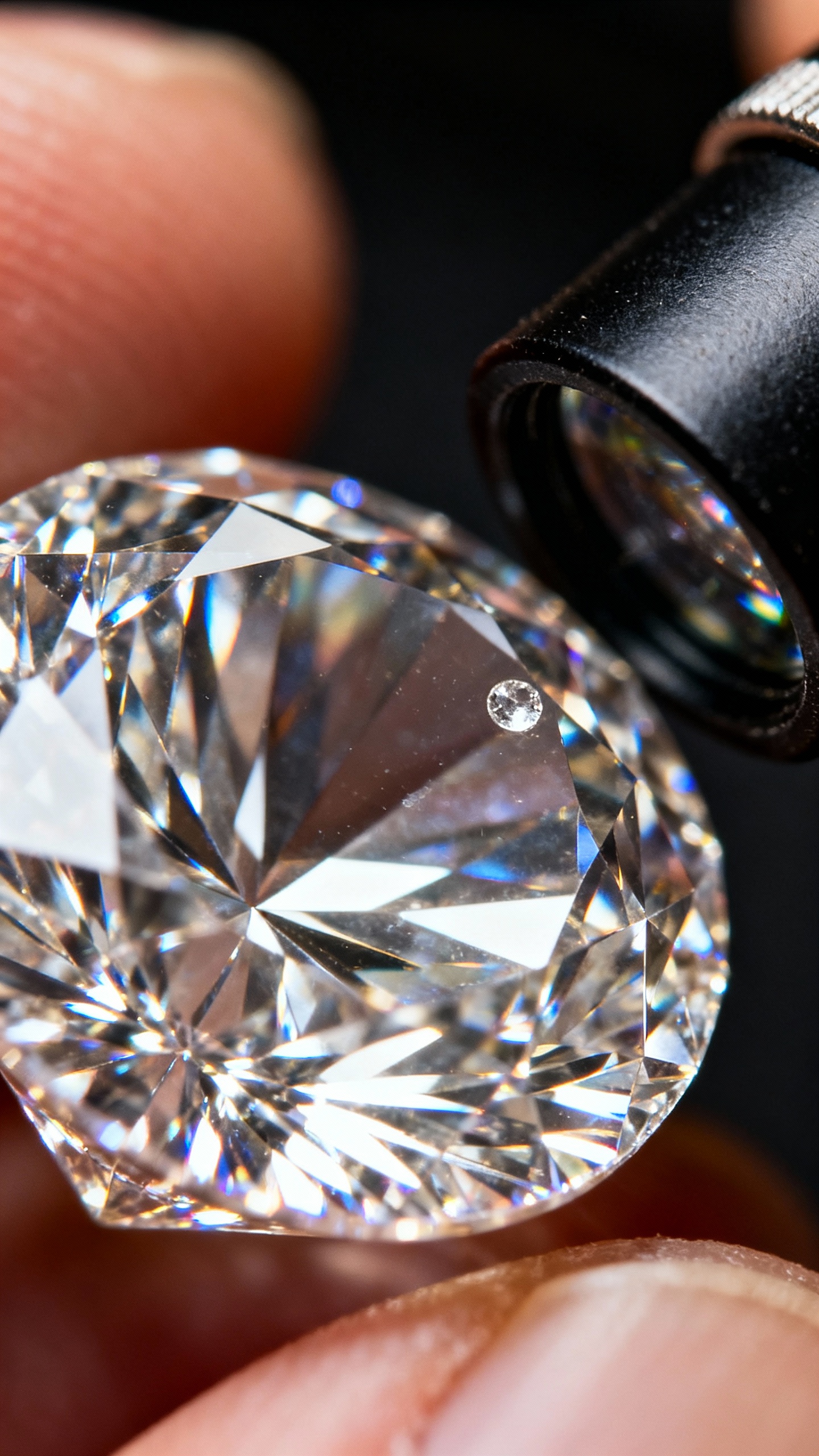
Clarity describes how many internal “birthmarks” (inclusions) and external marks (blemishes) a diamond has, plus how visible they are. That’s it. Not soul-deep, just tiny specks and lines.
The fewer and smaller they are, the rarer the diamond and the higher the grade. The GIA clarity scale:
- FL/IF: Flawless / Internally Flawless — you’re paying rent for perfection you can’t see
- VVS1–VVS2: Very, very slightly included — super clean, even under magnification
- VS1–VS2: Very slightly included — typically clean to the naked eye
- SI1–SI2: Slightly included — often eye-clean at the top end, depends on the stone
- I1–I3: Included — inclusions usually visible without magnification
Key point: “Eye-clean” beats “loupe-clean.” You wear your diamond on a finger, not under a microscope.
What Actually Affects Sparkle (It’s Not Just Clarity)
Spoiler: cut rules the sparkle kingdom. A great cut throws light everywhere and hides minor inclusions. A poor cut turns a flawless diamond into a sad, dim potato. Prioritize like this:
- Cut quality (Excellent/Ideal)
- Eye-clean clarity
- Color preference (G–I sweet spot for white metals)
- Carat (the budget balancer)
FYI: A well-cut SI1 can outshine a badly cut VVS.
Light performance > perfection points.
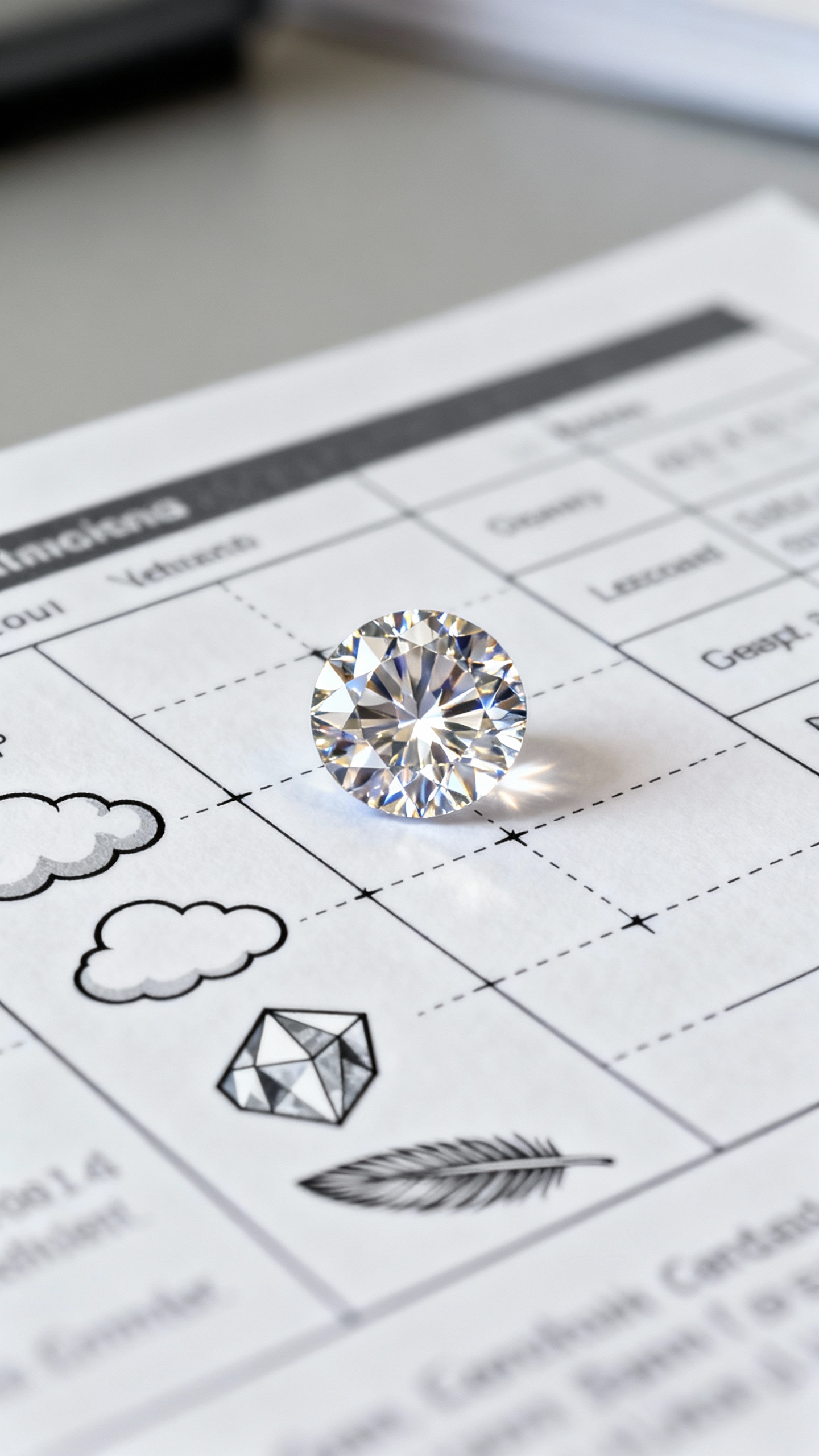
The “Eye-Clean” Sweet Spot: Where Value Lives
If you want maximum sparkle per dollar, aim for VS2 or SI1 in round diamonds. Many of these look flawless to the naked eye. Save cash, keep the shimmer.
By Shape: How Forgiving Is Your Cut?
- Round: Most forgiving.
VS2 and SI1 often look pristine.
- Oval, pear, marquise: Still forgiving. Watch for black inclusions near the center.
- Cushion, radiant: Facets mask inclusions well; SI1 can look great.
- Emerald, Asscher: Step cuts show everything. Aim for VS1–VS2 for eye-clean confidence.
- Princess: Hides inclusions decently but protect the corners (avoid chips/feathers there).
What to Avoid
- Black crystals smack in the table (center)
- Feathers that break the surface near edges (durability risk)
- Clouds that lower transparency across a big area
- Large cavities or chips, especially on corners and girdle
You can live with a tiny pinpoint off to the side.
You should not live with a crater on the table. IMO, that’s just emotional damage waiting to happen.
How to Read the Grading Report Without Crying
Always buy with a reputable lab report, ideally GIA or AGS (AGS now integrated into GIA). Skip “store labs” with generous grading. Key report sections:
- Clarity grade: The headline, not the whole story.
- Clarity characteristics: Lists inclusion types (crystal, feather, cloud, etc.).
- Plot diagram: Shows location.
Red = external; green = internal (GIA). Centered inclusions matter more.
- Comments: Watch for “additional clouds not shown” or “clarity grade based on clouds.” That can mean hazy sparkle.
Ask for Media
- High-res photos under different lighting
- 10x–20x videos
- ASET/IdealScope for light performance (especially for fancy shapes)
If the retailer won’t show you the stone clearly, treat that as a red flag and sprint.
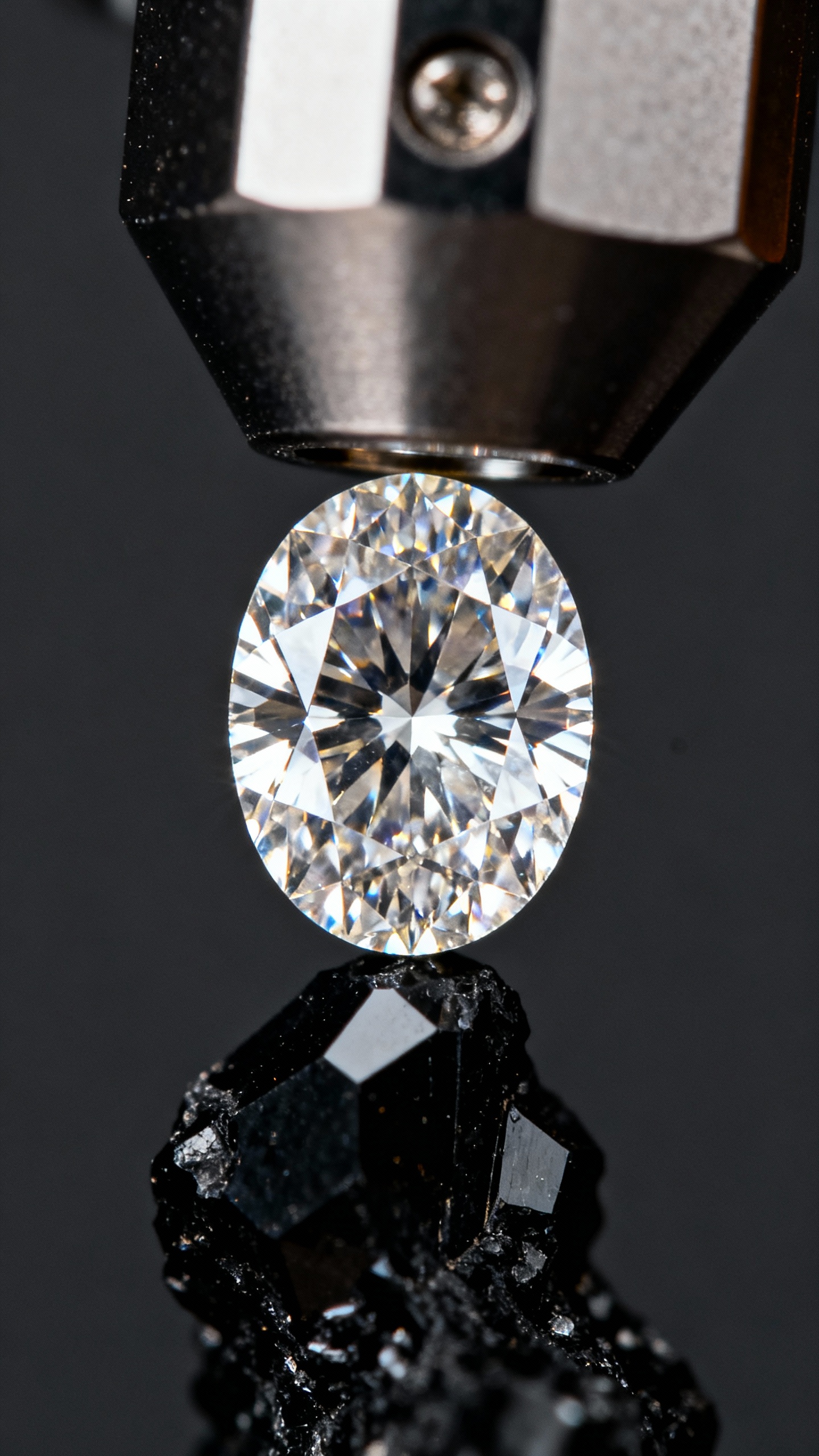
Budget Moves: Where to Save, Where to Splurge
Save on clarity, splurge on cut. That formula rarely fails.
But let’s get specific. Smart savings:
- VS2/SI1 for rounds and brilliant-cut fancy shapes
- VS1/VS2 for step cuts (emerald/Asscher)
- Color: G–I for white metals, H–J for yellow/rose gold to mask warmth
- Carat “shy” weights: 0.90–0.99, 1.80–1.99 for better pricing
Pay extra for:
- Eye-cleanliness (duh)
- Stones without durability risks (no big feathers at edges)
- Excellent/Ideal cut with strong symmetry and polish
Pro Tip: Let Inclusions Work For You
A small inclusion near the edge can hide under a prong. That’s like free invisibility. Ask the setter to position it smartly.
You just saved hundreds.
The Lighting Trap: How Stores Fool Your Eyes
Jewelry stores use spotlight theaters that make gravel look sparkly. You need real-world checks. Test in different light:
- Diffused light (office): overall brightness
- Spotlight (store): fire and scintillation
- Shade near a window: honest contrast and leakage
If it looks amazing in all three, you found a winner. If it only slaps under the store’s disco ball, reconsider.
Certification, Upgrades, and Resale (AKA Future You Will Thank Present You)
Always choose GIA/AGS-graded stones.
You’ll get consistent grading and better resale and trade-up options. Many jewelers offer lifetime upgrade policies, but they usually require 2x spend on the next stone. Read the policy before you commit.
Considering lab-grown? Lab-grown diamonds offer near-flawless clarity at a fraction of the price. But resale is weaker than natural. If you care about long-term value, go natural with smart clarity.
If you want max size and sparkle now, lab-grown can be a killer choice, FYI.
Common Clarity Myths, Debunked
- Myth: Higher clarity equals more sparkle. Reality: Cut drives sparkle. Clarity just avoids obvious distractions.
- Myth: SI means “bad.” Reality: Many SI1s are totally eye-clean. Your wallet will prefer them.
- Myth: Flawless diamonds are always better. Reality: They’re rarer, not shinier.
You mostly pay for the flex.
- Myth: All inclusions weaken the diamond. Reality: Most don’t. Only certain feathers or large surface-reaching issues matter.
FAQ
What clarity grade gives the best value?
For rounds, VS2 or SI1 usually delivers the best bang for your buck. For step cuts like emerald or Asscher, stick to VS1–VS2 to keep the look clean.
Always confirm eye-cleanliness with images or in-person inspection.
Can I trust SI2?
Sometimes. SI2 lives on the edge. A few are eye-clean, especially in smaller carats with busy faceting, but many show visible inclusions.
Check videos, avoid black crystals in the center, and be picky. If in doubt, bump up to SI1.
Will a higher clarity grade hold value better?
To a point. FL/VVS stones have rarity appeal, but most buyers don’t pay huge premiums on resale for clarity alone.
Market demand focuses on cut, carat, and overall look. Buying well-cut, eye-clean stones at fair prices protects value more than chasing IF.
Do inclusions ever help identify my diamond?
Yes, like a fingerprint. A small crystal or feather can help you recognize your stone without a microscope-level exam.
That’s a neat perk of not buying flawless, IMO.
Should I prioritize color or clarity?
Pick eye-clean clarity first, then choose color based on your metal and sensitivity to warmth. Most people don’t notice a one-grade color difference, but everyone notices a big black speck in the middle.
What about fluorescence?
Medium to strong blue fluorescence can make near-colorless diamonds (G–J) look whiter and can save money. Avoid stones where fluorescence causes haziness; check the stone in diffused light to be sure.
Bottom Line: Your Clarity Game Plan
You don’t need perfection; you need eye-clean and well-cut.
Start with Excellent/Ideal cut, then target VS2/SI1 for rounds (VS1/VS2 for step cuts). Inspect the inclusion map, avoid center-stage blemishes, and use prongs to hide edge inclusions. Test the diamond in different lighting, insist on GIA/AGS grading, and don’t pay premium prices for invisible upgrades.
Do that, and you’ll get a stone that sparkles hard—and a bill that doesn’t.