
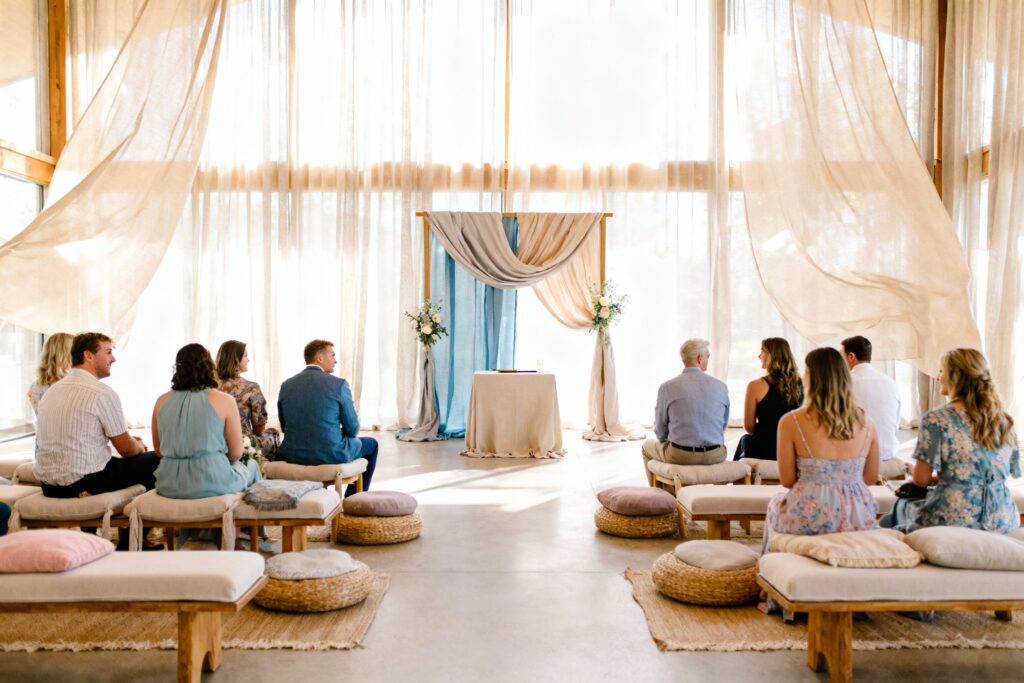
You want a wedding day that feels like a warm hug, not a chaos tornado. A celebration where everyone—neurodivergent guests, kids, introverts, grandparents, and yes, you—feels comfortable and included. Good news: a sensory-friendly wedding doesn’t mean bland or boring.
It means thoughtful, intentional, and honestly? Better for everyone.
Start With Your Why (and Tell People!)
You set the tone. If you want a sensory-friendly vibe, bake that into the plan from the start.
Share a short note on your website or invite that says something like: “We’re aiming for a calm, comfortable celebration. Expect quiet spaces, gentle lighting, and flexible moments.” Why share this? People relax when they know what to expect. It also tells your vendors and venue, “Hi, we care about sensory access,” which helps them help you.
Key details to include on your website
- Expected noise levels (band vs. playlist, amplified speeches or not)
- Lighting choices (no strobes, no flashing, warm lighting)
- Availability of quiet spaces and chill zones
- Food notes (strong scents minimized, dietary options available)
- Flexible dress code (comfortable shoes welcome, sensory-friendly fabrics encouraged)
Design Your Space With Sensory Zones
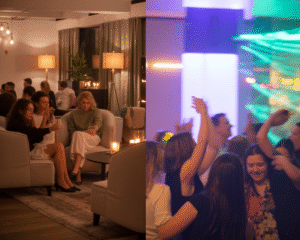
Create a layout that lets people choose their own comfort level.
Think “choose your own adventure,” but with seating and acoustics.
- Quiet Zone: A room or corner with comfy seating, soft lighting, zero speakers, and clear signage. Add fidgets, noise-reduction headphones, and water.
- Moderate Zone: Tables away from the main speakers. Good for conversation without shouting.
- High-Energy Zone: Near the dance floor for folks who want to be in the mix.
Venue tips that actually matter
- Ask for dimmable lights and avoid fluorescents.Warm bulbs > blue-white glare.
- Check the HVAC. Loud vents can be surprisingly overwhelming.
- Confirm you can control the music volume, not just the DJ.
- Plan traffic flow so people can exit easily—no maze-like layouts.
Rethink Sound: Volume, Vibes, and Variety
Loud music isn’t mandatory for fun. You can create an awesome soundscape without blasting eardrums.
- Set a volume cap. Agree with your DJ/band on a max decibel level.Stick to it.
- Use directionally placed speakers. Aim them at the dance floor, not dining tables.
- Build quiet windows. Lower music during dinner and after speeches.
- Offer earplugs. Put stylish, labeled earplug baskets by doors. People love options.
FYI: Bands can be sensory-friendly
Ask for brushed drums, acoustic sets, and no strobe lighting. Share your vibe playlist ahead of time (think chill, rhythmic, predictable).
Musicians appreciate clarity—they’re not trying to scare your guests.
Lights People Can Actually Stand
Lighting can make or break comfort. You want flattering and calm, not “nightclub at 2 a.m.”
- No flashing or strobe lights. Non-negotiable.
- Go warm and layered. Candles, string lights, lamps. Dim overheads.
- Use steady, soft uplighting. Avoid intense color shifts or rapid effects.
- Skip heavy fog or scent machines. Looks cool, smells… not cool.
Photography and video etiquette
Ask your photographer to avoid flash during the ceremony.
Provide a sign at the entrance: “Please no flash or bright phone lights.” Also, consider a screen-free ceremony so constant clicking and glowing screens don’t overload anyone.
Make Food and Smells Easy to Handle
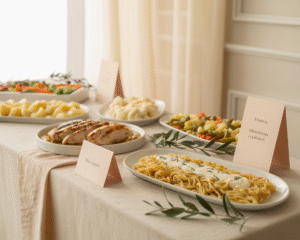
Strong scents can overwhelm people fast. Keep it simple.
- Minimize scented florals. Choose low-scent flowers or use greenery-heavy arrangements.
- Avoid overly fragrant menu items. Garlic bombs and heavy perfumes do not belong.
- Offer predictable textures. A few soft, simple options (mashed potatoes, rice, plain proteins) help sensory-sensitive guests.
- Clear labeling. Ingredients and allergens listed right on the buffet or menu cards.
Snack and hydration stations
Set out water, herbal tea, and light snacks in the quiet zone. Sometimes people just need a moment, a cracker, and a sip to reset.
Plan People-Friendly Timing
A thoughtful timeline keeps energy steady instead of spiky.
- Short ceremony. Aim for 15–25 minutes.Comfortable seating. Shade if outside.
- Breaks between segments. Build in 10-minute pockets for bathroom, fresh air, or quiet time.
- Predictable schedule. Post a simple timeline board and put it on your website.
- Optional participation. Make bouquet tosses, group dances, and speeches opt-in, not must-do.
Kids and neurodivergent guests
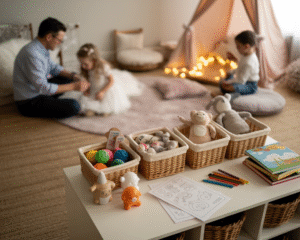
Create a mini sensory kit: fidgets, stickers, coloring pages, soft toys. Provide a family-friendly corner with floor cushions and a small activity table.
IMO, this saves more meltdowns than any timeline tweak.
Communicate Like a Pro
People can handle anything if you tell them what’s coming. Build clarity into your invites, website, and signs.
- Invite wording: “We’ll keep music at a comfortable volume and offer a quiet room all evening.”
- Signage: Clear icons for quiet spaces, restrooms, exits, and assistance.
- MC/DJ announcements: “Quiet room open all night to the left of the bar.” Repeat once or twice.
- Staff briefings: Make sure vendors know the plan and can guide guests kindly.
Dress Codes That Don’t Itch

Let people feel good in their bodies. Comfort actually photographs beautifully—no one smiles through a scratchy corset.
- Flexible attire language: “Festive and comfortable” or “Cocktail, comfy shoes encouraged.”
- Texture-aware picks: Suggest breathable fabrics and no mandatory ties if they’re constricting.
- Seating backup: Provide lap blankets or shawls for outdoor chills instead of blasting heaters.
Include, Don’t Spotlight
You want to support sensory needs without making anyone feel “othered.” Make accommodations universal.
- Offer earplugs to everyone, not just a few people.
- Put fidgets in a general welcome basket.
- Frame quiet spaces as “Relax/Recharge Rooms,” not “For Sensitive Guests Only.”
Language matters
If someone shares a need, say “Thanks for telling us—we’ve got you.” No interrogation.
No drama. Just kindness.
Vendor Checklist (So Nothing Slips)
Print this and bring it to vendor meetings, FYI.
- Venue: Quiet room available? Dimmable lights?HVAC noise reasonable?
- DJ/Band: Volume cap; no strobe; predictable playlist; quiet windows; directional speakers.
- Caterer: Low-scent menu options; clear labeling; hydration and snack stations.
- Photographer: Minimal flash; no light bars during ceremony; discreet approach.
- Planner/Coordinator: Clear signage; traffic flow with easy exits; sensory kits prepped.
- Florist: Low-fragrance blooms; avoid heavy perfumes or scent diffusers.
FAQ
How do I make a sensory-friendly wedding without it feeling “less fun”?
You focus on choice. Keep the dance floor lively for people who want it, and offer quiet spaces and gentler sound for those who don’t. The result feels more inclusive—and surprisingly, the overall vibe stays happier because fewer guests burn out early.
Do I need to tell guests it’s sensory-friendly?
Yes, briefly.
A simple note helps guests plan outfits, manage expectations, and feel welcome. It also quietly signals compassion, which IMO sets the perfect tone for the day.
What if my venue can’t provide a separate quiet room?
Create a calm corner instead. Use room dividers, soft lighting, and signs.
Turn down nearby speakers, and add a small “Recharge” kit with water, fidgets, and earplugs. Not perfect, still effective.
Can I still have a live band?
Absolutely. Share your sensory needs up front: volume cap, no strobes, fewer sudden changes, and possibly an acoustic set during dinner.
A professional band can adapt and still keep the dance floor buzzing.
How do I handle guests who wear strong perfume or cologne?
Include a gentle note on your website and signs: “Please go easy on fragrances—many guests are scent-sensitive.” Most people don’t want to cause discomfort; they just need the reminder.
What small touches make the biggest difference?
Clear signage, a quiet zone, earplugs, warm lighting, and a predictable timeline. If you only do those five, you’ll feel the shift immediately, IMO.
Wrap-Up: Comfort Creates Joy
A sensory-friendly wedding doesn’t water down your celebration—it amplifies it. You design a day where guests feel safe to be themselves, and that energy turns into genuine connection.
Choose thoughtful sound, gentle lighting, clear communication, and flexible spaces. Then relax and enjoy the best part: watching everyone you love actually have a good time, start to finish.