
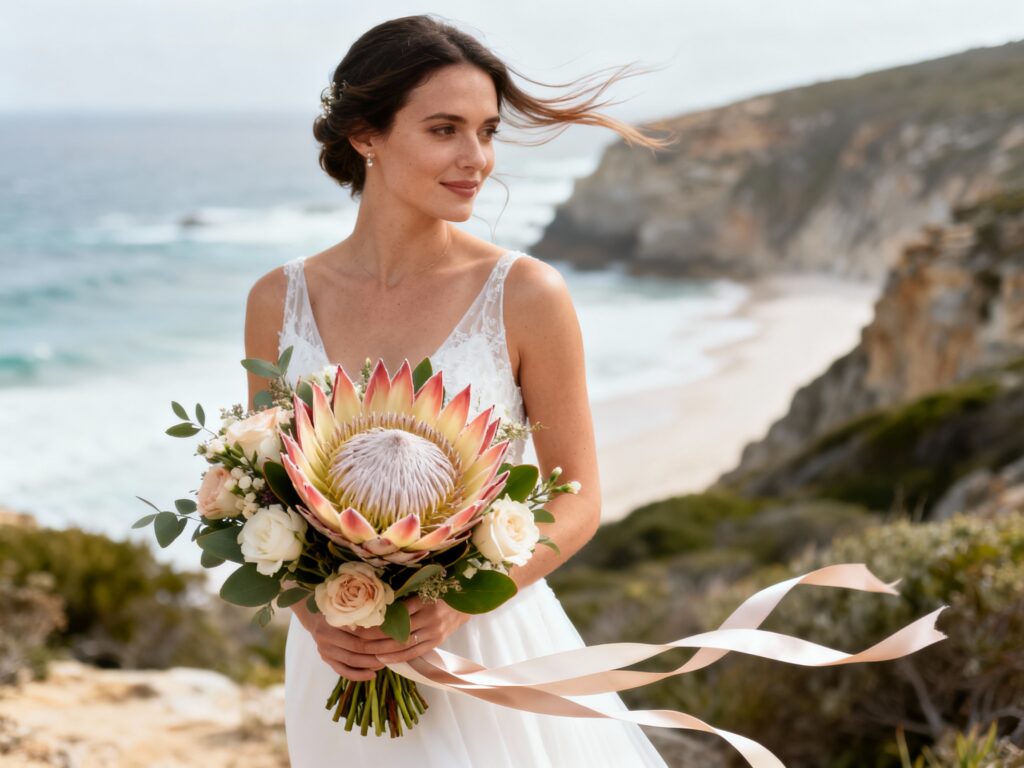
How to Style a Protea Bouquet for a Destination or Outdoor Wedding
Proteas are that rare combo of “wildly unique” and “effortlessly elegant”—which is exactly why they shine at destination and outdoor weddings. Whether you’re saying “I do” on a beach, in the mountains, or in a garden that feels straight out of a romance novel, here’s how to style a protea bouquet so it looks intentional, photographs beautifully, and holds up in real-life weather.
Why Proteas Are a Dream for Outdoor & Destination Weddings
Proteas (especially king protea and pincushion protea) have a sculptural shape that reads bold from far away—perfect for wide landscape photos and ceremony setups with big views. They’re also naturally hardy, which makes them a smart choice for travel days, warm climates, and long wedding timelines. Their vibe is “modern botanical,” and they pair well with everything from minimal silk gowns to lace and dreamy veils.
Step 1: Pick the Protea Style That Matches Your Location
Beach or tropical destination
Go for warmer tones and playful texture: king protea (pink or blush), pincushion protea (gold/orange), anthurium, orchids, and palm accents. Keep the bouquet airy so it feels breezy, not heavy.
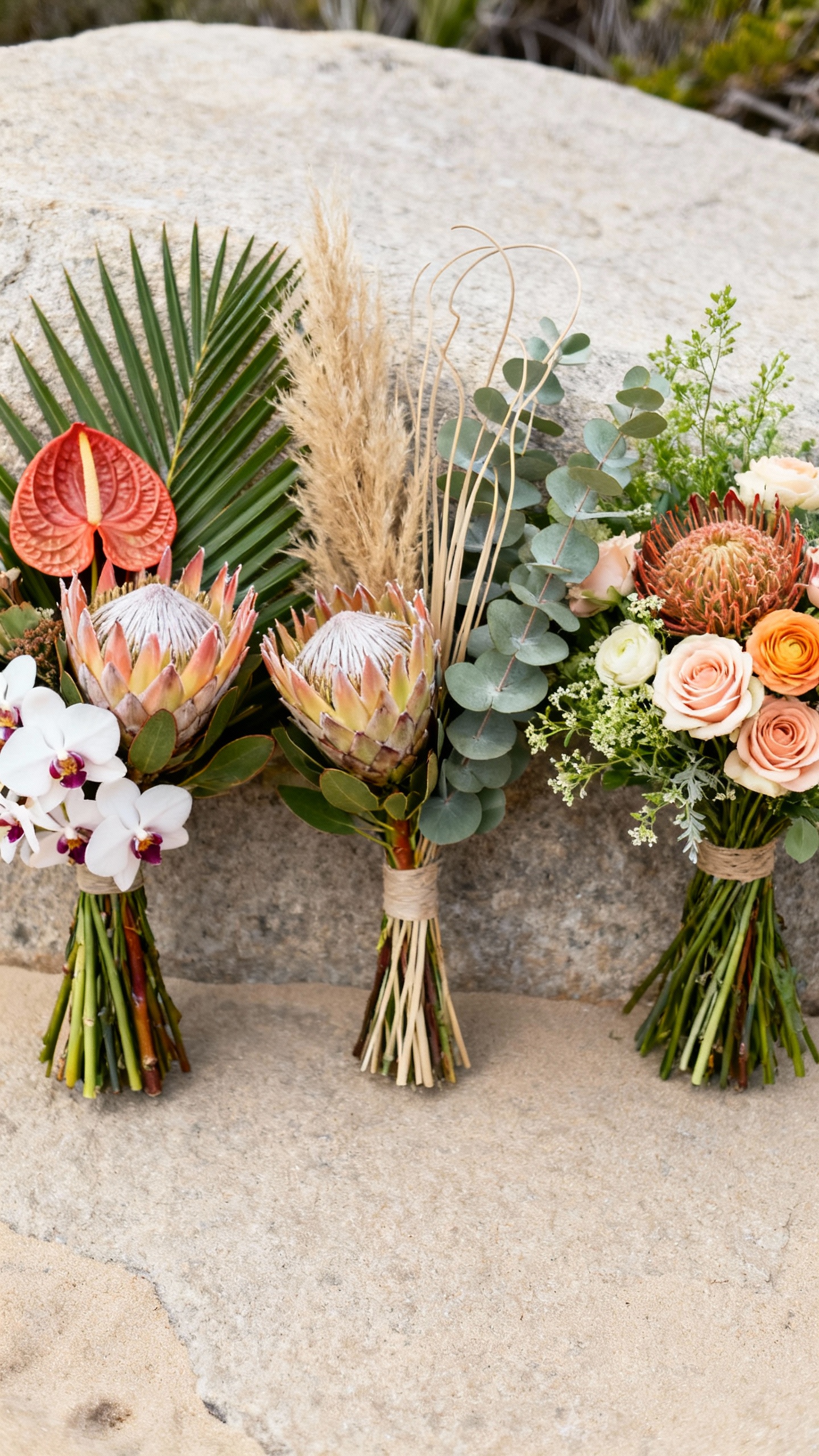
Mountain, desert, or modern elopement
Lean into graphic shapes: king protea with dried elements like pampas, billy balls, bunny tails, and bleached ruscus. Add a few sharp lines (like leucadendron) to match the landscape’s drama.
Garden or vineyard wedding
Soften the protea’s boldness with romantic supporting blooms: garden roses, ranunculus, lisianthus, and spray roses. Add greenery with movement like Italian ruscus or olive branches for that “just gathered” finish.
Step 2: Choose a Shape That Works in Wind, Heat, and Photos
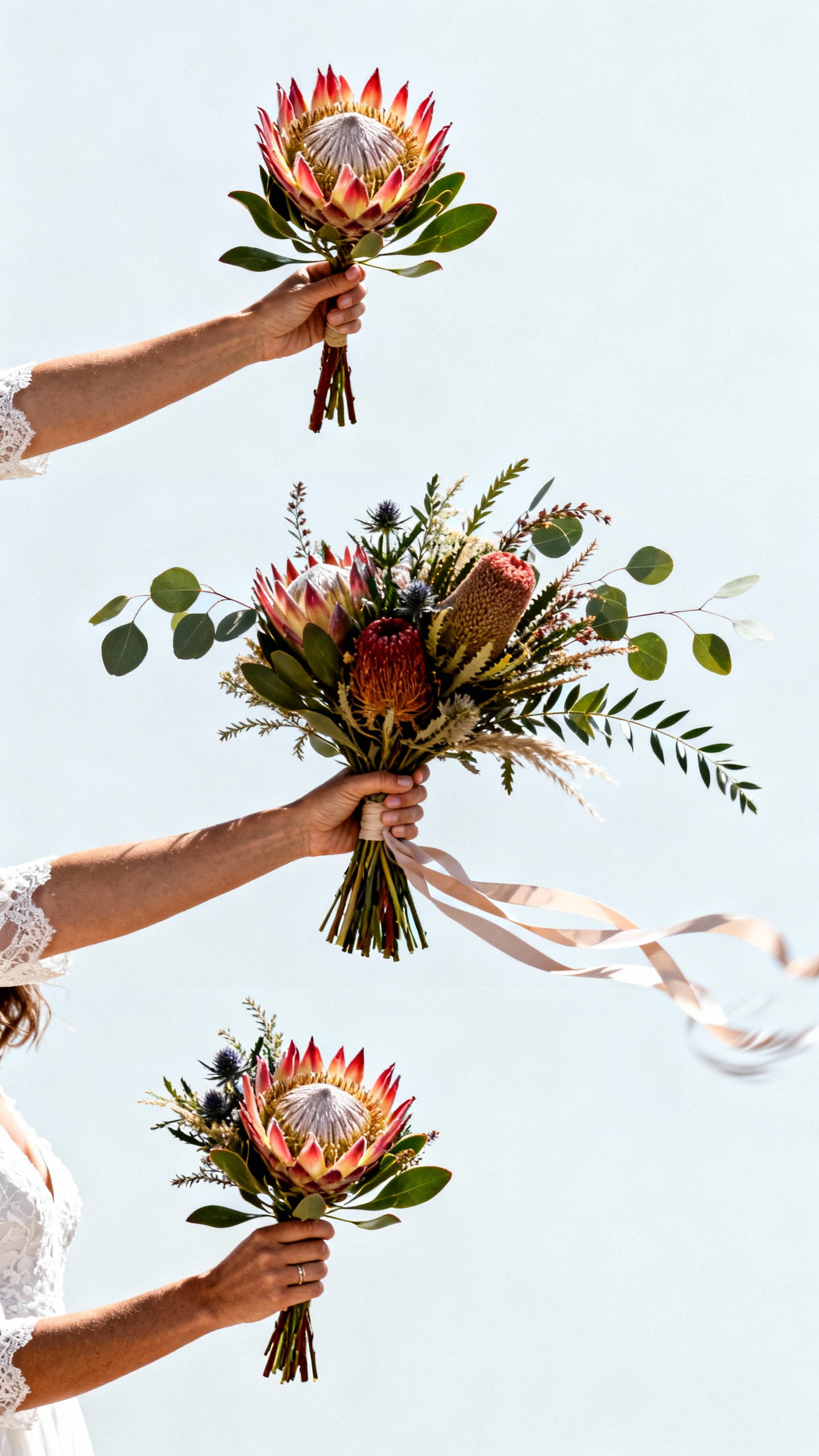
The “hero bloom” bouquet (best for minimalists)
One large king protea as the star, surrounded by a tight supporting cast. This reads editorial and won’t get messy in wind. Ask your florist to keep stems clean and the silhouette slightly oval for a modern look.
The wild, asymmetrical bouquet (best for boho vibes)
Proteas were basically made for asymmetry. Keep it controlled: one side longer, one side fuller, and a clear focal point (the protea). Request sturdier greens so it doesn’t flop mid-ceremony.
The compact handheld (best for travel + ease)
If you’re traveling with your bouquet or having a long outdoor day, smaller is smarter. A compact bouquet still looks luxe when it’s built with high-impact blooms like protea and anthurium.
Step 3: Build a Color Palette That Feels Elevated (Not Random)
Proteas have a lot going on visually, so a clear palette is your best friend. Choose one main color family and one accent.
- Soft & romantic: blush protea, ivory roses, cappuccino roses, dusty miller.
- Sunset destination: coral protea, golden pincushion, terracotta accents, warm greenery.
- Modern neutral: white protea, beige dried palms, taupe ribbon, olive branches.
- Moody outdoor: deep burgundy accents, chocolate cosmos, plum tones, smoky foliage.
Pro tip: pull one shade from your surroundings (sand, stone, greenery, ocean) so your bouquet looks like it belongs in the setting.
Step 4: Add Texture the Right Way (So Protea Stays the Star)
Texture is where protea bouquets get their magic—just don’t overcrowd the focal bloom. Aim for a mix of three texture types:
- Soft: ranunculus, roses, lisianthus, wax flower.
- Spiky/graphic: leucadendron, thistle, palm spears.
- Airy: jasmine vine, sweet pea, amaranthus (for drama).
Ask for negative space (little “breathing rooms”) so the bouquet photographs as intentional and not like a flower traffic jam.
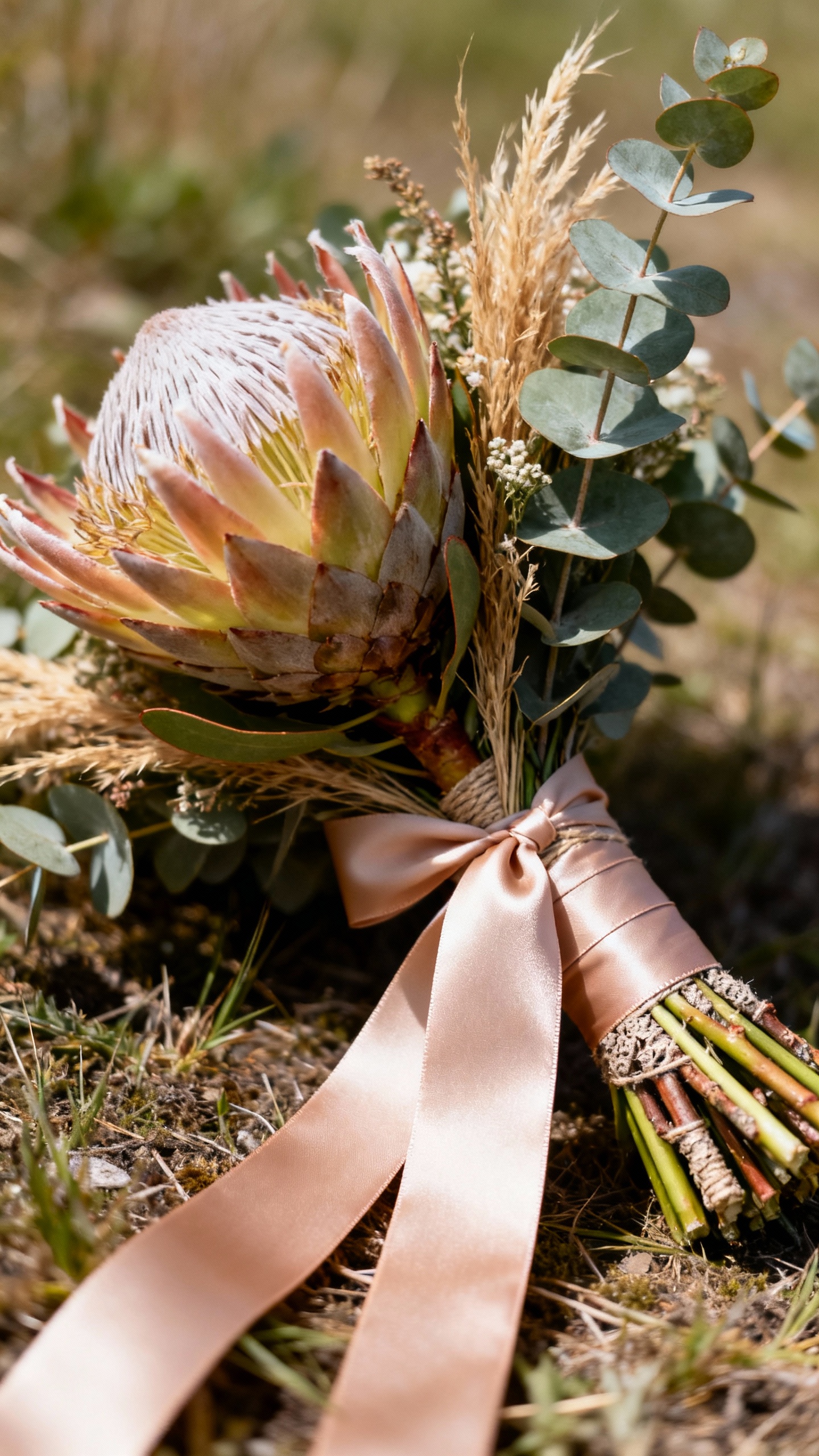
Step 5: Pick a Ribbon + Wrap That Survives the Outdoors
Ribbon is small but powerful—especially in destination photos where wind adds movement. Choose based on your environment:
- Windy beach: shorter ribbon tails or a silk ribbon with some weight.
- Hot climates: avoid anything that bleeds dye if it gets damp (sweaty hands happen).
- Rustic outdoor venues: raw silk, linen, or velvet for richer texture.
For the handle wrap, ask your florist for a tidy, water-resistant finish (floral tape under ribbon, neatly pinned). It keeps your grip secure and your photos polished.
Step 6: Travel + Weather Prep for a Destination Bouquet
Proteas are sturdy, but they still deserve a game plan:
- Confirm sourcing: ask your florist what protea varieties are most reliable in your wedding month.
- Hydration plan: request a water source during transport (water tubes or a hydration pack around stems).
- Heat strategy: keep the bouquet indoors and cool until photos; avoid leaving it in a car.
- Wind plan: choose a more compact silhouette and fewer wispy greens if your ceremony is cliffside or beachfront.
Wrap-Up
A protea bouquet already brings the wow—your job is to style it so it matches your location, holds up outside, and feels like you. Pick the right variety, keep the palette cohesive, and let texture work in layers. The result is bold, modern, and so destination-ready.
FAQ
1) Are protea bouquets good for hot weather weddings?
Yes. Proteas are naturally hardy, which makes them a solid choice for warm outdoor ceremonies—just keep them out of direct sun until you need them.
2) What flowers pair best with king protea for a destination wedding?
Anthurium, orchids, roses, and airy greenery (like olive or jasmine vine) pair beautifully and photograph well in bright, scenic locations.
3) How do I keep a protea bouquet from looking too “wild”?
Limit your palette, use negative space, and choose one clear focal protea. Ask for a controlled asymmetrical shape instead of “as many stems as possible.”
4) What bouquet shape is best for a windy outdoor ceremony?
A compact or “hero bloom” bouquet is easiest to manage in wind. Fewer trailing elements means fewer mid-ceremony tangles.
5) Can proteas work with a classic, elegant wedding aesthetic?
Absolutely. Style them with softer blooms (like ivory roses), keep the bouquet structured, and finish with a sleek ribbon for a refined look.