
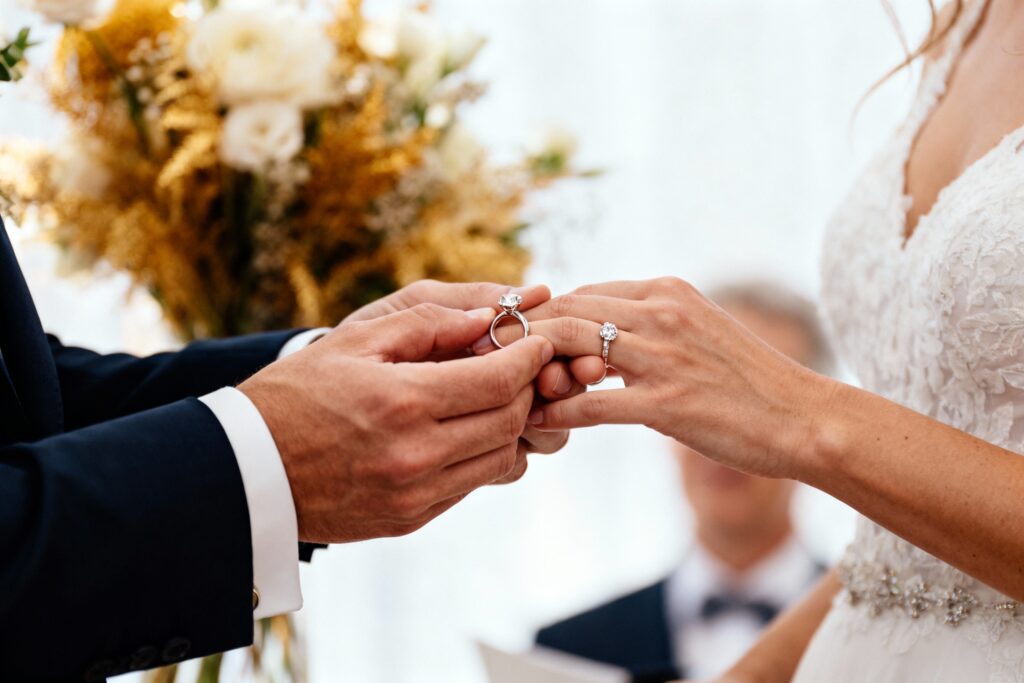
The ring exchange lasts minutes, but those photos live forever on mantelpieces, feeds, and phone lock screens. You want images that feel effortless, not staged to death. The secret?
A little planning, zero stiffness, and a photographer who knows when to lead and when to vanish. Let’s map out ideas that actually capture the energy, the nerves, and the “oh wow” of your ring ceremony.
Set the Scene: Light, Space, and Vibes
Great photos start with a great setup. You don’t need a movie set, but you do need intentional choices.
- Choose flattering light: Aim for natural light.
Window light or outdoor shade gives soft, dreamy tones. Golden hour? Yes, please.
- Leave breathing room: Keep the ceremony area uncluttered.
Hide cables, move speakers, and tuck bags away.
- Create a focal point: Use an arch, florals, or a clean backdrop. Your photographer needs a “frame within a frame.”
Pro tip: The 10-foot rule
Give your photographer a clear 10-foot radius around the ring exchange. That space lets them move, crouch, and snag angles without photobombers.
The Pre-Ceremony Story: Build the Narrative
The best albums read like a story.
Start before the rings appear.
- Flat-lay of the details: Rings, invitation, boutonnière, vows, perfume, watch. Clean surface + soft light = chef’s kiss.
- Getting ready candids: Buttoning cuffs, final lipstick swipe, a quick hug with Mom. These quiet frames warm up the album.
- First look (optional): Private, emotional, and gives your photographer more time to play with angles.
Don’t forget the ring close-ups
Ask for macro shots of both rings on meaningful textures: lace, silk, flowers, a book page, or your handwritten vows.
Keep it simple and clean.
Ceremony Moments You’ll Kick Yourself for Missing
The ring exchange isn’t just “ring on, ring off.” Milk the moments around it.
- Approach and hands: The hand reach, the gentle shake, the “we got this” squeeze. Emotion hides in hands.
- The slide: Photograph from both angles if possible—one from the side, one over the shoulder. Real reactions beat posed smiles, every time.
- Eye contact: Hold it for an extra beat.
Your photographer needs a clean shot of your faces.
- The laugh and the tear: If someone cracks a joke or cries, let it happen. That’s the gold.
Positioning cheat sheet
– Face each other at a slight angle toward the audience (and camera), not fully perpendicular. – Lower your bouquet to your hip during the exchange. – Take a half-step closer than feels natural. Intimacy photographs beautifully.
Creative Angles That Don’t Feel Cheesy
You can keep things classic while sneaking in fresh perspectives.
- Over-the-shoulder: One partner’s shoulder in foreground, the ring slide in focus.
Dramatic and romantic.
- Reflections: Mirrors, windows, even a polished table. Reflections create “double-take” shots.
- Foreground blur: Florals or guests subtly out of focus in front, with you two tack sharp.
- Symmetry and leading lines: Aisles, arches, staircases. Your photographer should use architecture to frame you.
Black & white magic
Convert a handful of emotional frames to black and white.
You’ll strip out distractions and spotlight expressions. IMO, every album needs at least 3–5 B&W ceremony shots.
Involve the People: Reaction Shots That Matter
The audience isn’t background—they’re part of the story.
- Parents and grandparents: Ask for dedicated reaction coverage during vows and ring exchange.
- Kids being kids: Flower girls staring at the rings? Ring bearer yawning?
Keep those. They’re hilarious and honest.
- Friends’ cheers: Capture the whoops and teary claps right after the exchange.
Micro-moments to request
– A shot of your best friend holding the ring box. – Linking arms with a sibling or grandparent post-exchange. – The quick “we did it” look at each other before the kiss.
After the Rings: Portraits Without the Stiffness
Once the rings are on, grab portraits while emotions run high. You want energy, not mannequin vibes.
- Movement wins: Walk hand-in-hand, spin slowly, slow-dance without music.
Movement loosens faces.
- Prompts over poses: “Whisper what you’ll order at 2 a.m. after the party.” The smiles? Instant and real.
- Close-up hands: Interlaced fingers showing both rings, resting on a bouquet or jacket lapel.
Group portraits, but faster
– Make a short list (family, VIP friends). – Assign one “wrangler” who knows names. – Shoot by light source, not just backdrop. FYI, bright shade beats a pretty wall with harsh sun.
Play With Props and Personal Touches
Props can elevate, not distract, when you keep them intentional.
- Heirloom elements: A grandparent’s handkerchief, a locket tied to the bouquet, a vintage ring box.
- Confetti or petals: Save them for the recessional or a celebratory kiss after the exchange.
- Champagne pop: A mini celebration photo right after the ceremony keeps the vibe euphoric.
Signature shots to consider
– Rings balanced on your invitation typography. – Hands with rings resting on a piano, book, or meaningful object. – A silhouette kiss with the rings catching a hint of light.
Lighting Hacks for Irresistible Glow
You don’t need film-school lighting—just a few smart choices.
- Golden hour ceremony: Soft, warm light minimizes shadows and makes skin tones sing.
- Backlight the moment: Position the sun behind you for a halo effect.
Your photographer should expose for faces.
- Indoor fix: Turn off mixed lighting (yes, those orange downlights). Use window light or a single, consistent source.
Night shots you’ll love
– Step outside for 5 minutes post-ceremony. – Add a tiny backlight for a glow around you two. – Include twinkle lights or candles for atmosphere. Romantic?
Absolutely.
Workflow That Keeps You Present (And Still Gets the Shot)
You want beautiful photos without spending your entire day posing. Here’s how.
- Make a mini shot list: 10 must-have moments max. Trust the photographer for the rest.
- Build buffer time: Add 10 extra minutes before the ceremony for details and ring shots.
- Communicate roles: Tell your officiant to step aside during the ring slide for a clean frame.
It matters.
- Plan the kiss: Hold it for 2–3 seconds. Let your photographer nail multiple angles.
FAQ
How many ring ceremony photos should I expect?
Most couples receive 50–150 images that relate directly to the ceremony, including details, reactions, the exchange, and post-ceremony portraits. It depends on your timeline and how much you build in for creative shots.
Do we need a second photographer?
Not always, but it helps.
A second shooter can cover reactions and alternate angles simultaneously, especially in larger ceremonies or tighter spaces where moving stealthily isn’t possible.
What if our venue has bad lighting?
You can still get gorgeous photos. Ask your photographer to scout the space, bring off-camera flash, and find windows or doorways for natural light. Turn off mixed lighting and keep color temperatures consistent.
IMO, consistent light beats fancy decor every time.
How do we avoid awkward posing?
Use prompts and movement. Walk, sway, whisper jokes, tell each other what you’re most excited about for the night. Keep your hands connected—touch cues relax faces and guide natural expressions.
When should we schedule the ring details and flat-lays?
Have all your items gathered in one box before the photographer arrives: rings, box, invites, vow books, florals, jewelry, fragrance.
Allocate 20–30 minutes early in the day for flat-lays while hair/makeup finishes.
Should we get black and white photos?
Absolutely. B&W isolates emotion and simplifies busy backgrounds. Ask your photographer to convert a handful of key moments: the exchange, a tearful reaction, and one dramatic portrait.
Conclusion
You don’t need a hefty shot list or stiff poses to nail ring ceremony photos—you need intention, good light, and a few smart moves.
Prioritize emotion, leave room to breathe, and let your photographer chase the real moments. Do that, and you’ll have an album that feels like your day: a little sparkly, a little messy, and absolutely unforgettable.