
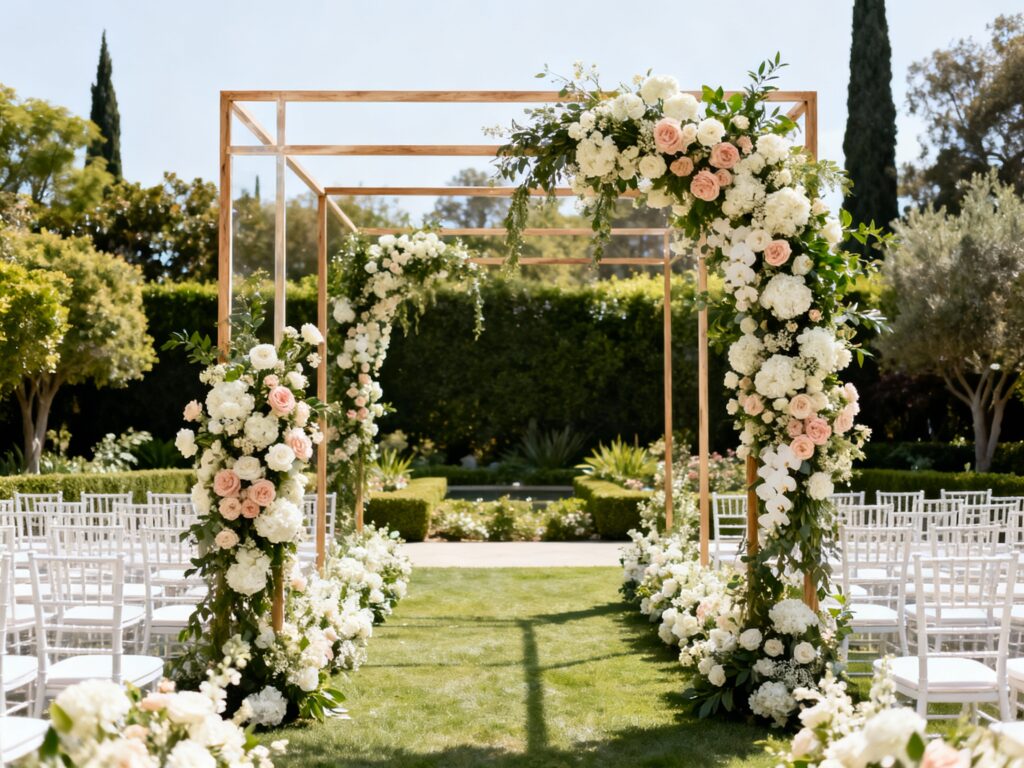
If you’ve ever seen a chuppah in photos and thought, “Okay cute from the front… but what about literally every other angle?”—same. Because between ceremony seating, the processional, and the way your photographer moves, your chuppah needs to look styled from the front, sides, and even the back.
These five chuppah flower ideas are designed to photograph beautifully in 360 degrees—so your aisle shots, wide ceremony shots, and those sneaky candids all feel intentional.
Top 5
1) Fully Wrapped Floral Frame (All Four Posts)
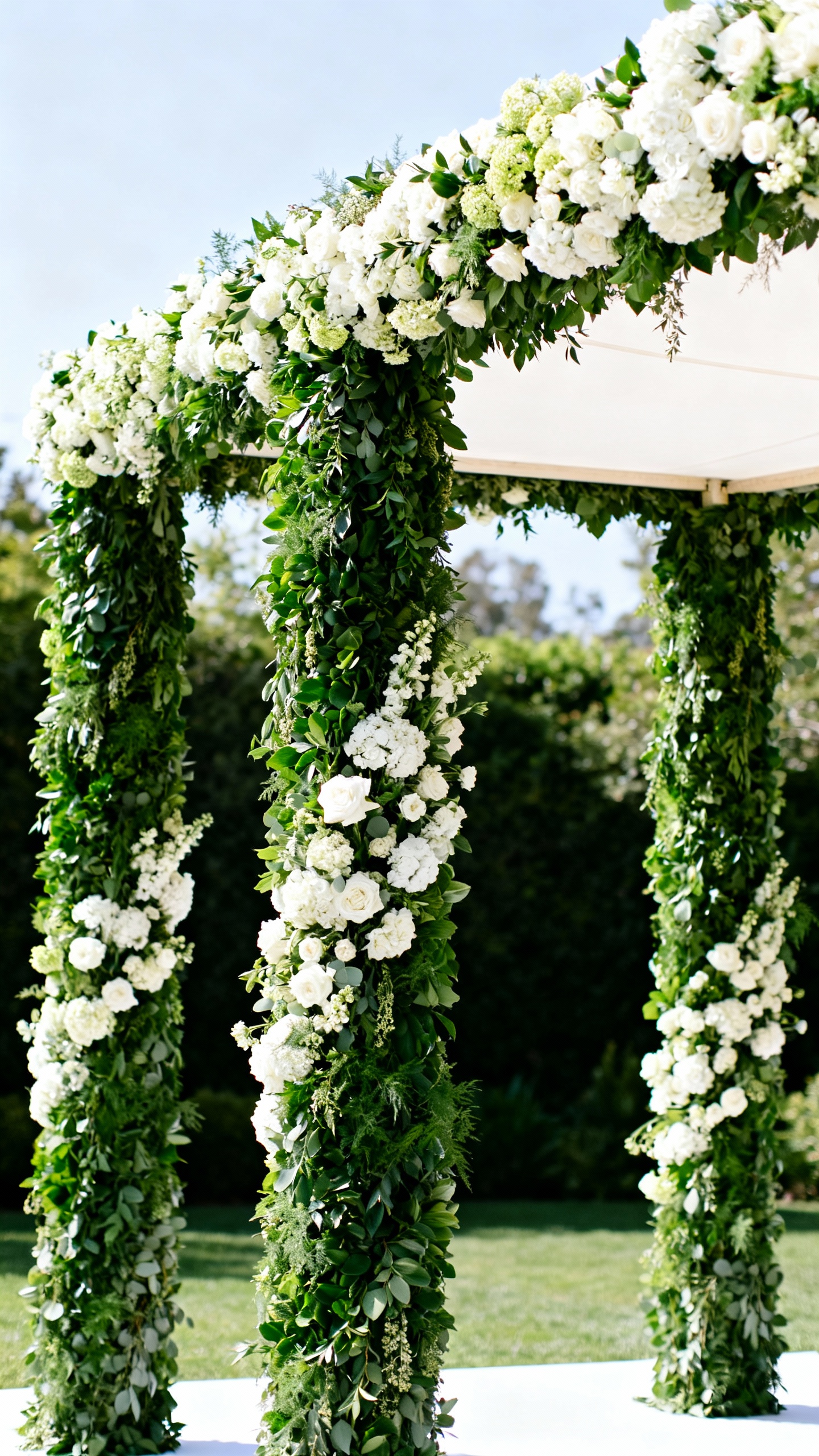
This is the “no bad angles” option: florals and greenery wrap each post and extend across the top. It reads lush from the aisle, but it’s also gorgeous from the sides where guests actually sit. Ask for a mix of textures (like garden roses + airy blooms) so it doesn’t look like one flat band of flowers in photos.
2) Asymmetrical Corner Swags (Two Corners, Full Coverage)
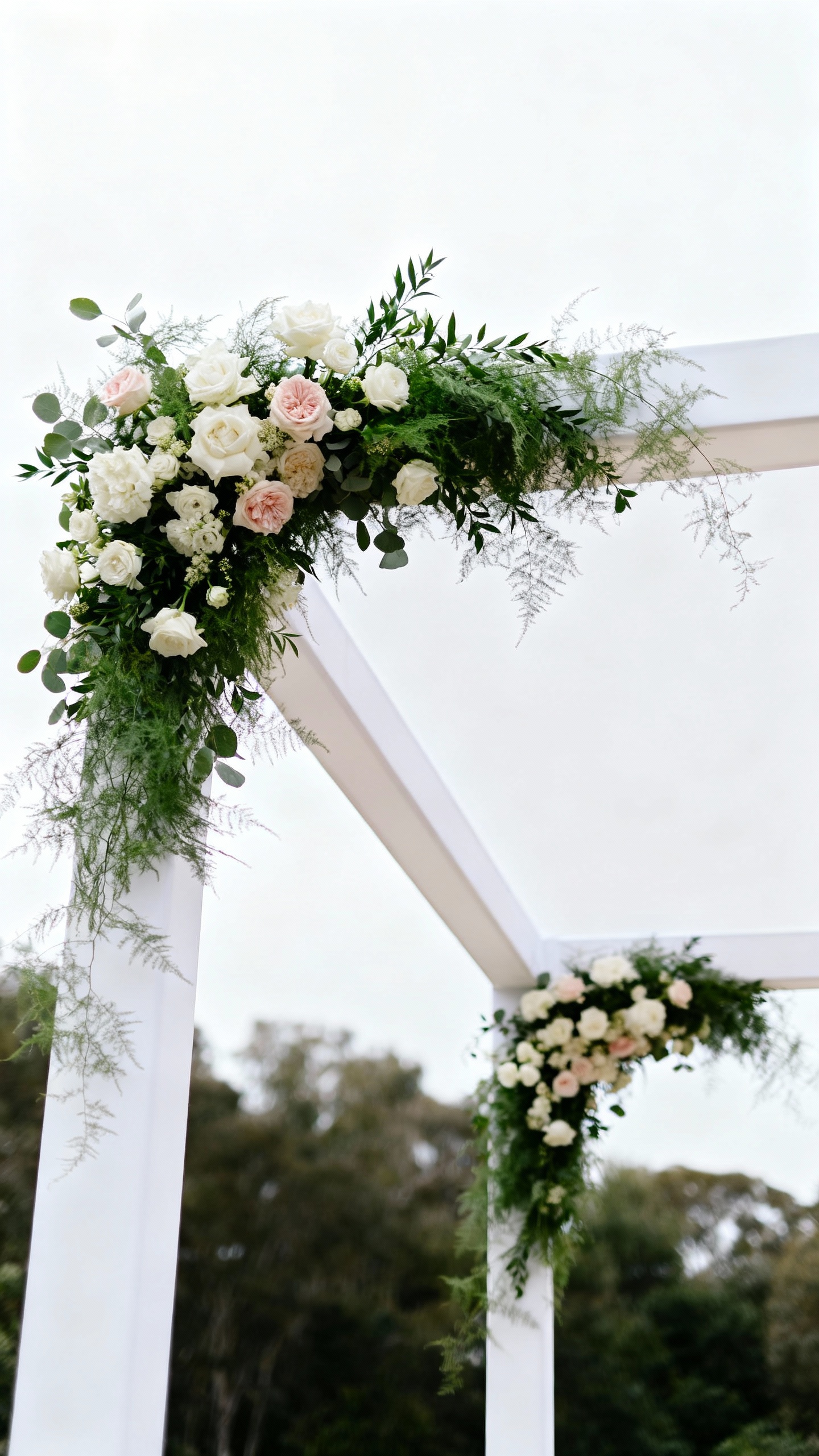
Instead of one heavy focal point, place statement swags on two opposite corners so every viewpoint gets a “moment.” It’s modern, a little editorial, and typically more budget-friendly than a full floral wrap. Pro tip: make sure your florist adds light touches on the “quiet” corners too, so the back view doesn’t feel bare.
3) Floral “Curtains” with Hanging Blooms
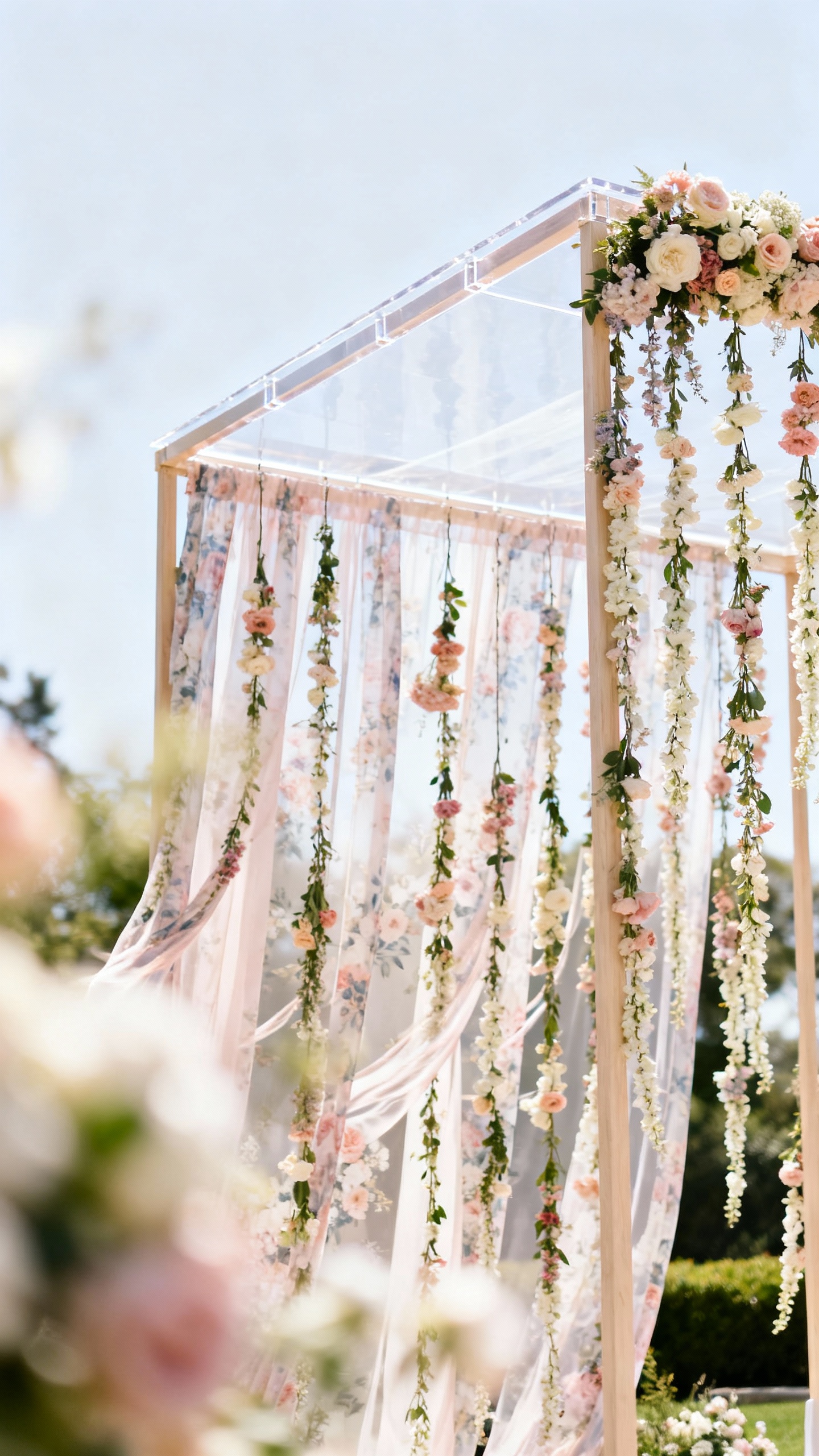
Hanging flowers (or floral garlands) create movement and depth, which looks incredible in wide shots and video. This works especially well with an acrylic or simple wood frame, because the florals become the main architecture. Choose blooms that hold up well out of water for the duration of your ceremony, and keep hanging pieces high enough so they don’t brush anyone’s hair during vows.
4) Meadow Base + Light Top Accent (Grounded Garden Look)
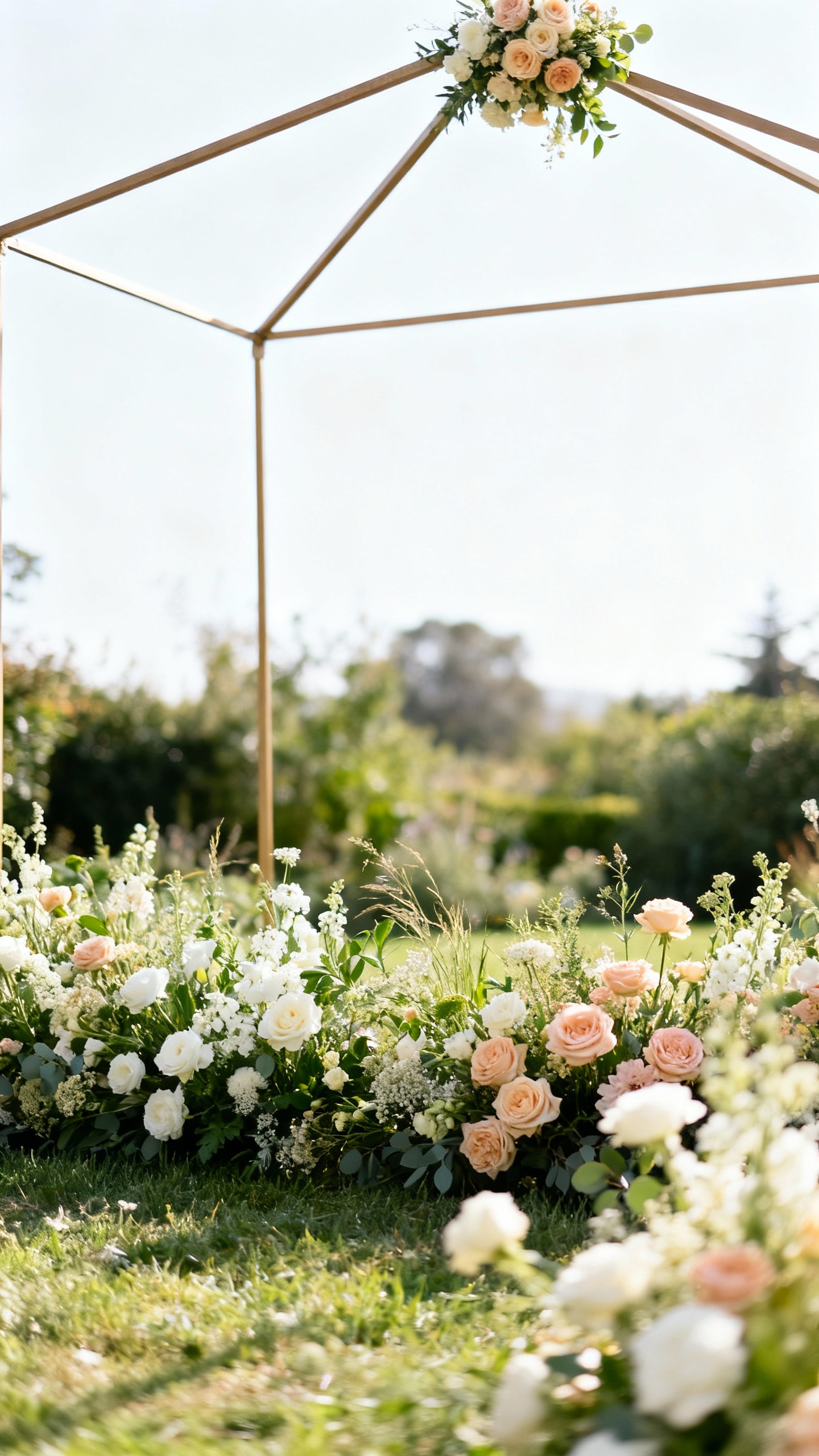
Build a “meadow” at the base of the chuppah with low arrangements on all sides, then add a smaller floral moment on top for balance. It photographs like you’re standing in a flower field—without blocking faces or feeling too heavy overhead. It’s also a smart way to repurpose: those ground pieces can move to the sweetheart table or head table after the ceremony.
5) Four Floral Pillars (Chuppah-Adjacent, Ultra Photogenic)
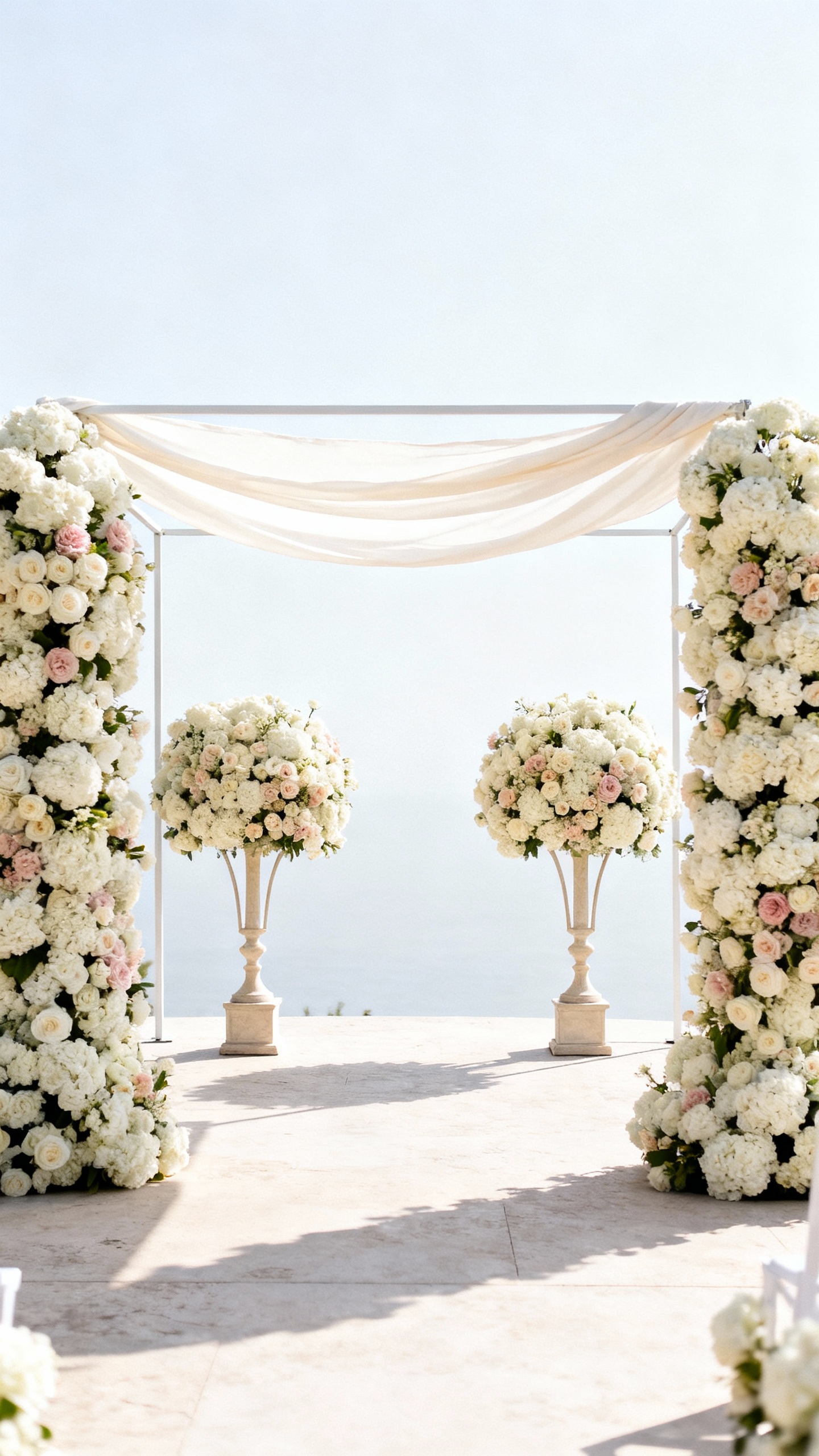
If you want a chuppah vibe but with maximum flexibility, place four floral pillars (or large arrangements on stands) at the corners and use a simple fabric tallit or canopy above. This looks stunning from every angle because the flowers are “in the round,” not stuck to one side of a frame. Bonus: it’s easier to adjust spacing for different ceremony layouts, especially outdoors on uneven ground.
FAQ
How do I make sure the chuppah looks good from the back (guest view)?
Design it as a 360-degree installation: add florals to all four posts, place small accents on the back corners, and avoid having one “hero” arrangement that only faces the aisle. If you’re doing asymmetry, balance it with lighter touches so the back doesn’t read empty in wide shots.
What flowers hold up best for chuppahs, especially outdoors?
Ask for sturdy blooms like roses, spray roses, carnations (modern varieties are gorgeous), orchids, and chrysanthemums, plus hardy greenery like ruscus or salal. Very delicate flowers can wilt in heat or wind, so your florist may use them sparingly or in shaded areas.
How far should the flowers extend so it looks full in photos?
Aim for at least 18–24 inches of floral “presence” on featured areas (like corner swags), with smaller supporting accents elsewhere. For wrapped posts, consistent coverage from about waist height to above eye level tends to read lush without swallowing the structure.
Can chuppah flowers be reused at the reception?
Yes—plan for it from the start. Meadow bases, aisle clusters, and pillar arrangements are the easiest to move to the reception for your sweetheart table, bar, escort display, or lounge areas; heavily attached top pieces are harder but still possible with the right mechanics.
What’s the best chuppah flower idea for a smaller budget?
Asymmetrical corner swags or a meadow base with a light top accent usually give the most “wow” per stem. You’ll get dimension and photo impact without paying for full coverage across the entire frame—just make sure there are small touches on every side so it still feels intentional from all angles.