
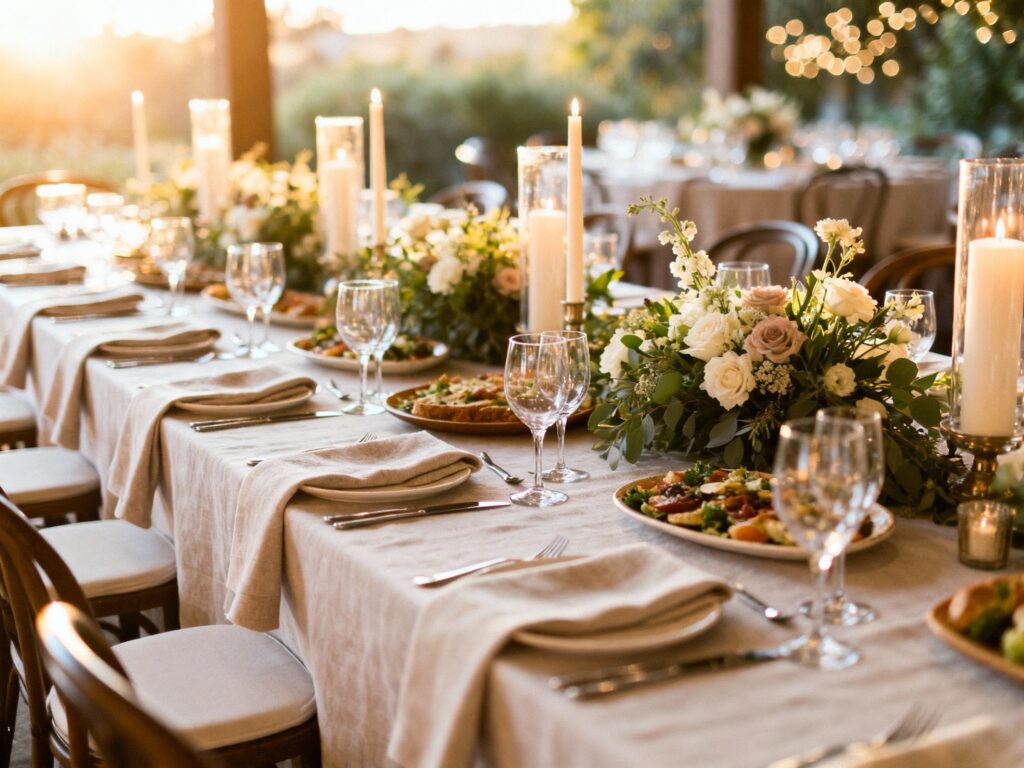
Family-style dinner is having a moment, and honestly, it deserves it. It’s warm, social, and feels like a celebration instead of a staged event.
The key is making it look intentional: thoughtful table layouts, elevated linens, and serving pieces that feel curated (not cafeteria). Here are five family-style dinner wedding setups that look high-end while still keeping that “everyone’s together” energy.
Top 5
1) Long King’s Tables With Layered Linens

Go all-in on one continuous, family-style vibe with long tables, then elevate it with layered textures: a base linen, a gauzy runner, and napkins in a complementary tone. Keep place settings consistent (same charger or same plate) so the tablescape reads polished even with shared platters. Add low, elongated centerpieces so guests can actually see each other across the table.
2) Round Tables With Shared “Lazy Susan” Center Platters

If you love family-style but want a classic reception look, round tables work beautifully—especially with a shared centerpiece platter moment in the middle. Use a wide, low arrangement (greens + candles) and tuck serving bowls around it so guests can reach without awkward passing. Bonus: it photographs super luxe from above, and it keeps conversation flowing in every direction.
3) Farmhouse Tables With Tonal Ceramics and Mixed Flatware

Farmhouse tables can look elevated when you lean into a curated “collected” style: tonal ceramics (think all whites/creams) and mixed metal flatware in the same finish family. Keep the color palette tight so the mix feels intentional, not random. Family-style platters look extra special on wood when you choose serving pieces with texture, like stoneware bowls or matte-glaze platters.
4) U-Shape or E-Shape Table Layout for a High-Design “Dinner Party” Feel

Want family-style to feel like a chic private dinner? Try a U-shape (or E-shape for larger counts) so the layout feels designed, not just “tables in rows.” This setup is amazing for toasts and speeches because it naturally creates a focal point while still keeping everyone connected. Style the inner edges with coordinated candles or bud vases so the shape reads clearly in photos.
5) “Coursed Family-Style” With Matching Serving Pieces Per Course

This is the elevated move: family-style serving, but in courses—salad, main, sides—each delivered in matching serving ware so the table stays cohesive. It feels like restaurant service while keeping the communal vibe. Ask your caterer to clear and reset platters between courses so the tablescape stays tidy (and your photos stay dreamy).
FAQ
Is family-style dinner more affordable than plated?
Not always. Family-style can sometimes cost similar to plated because it still requires staffing and timing, plus larger serving platters and portions. The “value” is more in the experience: it feels abundant, interactive, and cozy in a really elevated way.
How do I keep family-style tables from looking messy in photos?
Plan for “visual zones.” Keep centerpieces low and consistent, use matching (or intentionally coordinated) serving pieces, and ask your planner or catering captain to refresh platters and wipe table edges as needed. Also, build in a quick “room reveal” photo before guests sit, when the tables are perfectly set.
What centerpiece styles work best with shared platters?
Low and linear is the sweet spot. Think bud vases, compotes that sit under eye level, or greenery runners with tapered candles. Avoid tall, wide arrangements that block reach and sightlines—family-style should feel easy, not like an obstacle course.
How much table space should I plan for family-style serving?
Give yourself more breathing room than you would for plated. Wider tables (or slightly fewer decor elements) help shared bowls fit comfortably between place settings. If you’re using standard 60-inch rounds, consider slightly fewer guests per table so there’s space for platters without crowding.
What’s the best way to assign seats for family-style?
Assigned tables plus optional seats is a popular compromise, but for a truly elevated look, do assigned seats. It keeps the flow smooth, prevents awkward “who’s sitting where” moments, and helps caterers serve efficiently. If you’re mixing friend groups and family, alternate seats intentionally so conversation feels natural and inclusive.