
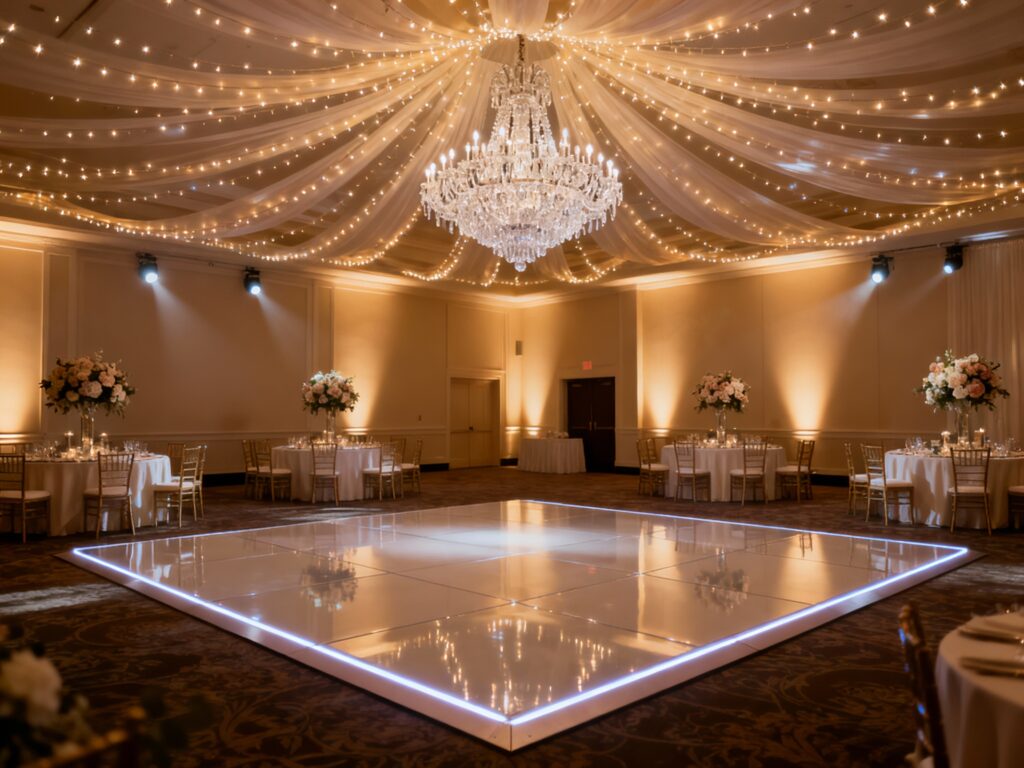
Luxury indoor reception lighting is the fastest way to make a space feel intentional, expensive, and totally unforgettable in photos. The best part? You don’t need a massive ballroom to get that “wow”—you just need smart layers and a plan.
Below are five lighting ideas that read high-end, work with most indoor venues, and photograph like a dream.
Top 5
1) Crystal Chandelier Moment (Real or Faux)
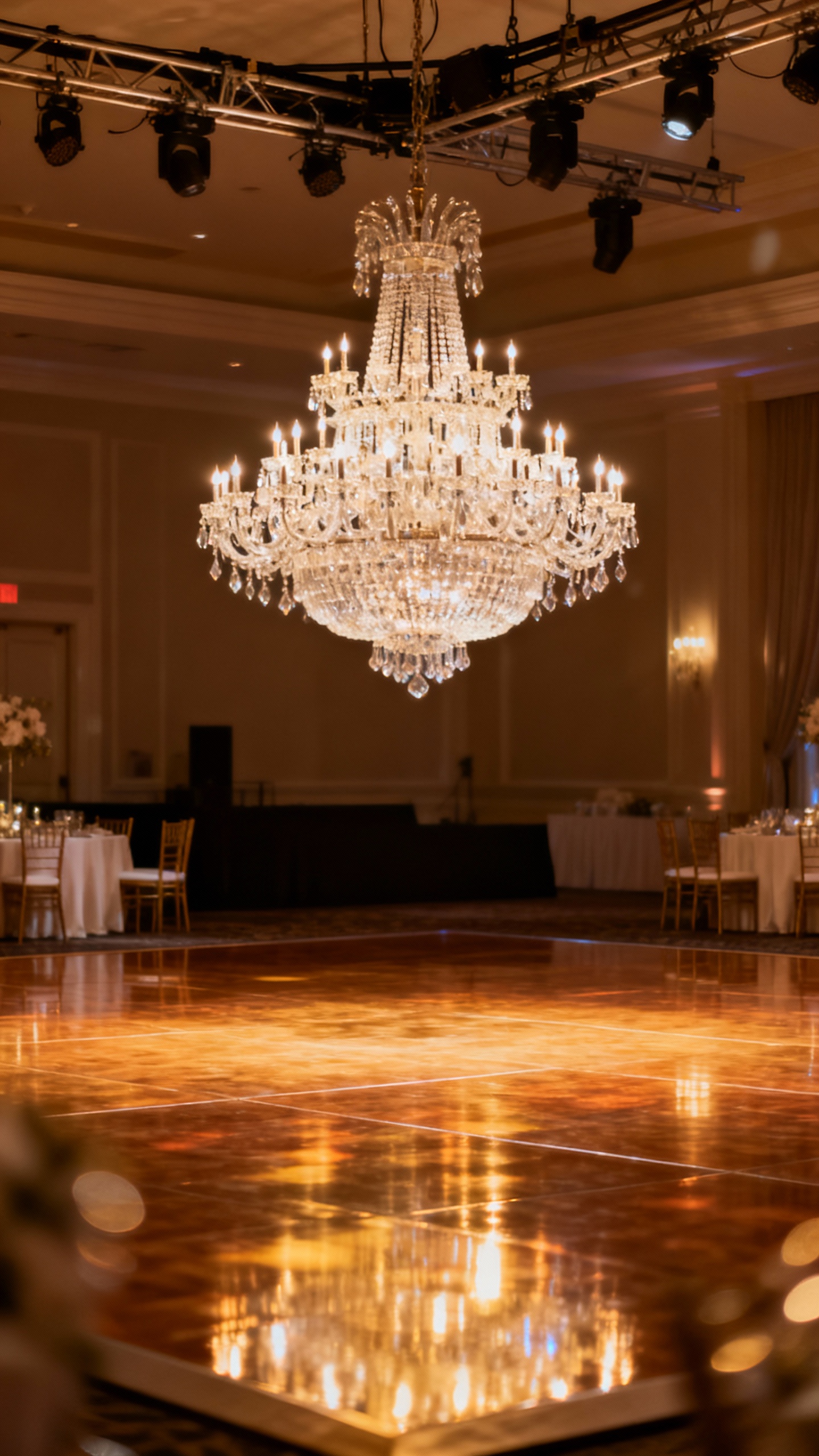
If you want instant luxury, nothing beats chandeliers—especially centered over the dance floor or head table. Ask your planner or lighting team about rigging points, ceiling height, and whether you can cluster multiple smaller chandeliers for a more editorial look. Pair them with warm dimming so the crystals glow (not glare) in photos.
2) Twinkle Light Canopy with Draping
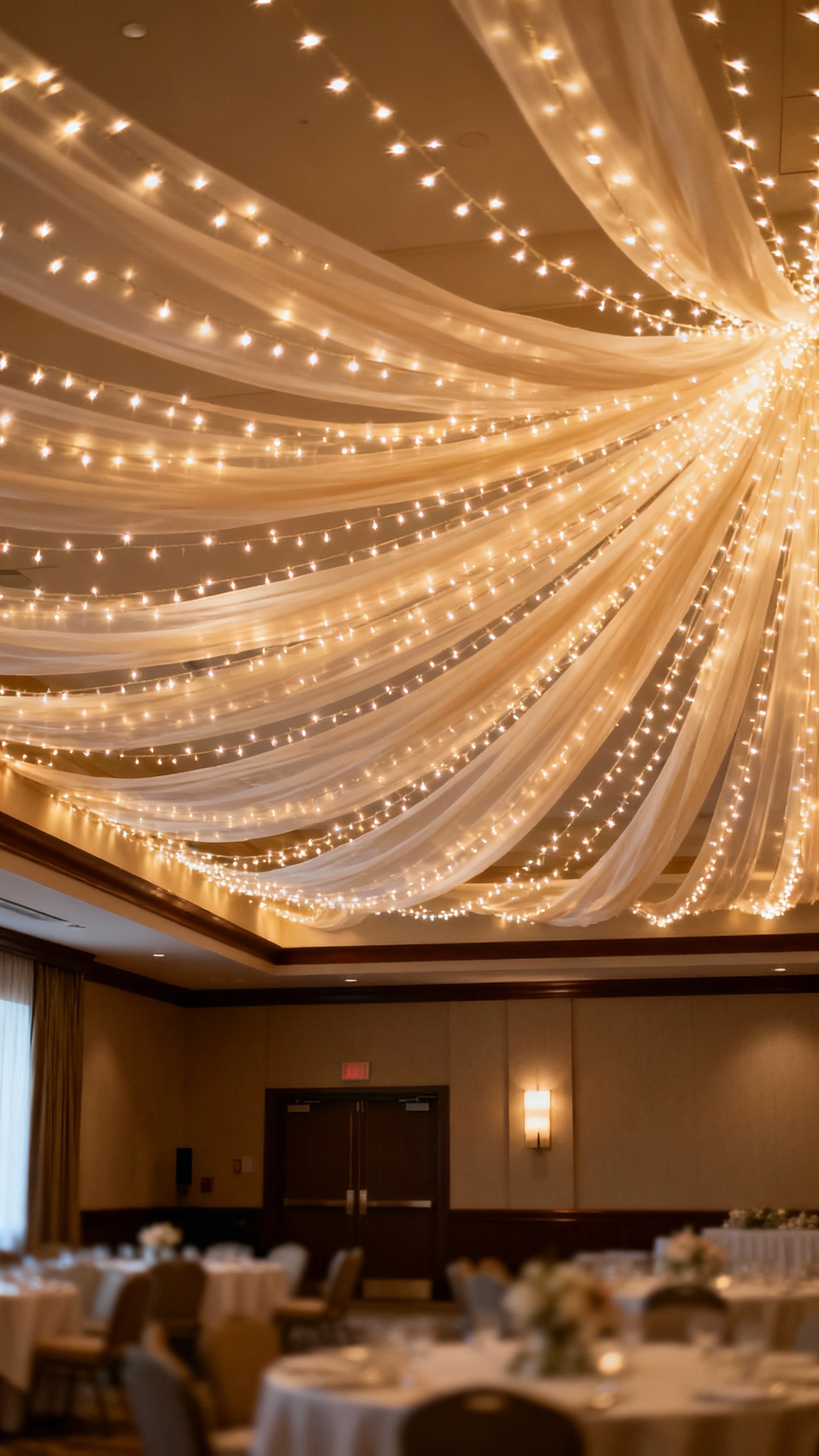
A ceiling canopy of fairy lights layered with soft draping gives “private estate” energy, even in a hotel ballroom. Keep the lights warm white (not cool) and request a dense pattern so it looks luxe instead of sparse. This is also a flattering option for guests because it adds sparkle without harsh shadows.
3) Pinspot Lighting for Centerpieces & Cake
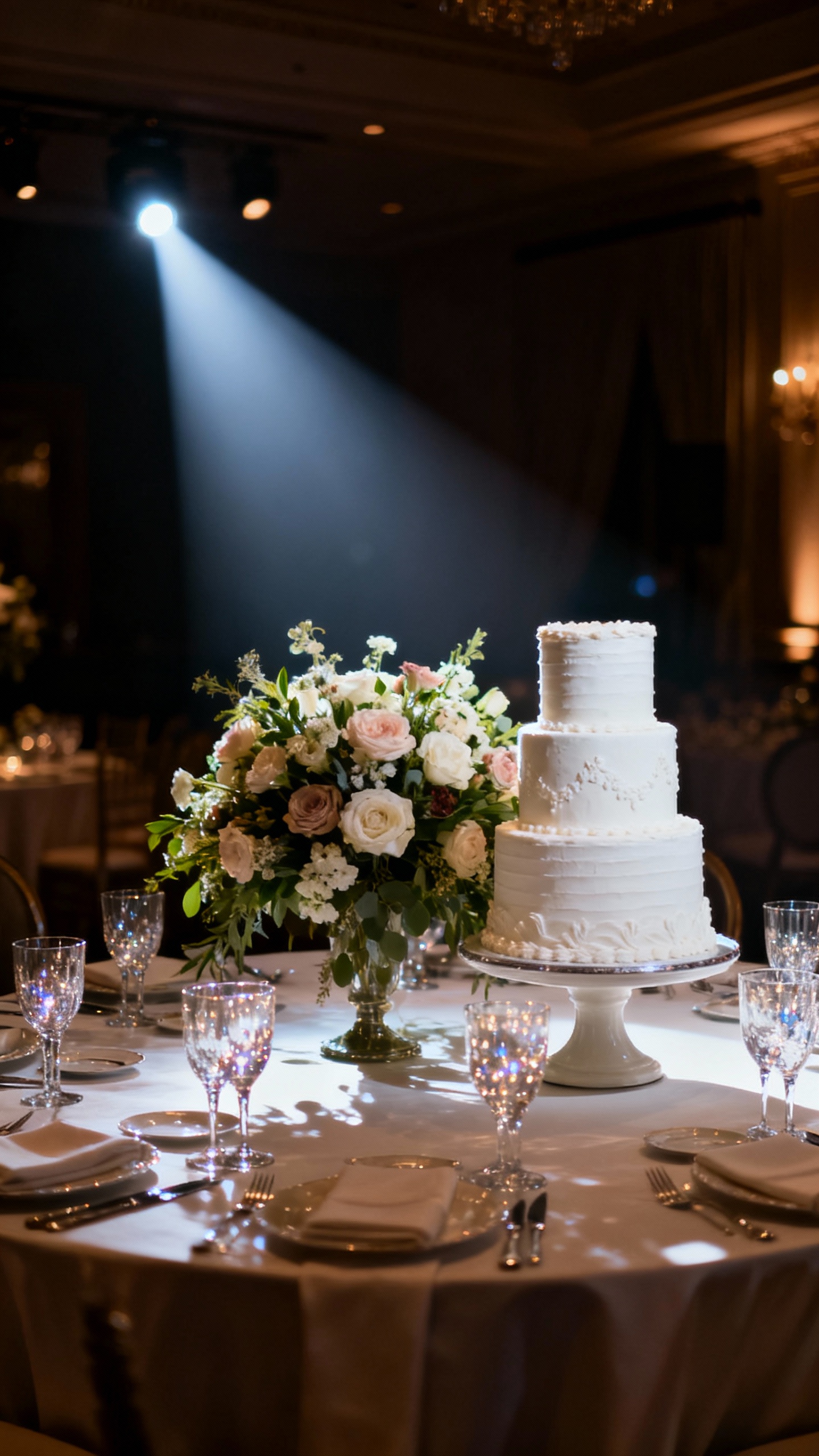
Pinspots are tiny, targeted spotlights that make your florals, place settings, and cake look museum-worthy. It’s one of the most underrated upgrades because it adds dimension and polish without changing the whole room. Pro tip: do pinspots on the cake and sweetheart table at minimum—those are the photos you’ll frame.
4) Color-Washed Walls in a Custom “Signature Glow”
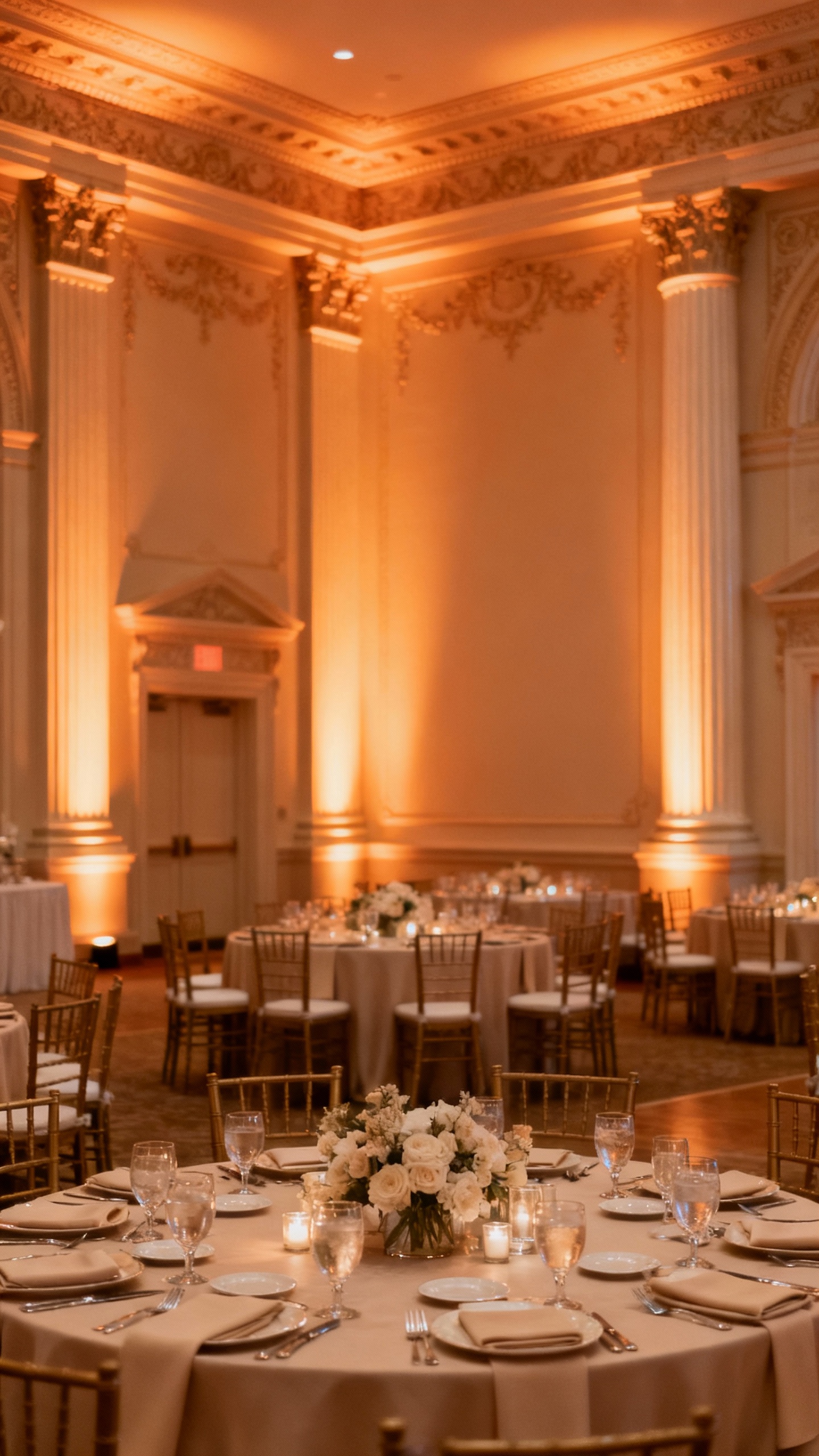
Uplighting is the secret to making an indoor space feel designed, not default. Choose one signature tone that matches your palette (think champagne, blush, soft amber, or a muted sage) and wash the perimeter walls evenly for a cohesive glow. Avoid super-saturated club colors—luxury reads as subtle, blended, and warm.
5) LED Dance Floor Lighting + Spotlight “First Dance” Setup
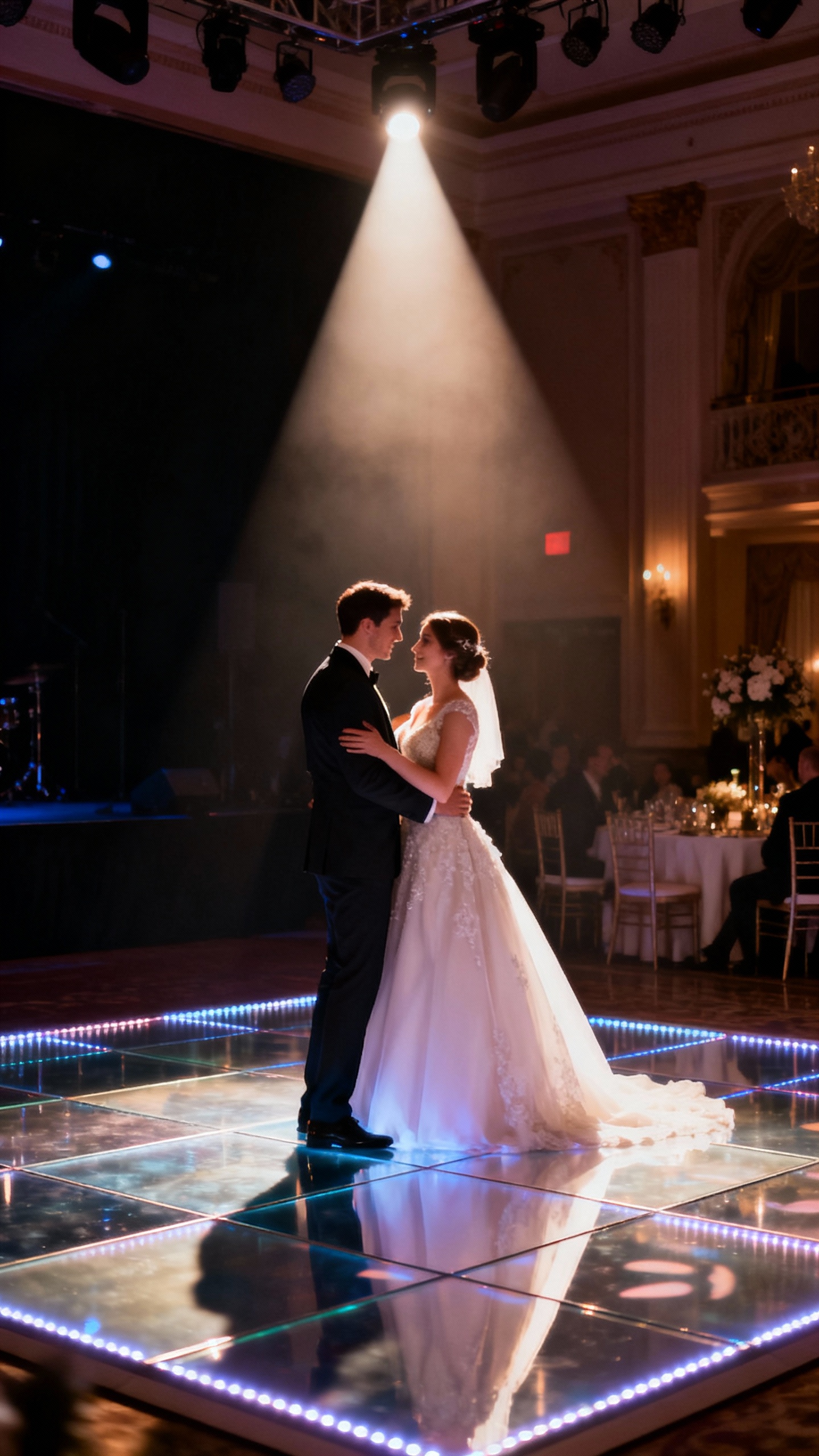
For a true luxury reception, treat the dance floor like a stage: a soft spotlight for the first dance plus controlled LED effects once the party starts. Ask for programmable lighting that can shift from romantic (slow fades) to energetic (movement and pattern) without looking chaotic. Your DJ, photographer, and lighting team should coordinate so the floor looks amazing on camera and still feels comfortable for guests.
FAQ
How do I make indoor lighting look “luxury” instead of like a banquet hall?
Layer your lighting: one hero feature (like chandeliers or a canopy), plus accent lighting (pinspots), plus ambient mood (uplighting). Keep everything warm-toned and dimmable so the room feels glowy, not harsh. The goal is depth and softness—no single light source doing all the work.
What color temperature should we choose for a high-end look?
Warm white is the move—typically in the 2700K to 3000K range. It’s flattering for skin tones, makes florals look richer, and reads romantic in photos. If your venue has cool overheads, ask your team to turn them off or dim them as low as possible.
Do pinspots actually matter if I already have candles on the tables?
Yes, especially in larger rooms where candlelight can disappear on camera. Pinspots highlight the height and texture of your centerpieces and create that dimensional, editorial look. They also help your tables stand out without needing bigger (and pricier) florals.
Will uplighting change the color of my flowers and dresses?
It can, which is why soft, neutral tones are safest if you’re worried. A gentle champagne or warm amber typically enhances most palettes without making whites look blue or greens look neon. Ask for a quick lighting test during setup so your photographer can confirm it photographs true-to-color.
When should we book a lighting designer for an indoor reception?
As soon as you have your venue and general design direction—ideally 6–9 months out for popular dates. Lighting affects everything from drape installs to floor plan to photo quality, so it’s a vendor that’s worth locking in early. Bring inspiration photos and your venue measurements so they can quote accurately.