
Spring wildflower bouquets are the moment: airy, romantic, and effortlessly “just picked.” The tricky part is keeping your palette soft and elevated—without drifting into colors that feel too kiddie or craft-store pastel.
These five color palettes give you that gentle spring vibe while still reading grown-up, chic, and wedding-ready in photos (and in real life, when you’re holding it all day).
Top 5
1) Buttercream + Blush + Sage
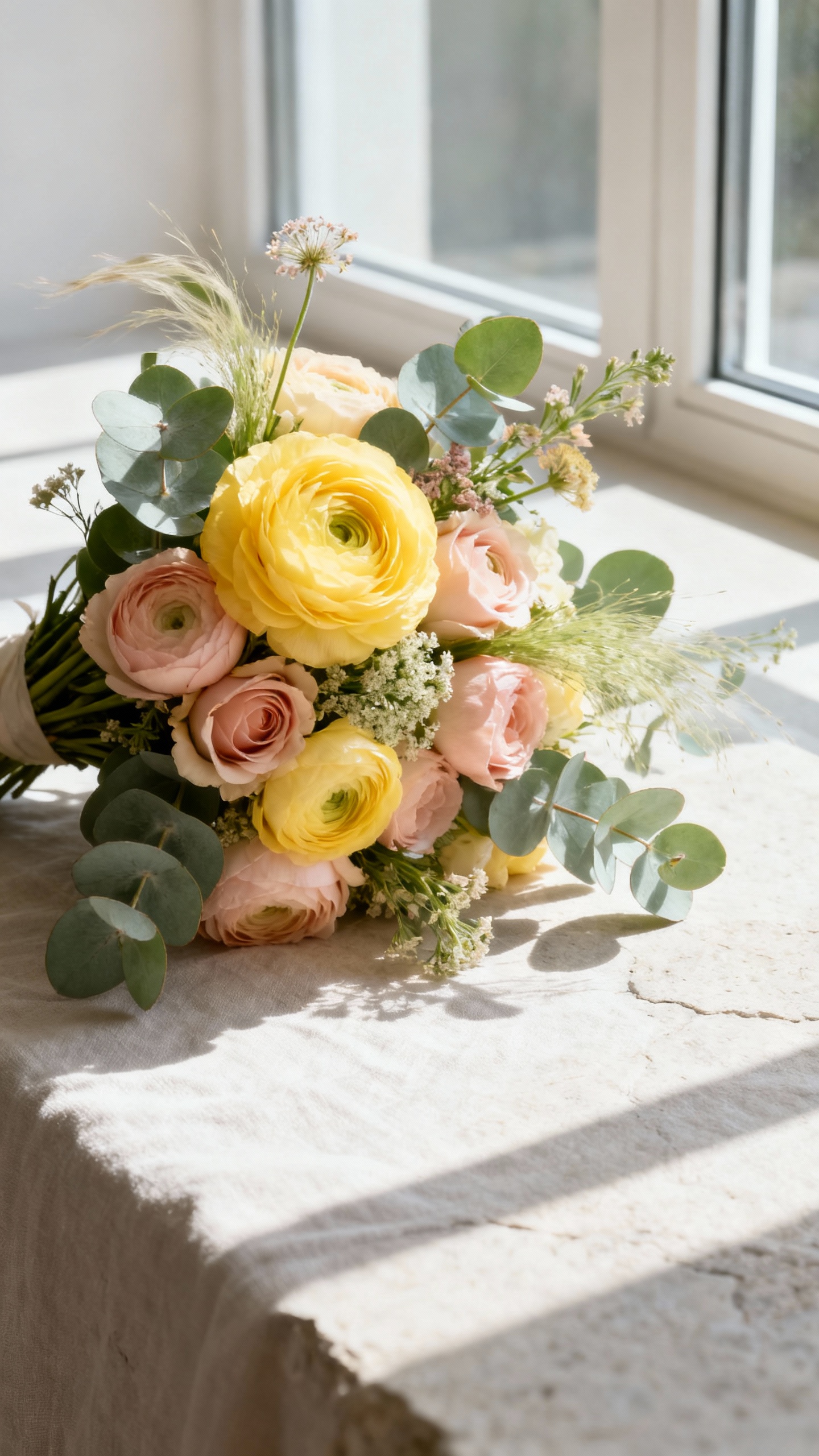
This is the “soft but sophisticated” classic: creamy yellow warms everything up, blush keeps it romantic, and sage adds that modern, grounded edge. Ask your florist for buttery ranunculus, blush garden roses, and wispy greenery like olive or eucalyptus to avoid anything too bright. This palette looks especially pretty with champagne bridesmaid dresses and warm ivory gowns.
2) Dusty Lavender + Cream + Silvery Green
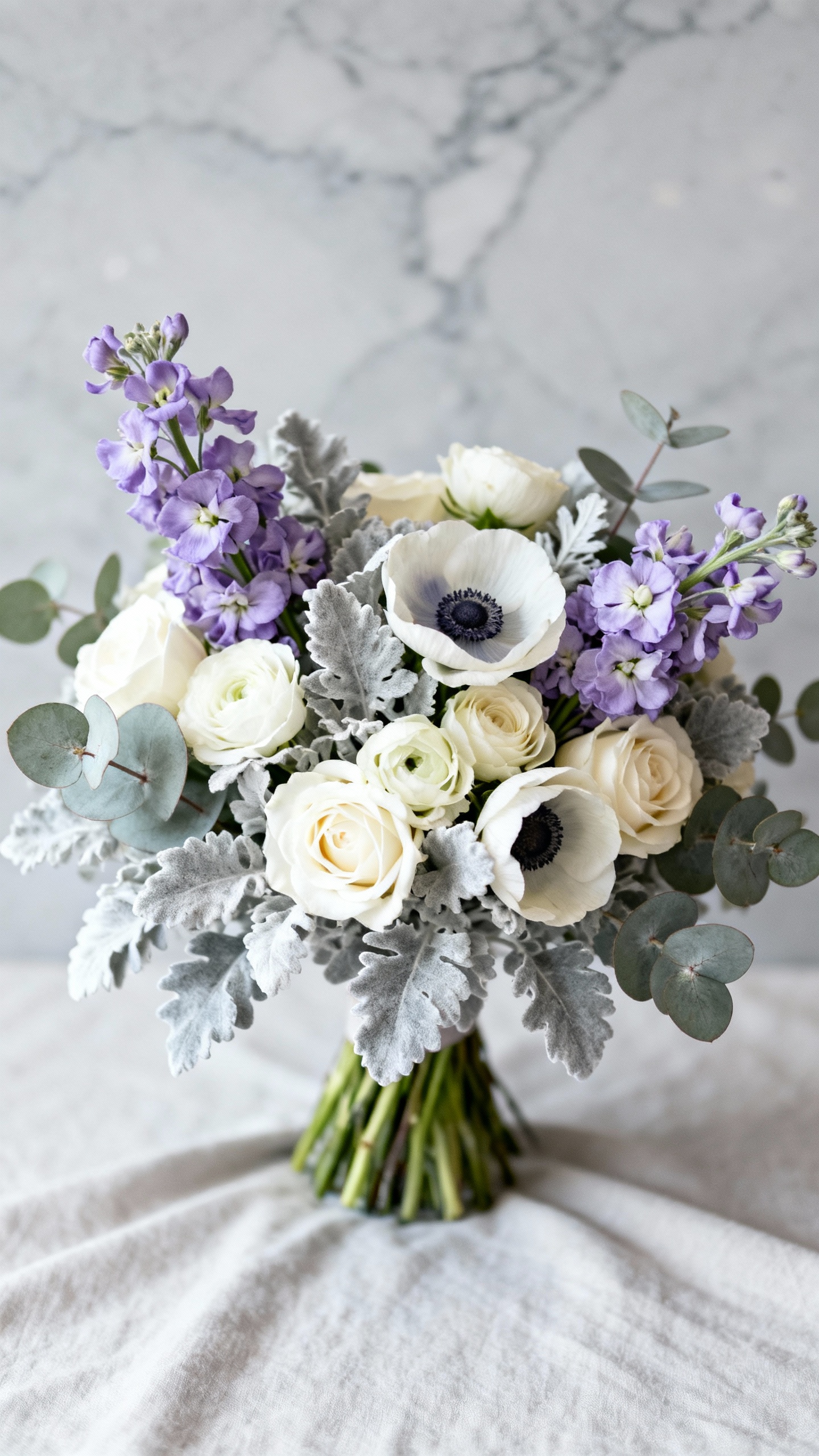
Lavender can swing childish fast—so go dusty, not candy. Pair it with creamy whites (think anemones, lisianthus, or roses) and silvery greens like dusty miller to keep it editorial. This palette photographs like a dream in soft spring light and feels extra elevated with a simple satin ribbon in ivory or taupe.
3) Peach + Apricot + Soft Terracotta + Ivory
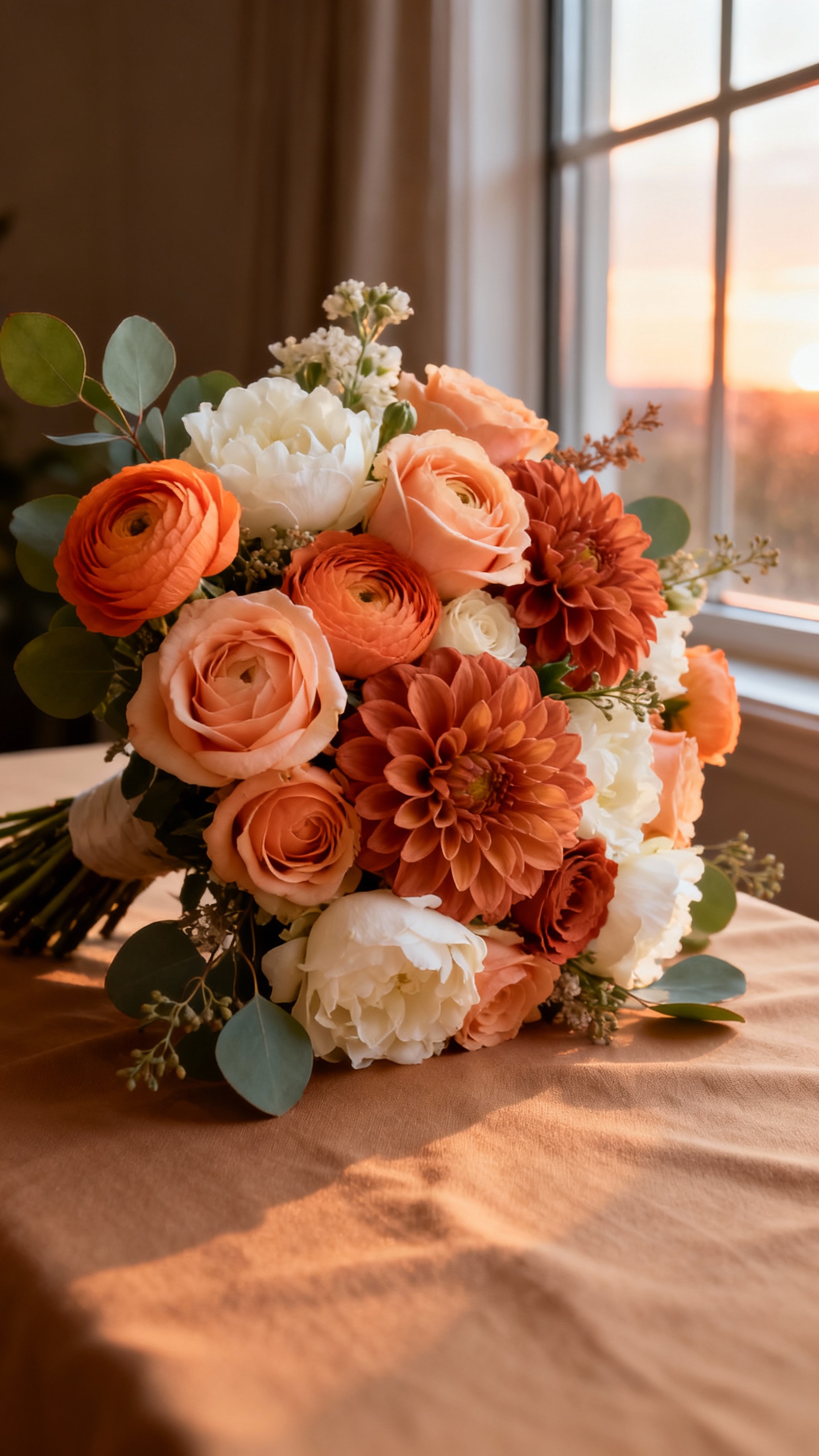
Peachy bouquets are flattering, cheerful, and still totally wedding-appropriate when you add a muted terracotta note. Keep the tones “sunset-y” instead of neon: apricot ranunculus, peach roses, and a few terracotta accents (dahlias in season, or toned carnations) with ivory blooms to calm it all down. It’s perfect for outdoor ceremonies and pairs beautifully with warm neutrals in your decor.
4) Pale Blue + White + Chamomile Yellow
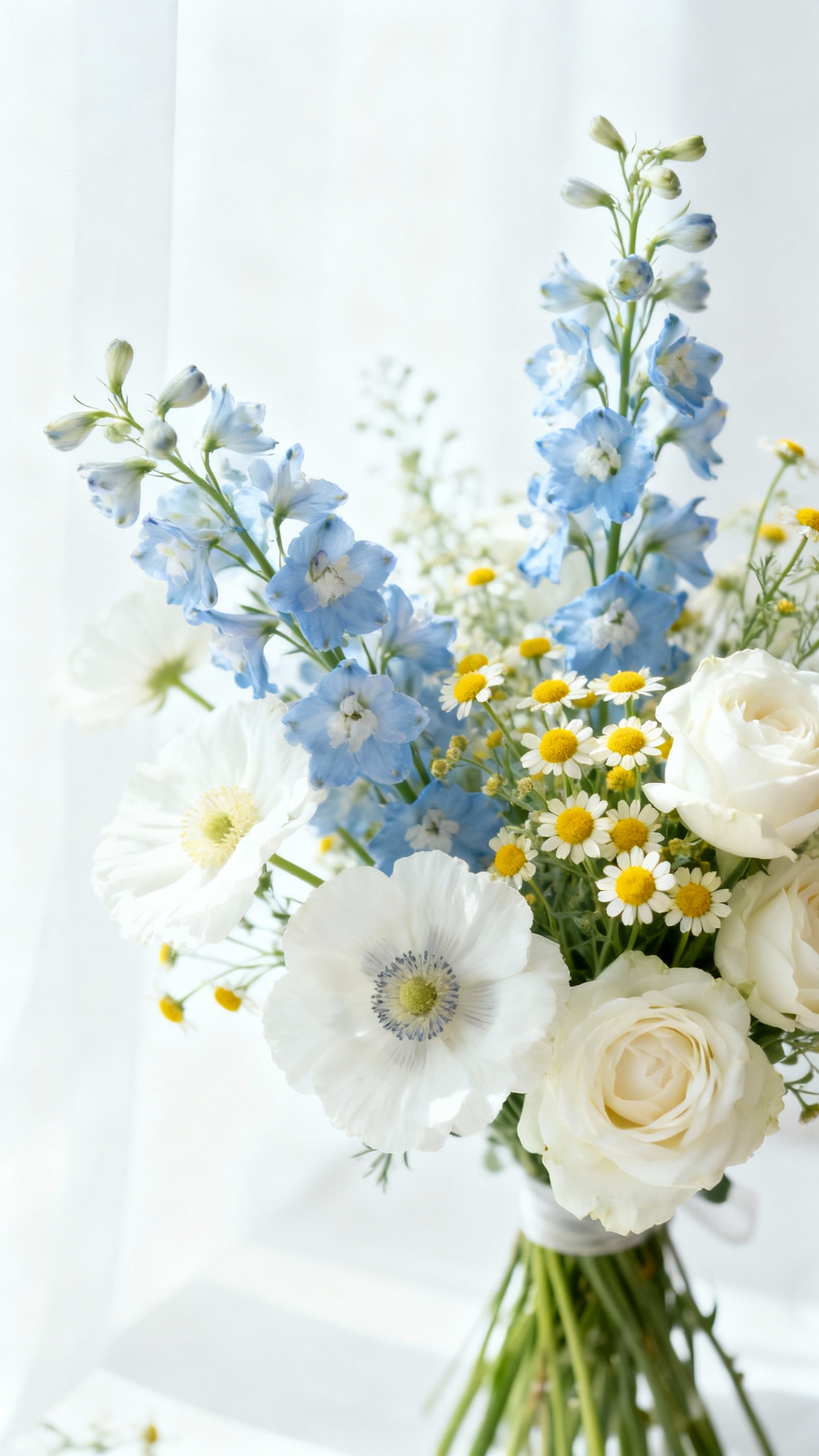
If you love something airy and fresh but don’t want “baby shower” energy, this combo is your best friend. Pale blue (delphinium or tweedia), crisp white blooms, and tiny chamomile-style yellow centers create a wildflower look that still feels refined. Keep the yellow minimal—more like sprinkled sunlight than a full-on statement—and you’ll get that clean, romantic finish.
5) Soft Coral + Cream + Soft Plum
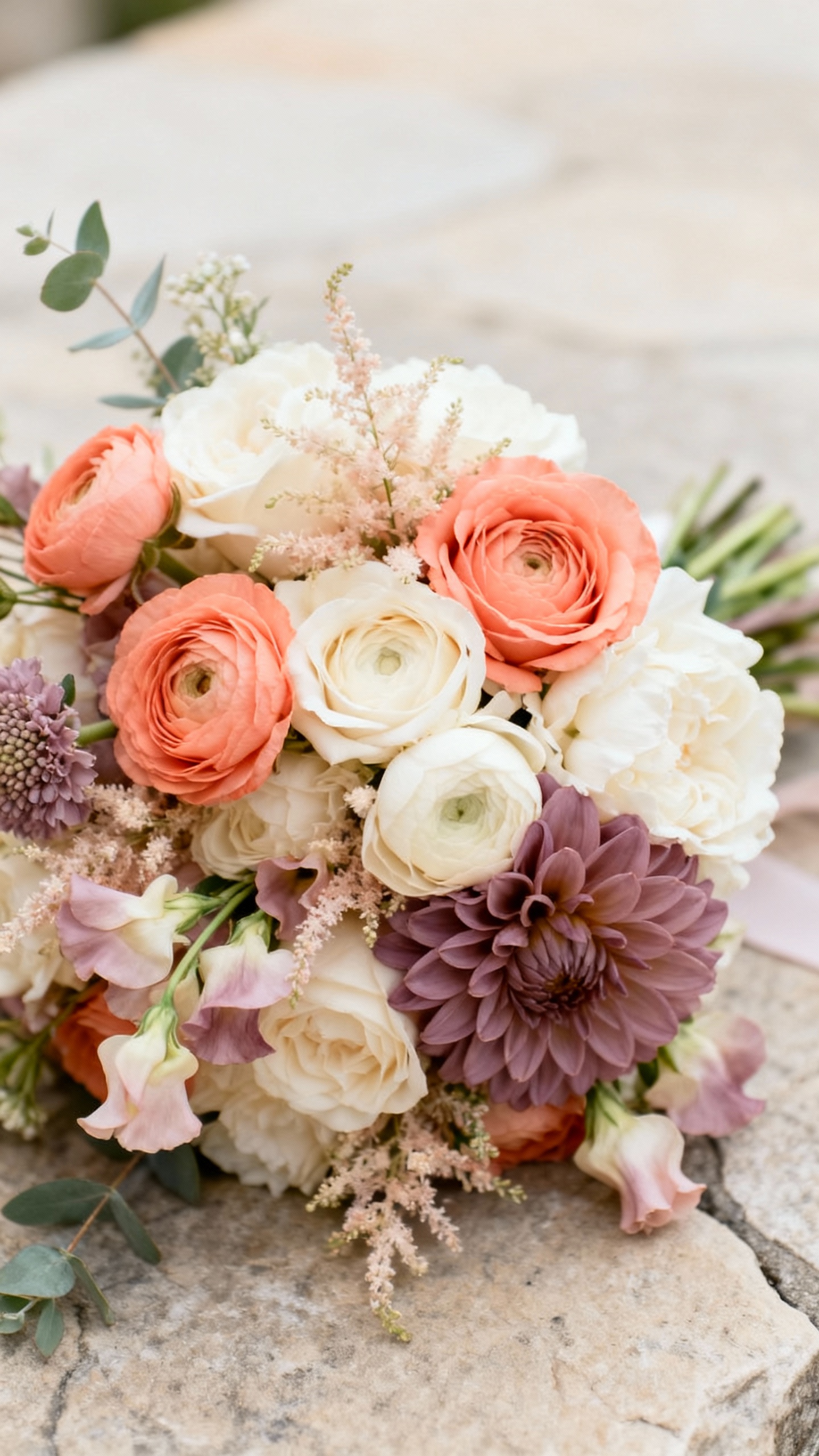
This is for the couple who wants color, but not chaos. Soft coral brings warmth, cream keeps it bridal, and a touch of muted plum adds depth so it doesn’t read too sugary. Request a gradient effect (coral to blush to cream) with just a few plum accents—like scabiosa or sweet pea—so the bouquet feels curated, not cartoonish.
FAQ
How do I keep a wildflower bouquet from looking “messy” in photos?
Ask for a loose shape with intentional structure: one focal flower type (like garden roses or ranunculus), one airy “wild” ingredient (like cosmos or scabiosa), and one consistent greenery. A clean wrap (silk ribbon, satin, or raw silk) instantly makes it feel wedding-polished.
What’s the best way to make soft colors look more mature?
Add a grounding neutral or smoky tone: sage, silvery green, taupe ribbon, or creamy ivory. Also keep your pastels dusty instead of bright, and limit the palette to 2–4 main colors so it reads elevated.
Which wildflowers hold up best for a spring wedding day?
Ranunculus, anemones, lisianthus, spray roses, and sweet peas (handled carefully) are popular for spring and tend to photograph beautifully. For true wildflower texture, add sturdier accents like chamomile, wax flower, and well-hydrated greenery.
Can bridesmaids carry the same palette without it feeling too matchy?
Yes—do “same palette, different mix.” Keep the colors consistent but vary the proportions (one bouquet more cream-forward, another more lavender-forward) and keep the ribbon the same across the set for cohesion.
What ribbon color works with almost every soft wildflower palette?
Ivory is the safest, most bridal choice. If you want something slightly moodier but still soft, go with taupe, champagne, or a muted sage—those tones add polish without overpowering delicate blooms.