

Spring wildflower bouquets are the definition of effortless romance—until your photos come back and the bouquet looks like a fuzzy blob from the side. The secret isn’t “more flowers,” it’s choosing a shape that has a clear silhouette from both front and profile.
Here are five wildflower-friendly bouquet shapes that consistently photograph like a dream (think: ceremony close-ups, walking-down-the-aisle candids, and those classic portrait poses).
Top 5
1) Airy Dome (Loose Round)
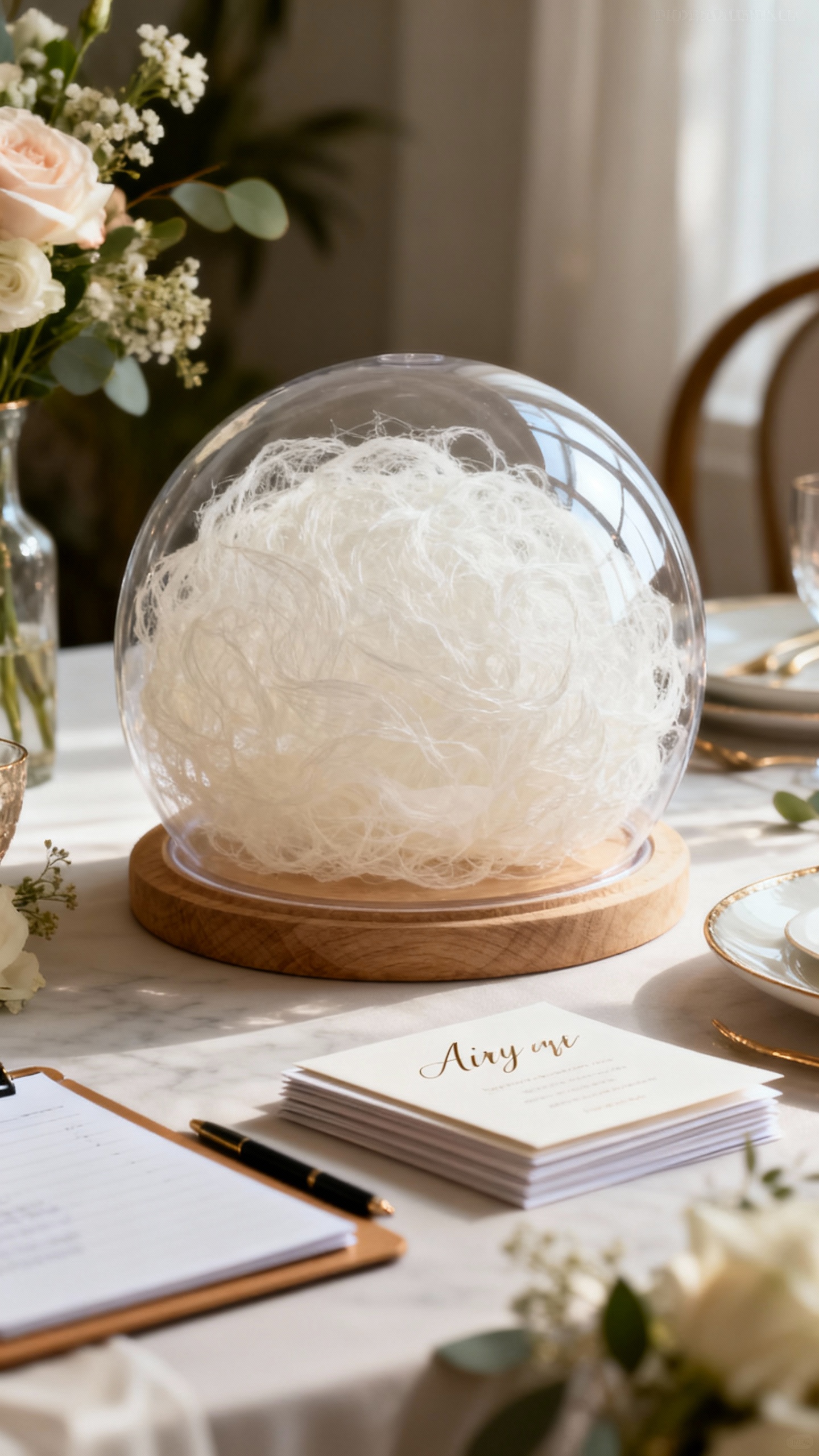
This is the classic “just picked” wildflower look, but with a gentle rounded outline that reads clearly on camera. From the front, it frames your dress bodice without covering it. From the side, the dome gives enough depth to look lush (not flat) while still feeling light and springy.
2) Crescent (C-Shape) Wildflower Bouquet
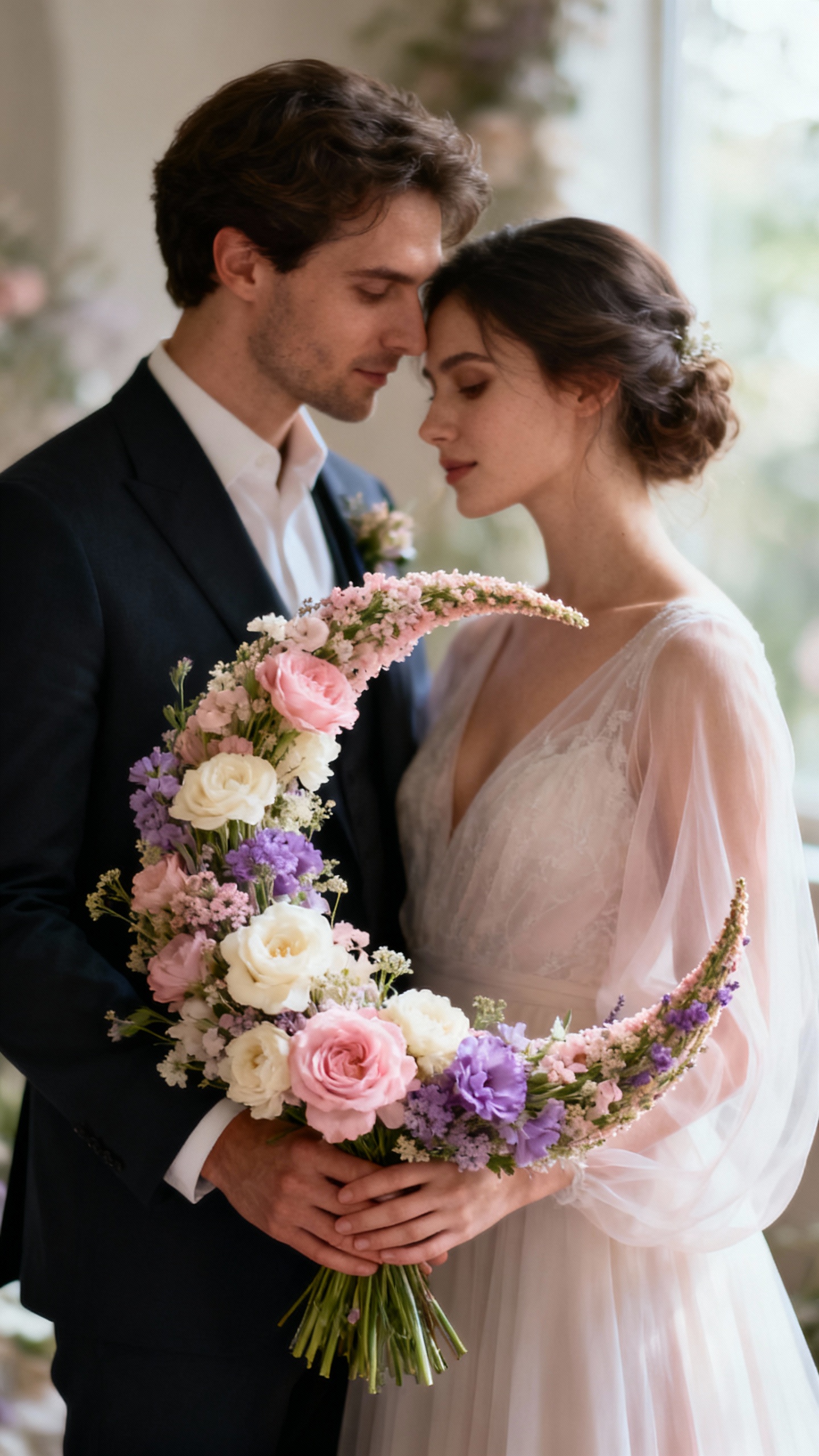
A crescent bouquet curves like a soft “C,” which creates instant movement in photos—especially during bouquet-holding candids. Front view: it gives your hands a natural focal point and shows off color variation. Side view: the curve prevents the bouquet from becoming a single ball, so individual blooms and grasses stay visible.
3) Asymmetrical Meadow (Front-Facing Garden Style)
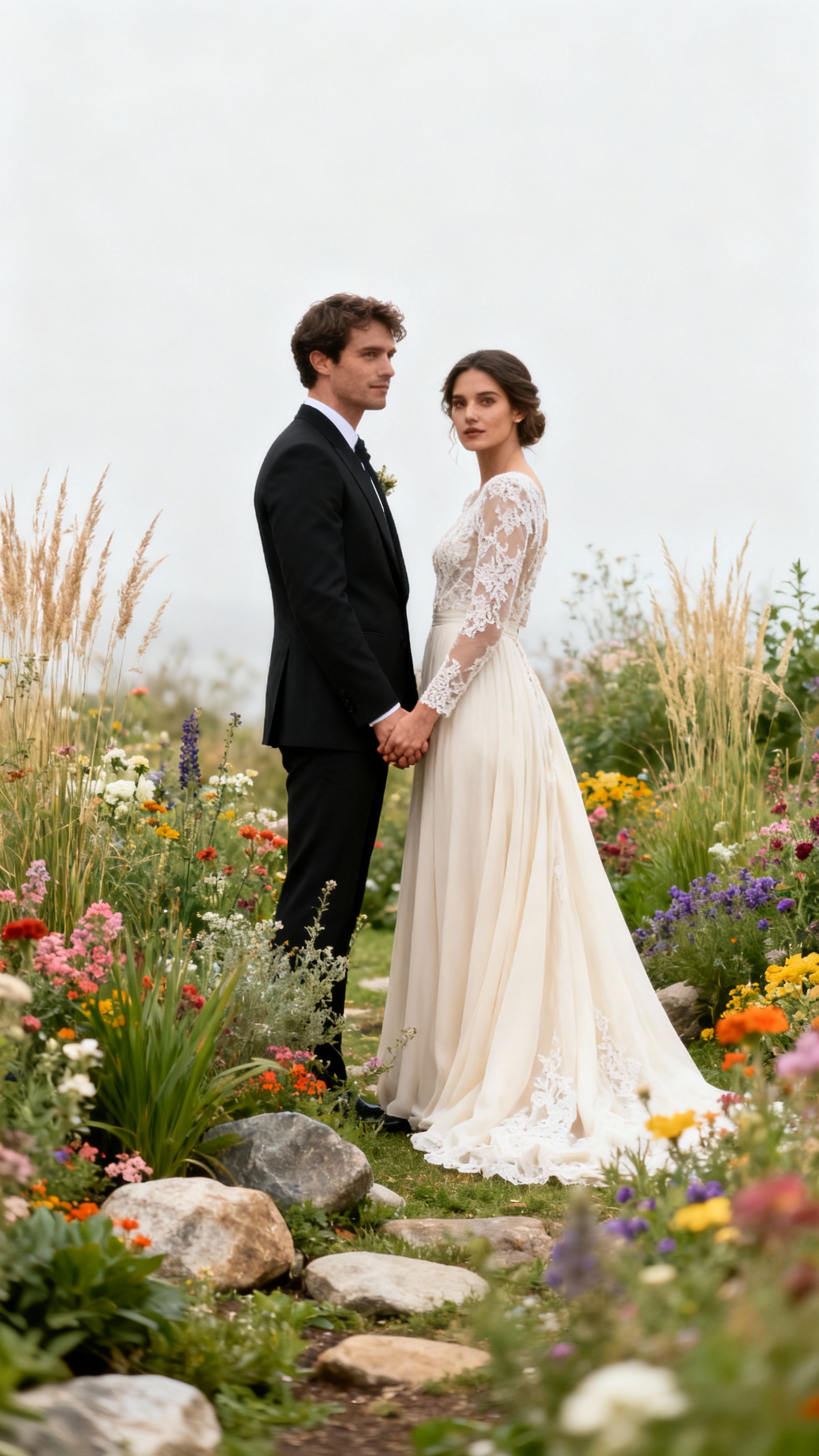
This shape is intentionally uneven, with one side slightly longer or more textural—perfect for wildflowers, herbs, and flowering branches. In front-facing portraits, it looks editorial and organic, not “too arranged.” In side profiles, the asymmetry keeps detail showing (think: a few standout blooms or wispy stems that catch the light).
4) Tapered Teardrop (Soft Drop)
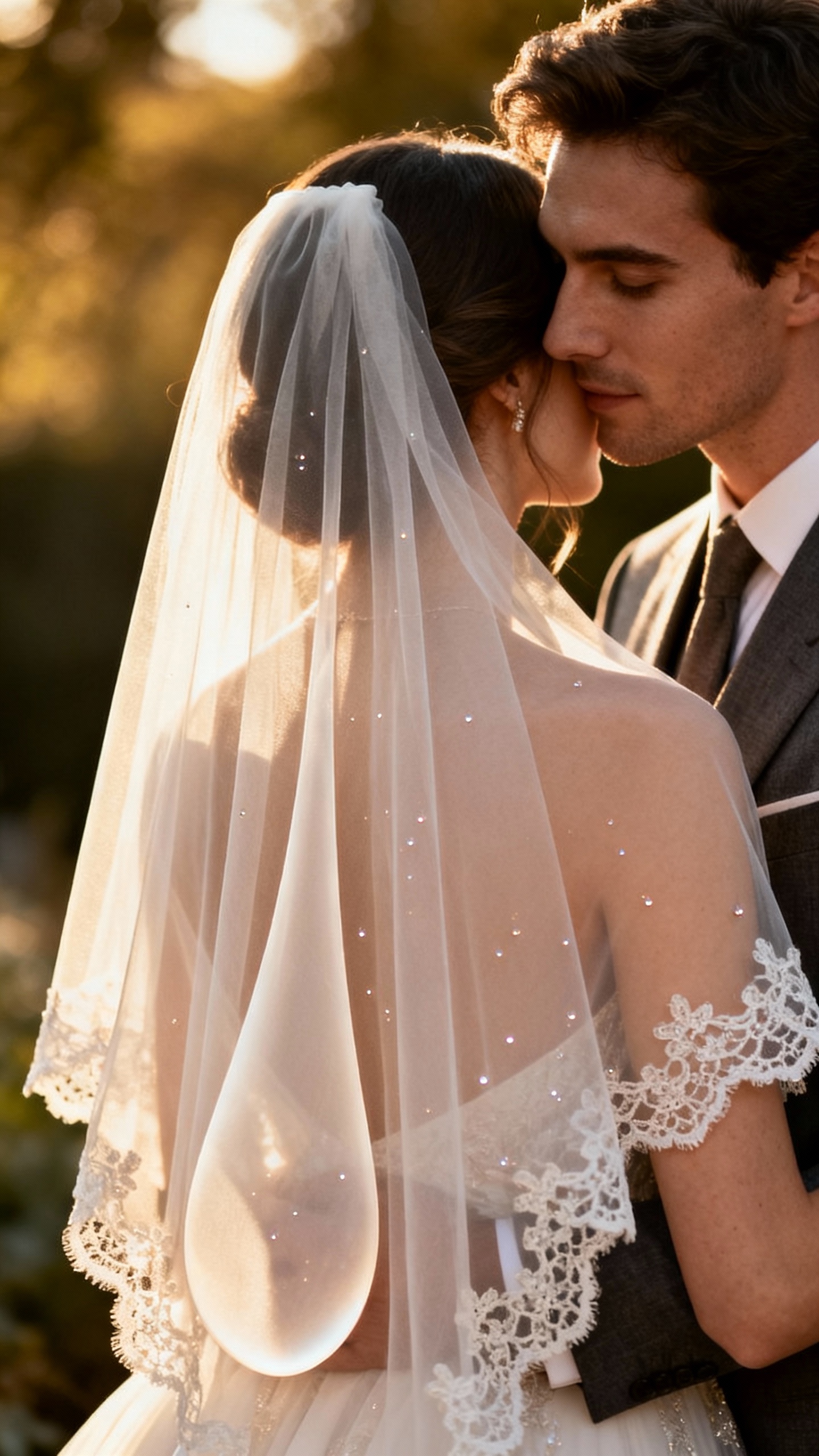
If you love a polished silhouette but still want wildflower vibes, a soft teardrop is your sweet spot. From the front, it elongates your torso and looks super flattering in fitted dresses or clean silhouettes. From the side, the gentle drop shape gives a defined outline, so the bouquet doesn’t disappear against your skirt in full-length photos.
5) Mini Wildflower Posy (Petite Round)
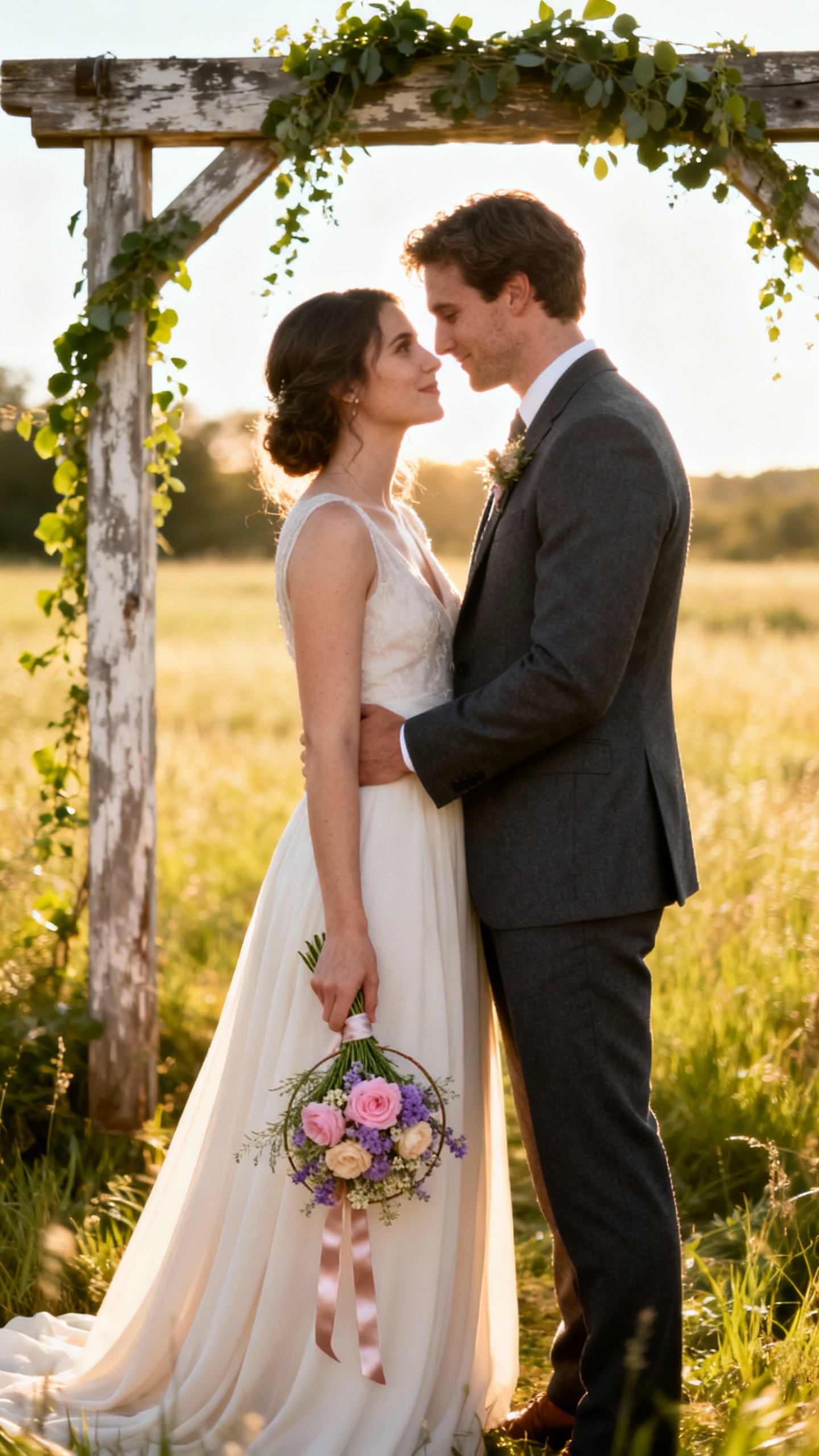
Small bouquets photograph surprisingly big—because they keep the focus on you, your ring, and the styling details. Front view: a petite posy leaves room for neckline details, corsetry, and statement sleeves. Side view: the compact shape stays neat in motion, making it a favorite for outdoor spring ceremonies with a little wind.
FAQ
What wildflowers photograph best in spring wedding bouquets?
Look for blooms with clear shapes and color payoff: anemones, ranunculus, tulips, sweet peas, lilac, chamomile/feverfew, and blooming branches. Add airy texture with grasses or jasmine vine, but keep a few “hero” flowers at the front so the bouquet reads clearly in close-ups.
How do I keep a wildflower bouquet from looking messy in photos?
Ask your florist for a defined “face” (the front side) with a couple of focal blooms placed slightly forward and centered. Keep textures intentional: one airy ingredient (like grasses), one medium filler (like sweet pea), and one focal flower type to anchor the look.
Which bouquet shape is best for side-profile wedding photos?
Crescents, teardrops, and asymmetrical meadow shapes tend to win from the side because they create a readable silhouette. A loose dome also works well if it has enough depth and doesn’t flatten at the back.
What size bouquet looks best in photos for a spring wedding?
Most couples love a “medium” size: about the width of your ribcage or slightly smaller, so it doesn’t cover your dress details. Petite brides or minimal gowns often look amazing with a mini posy, while fuller skirts can balance nicely with a medium airy dome or soft teardrop.
How should I hold my wildflower bouquet so it photographs well?
Hold it a few inches below your belly button, with relaxed elbows and wrists (no stiff “T-rex” arms). Angle the bouquet slightly forward so the front face shows to the camera, and rotate it a touch during portraits so your photographer can capture both front and side views without rearranging anything.