
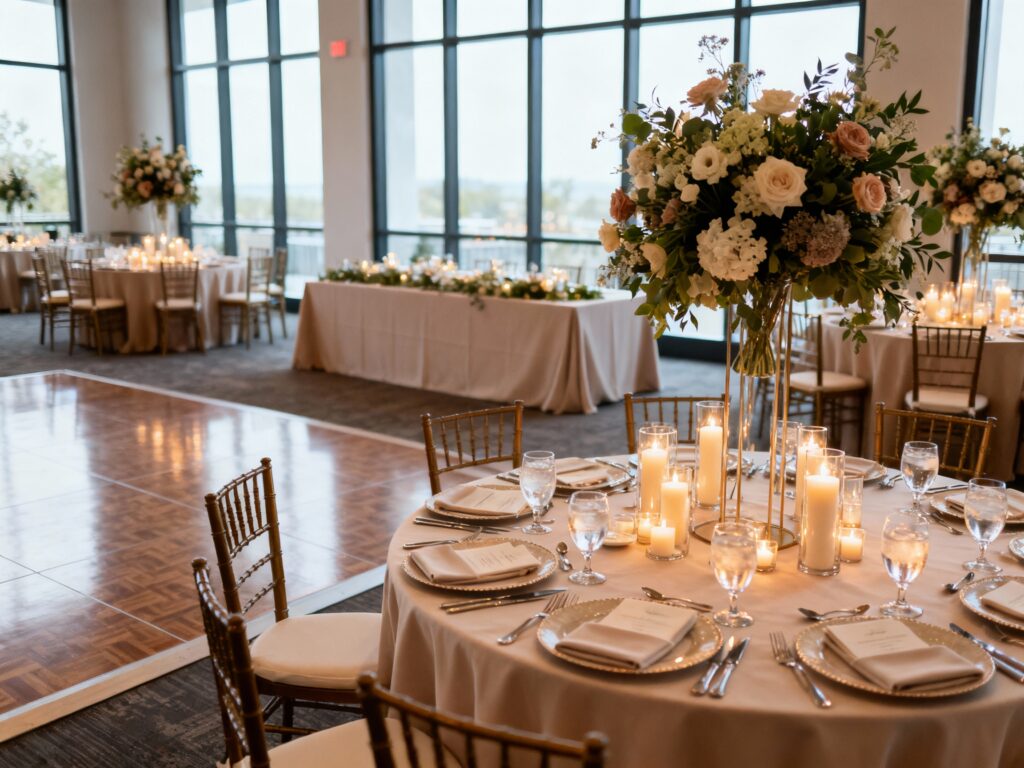
Your reception dining layout sets the whole vibe: how guests mingle, how photos look, and how smoothly dinner actually happens. The best part? You don’t need a “perfect” venue to have a gorgeous, functional setup.
Below are five layout styles that work across ballrooms, barns, backyards, museums, and everything in between—plus quick tips to make each one look intentional (not like you just placed tables wherever they fit).
Top 5
1) Classic Rounds with a Centered Dance Floor
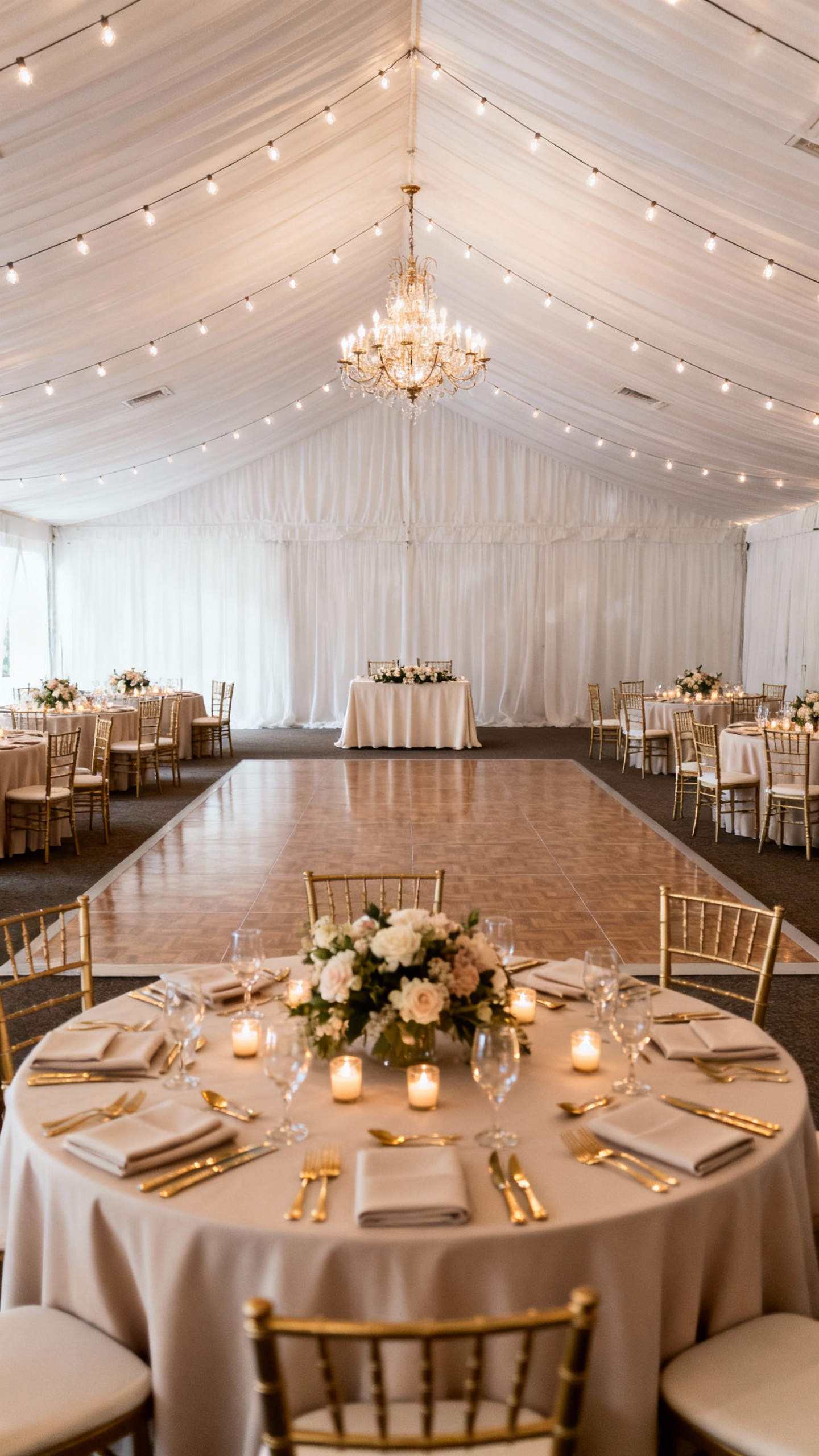
This is the timeless “everyone knows where to go” layout: round tables around a central dance floor, with the head table or sweetheart table facing it. It’s great for mixed-age guest lists because conversation flows easily at rounds, and the dance floor feels like the main event. Keep paths wide (at least 5–6 feet) so servers and guests aren’t doing awkward squeezes. To elevate the look, vary centerpiece heights and add a statement bar or lounge on the perimeter.
2) Long Banquet Tables (Family-Style Rows)
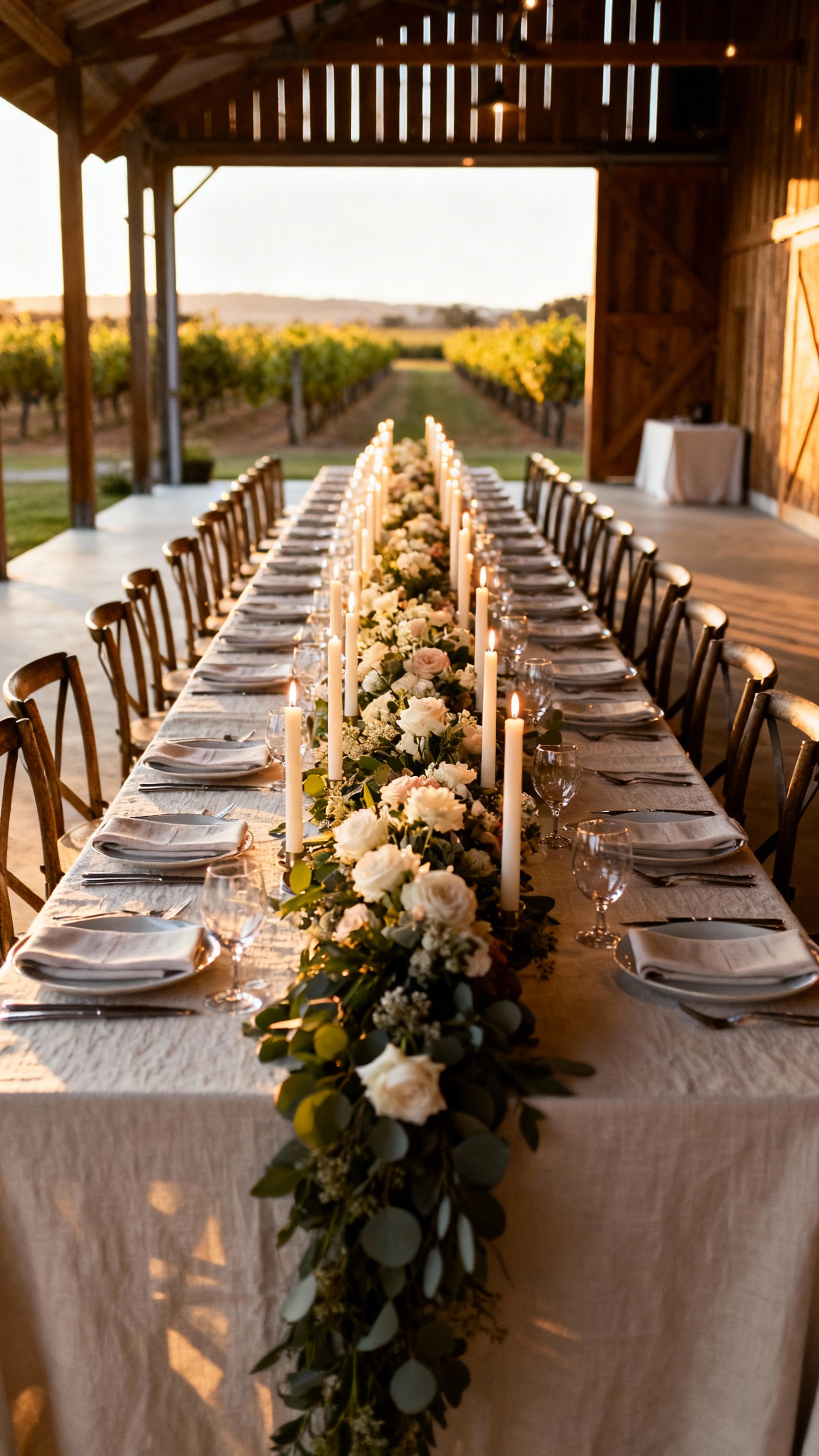
Banquet-style dining instantly reads modern and editorial—especially in barns, industrial spaces, tented lawns, and vineyard patios. Long tables make florals and candles look extra dramatic because you get that uninterrupted “runner moment.” Plan for wider aisles at the ends so guests can slide in without bumping chairs, and consider place cards to prevent the “where do I sit?” swirl. This layout also photographs beautifully from above if your venue has a balcony or loft.
3) U-Shape or Horseshoe Layout for Intimate Vibes
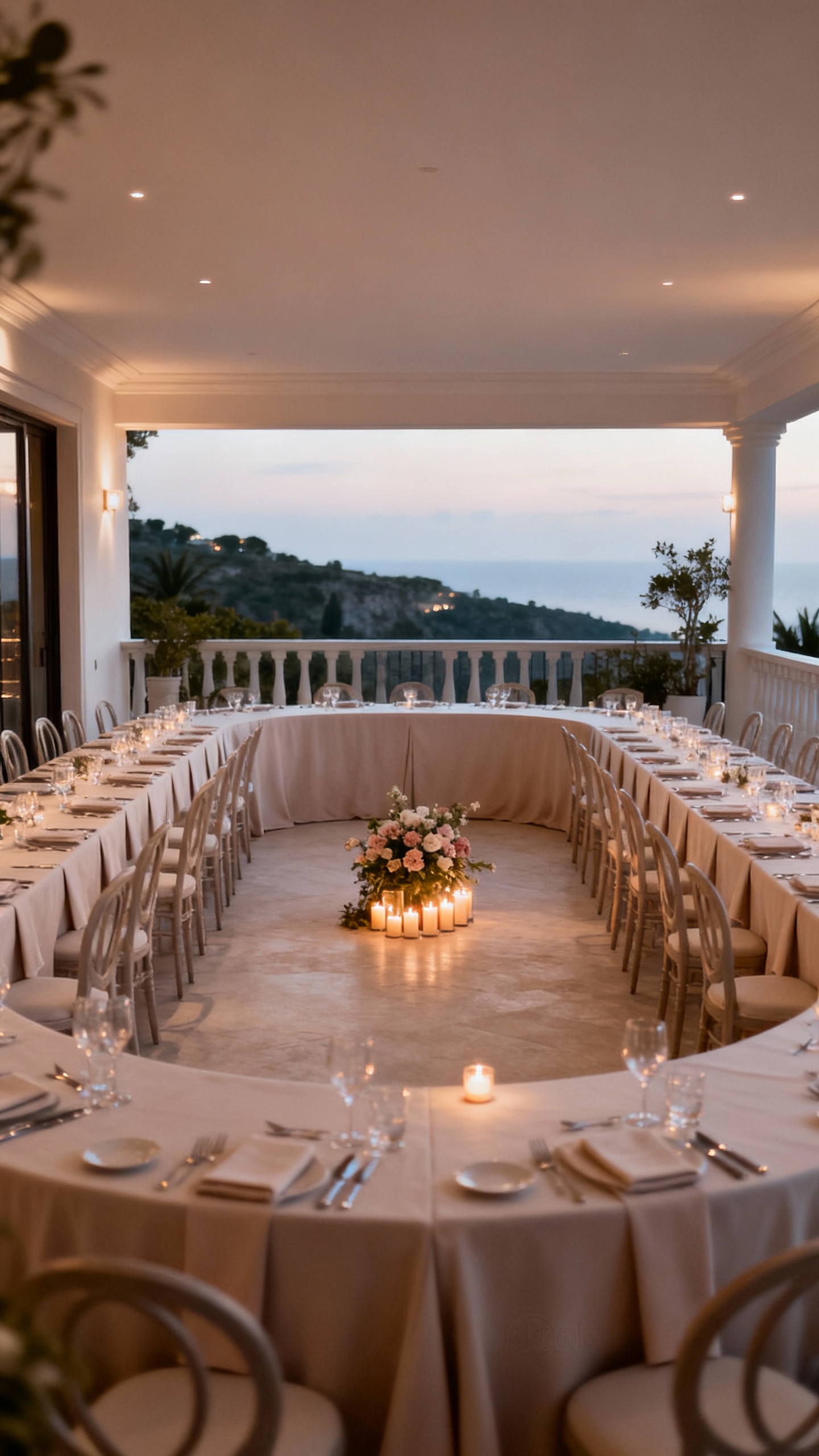
A U-shape (or horseshoe) is perfect when you want everyone to feel connected—think smaller weddings, private rooms, or a chic destination dinner. It creates a natural focal point inside the “U” for toasts, a cake display, or even a mini dance floor if space is tight. Keep the opening of the U aimed toward the action (DJ, band, or scenic view) so the room feels balanced. Styling tip: line the inner edge with candles to get that cozy, high-end restaurant glow.
4) Serpentine (S-Curve) Tables for a Statement Look
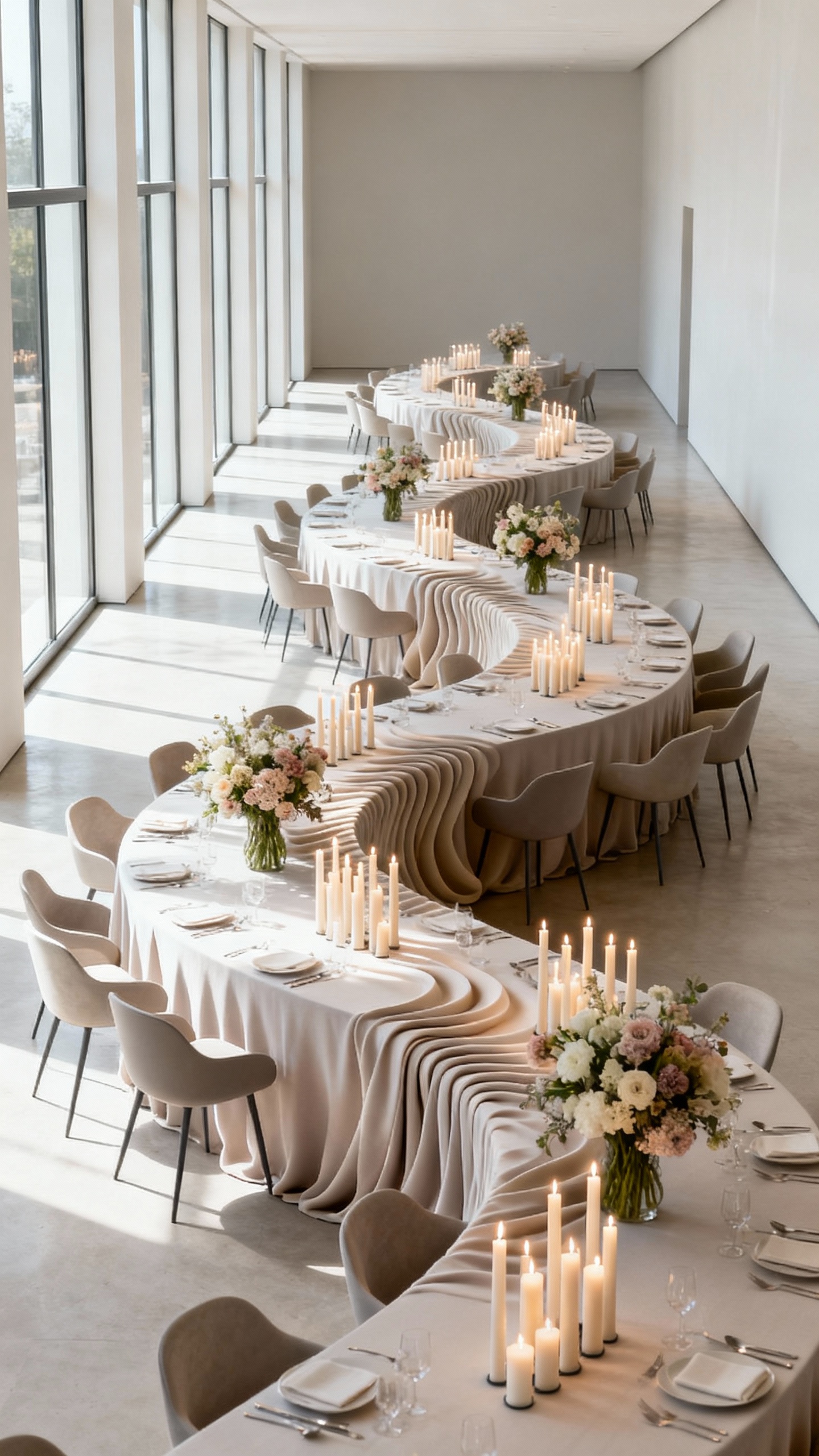
Serpentine tables are the cool-girl layout right now: a flowing S-curve that feels artful, unexpected, and super Pinterestable. It’s ideal for long, narrow venues where straight rows would feel like a cafeteria, and it can also help break up a big tent so it feels designed. Work with your planner or rental team early because it takes the right mix of tables and confident spacing. Keep centerpieces low and elongated so guests can talk across the curve without floral “walls.”
5) Mixed Tables (Rounds + Longs + Lounge Zones)
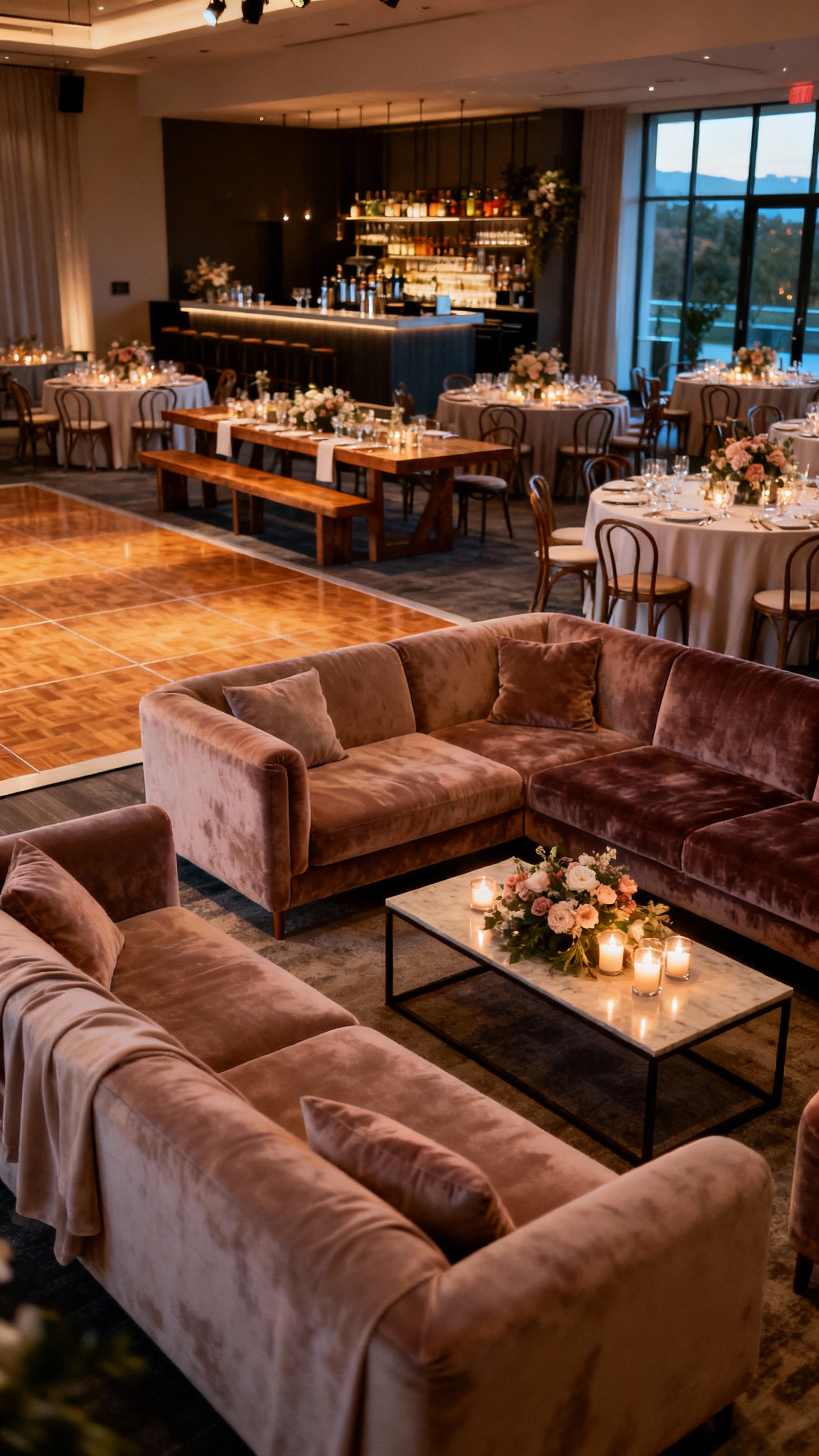
If you want the room to feel layered and social, a mixed layout is your best friend: combine rounds and long tables, then add lounge seating near the bar or dance floor. This works especially well in unconventional venues with columns, odd corners, or multiple rooms—because you can “custom fit” each area. The key is consistency: match linens, chair styles, and tabletop details so it looks intentional, not random. Bonus: lounges give guests a place to chat without shouting over the music, and photos look more dynamic.
FAQ
How do I choose the best dining layout for my venue?
Start with your guest count and the venue’s true usable space (not just the overall square footage). Then decide what you want to prioritize: a big dance floor, a dramatic tablescape, easy conversation, or a more loungey cocktail-party feel. Ask your venue or planner for a scaled floor plan mockup before you commit to rentals.
What layout is best for guest conversation?
Round tables are the easiest for conversation because everyone can see each other. Banquet tables also work well if you keep centerpieces low and avoid extra-wide table widths that make people feel far apart. If you’re doing long tables, consider grouping friends and families thoughtfully so no one feels stranded at the “quiet end.”
How much space should I leave for aisles and walking paths?
Aim for 5–6 feet for main aisles and at least 3–4 feet between tables where guests will pass behind chairs. If you have servers, wider is better—tight spacing slows service and can lead to bumped chairs (and spilled drinks). Your venue coordinator can confirm fire code requirements, too.
Can I fit a dance floor with banquet tables?
Yes—just be strategic about placement. A popular option is banquet rows on the sides with a dance floor centered at the end near the DJ, or a horseshoe/modified U that frames the dance floor. If space is limited, consider a slightly smaller dance floor and add lounge seating nearby to keep the area feeling full and fun.
How do I make my layout look cohesive in photos?
Repeat a few visual elements across the room: the same chair style, consistent linen tones, and a unified candle/centerpiece look. Anchor the space with one or two “moments” like a statement bar, escort card wall, or sweetheart table backdrop. And if you’re mixing table styles, keep the tabletop styling consistent so it reads curated, not chaotic.