
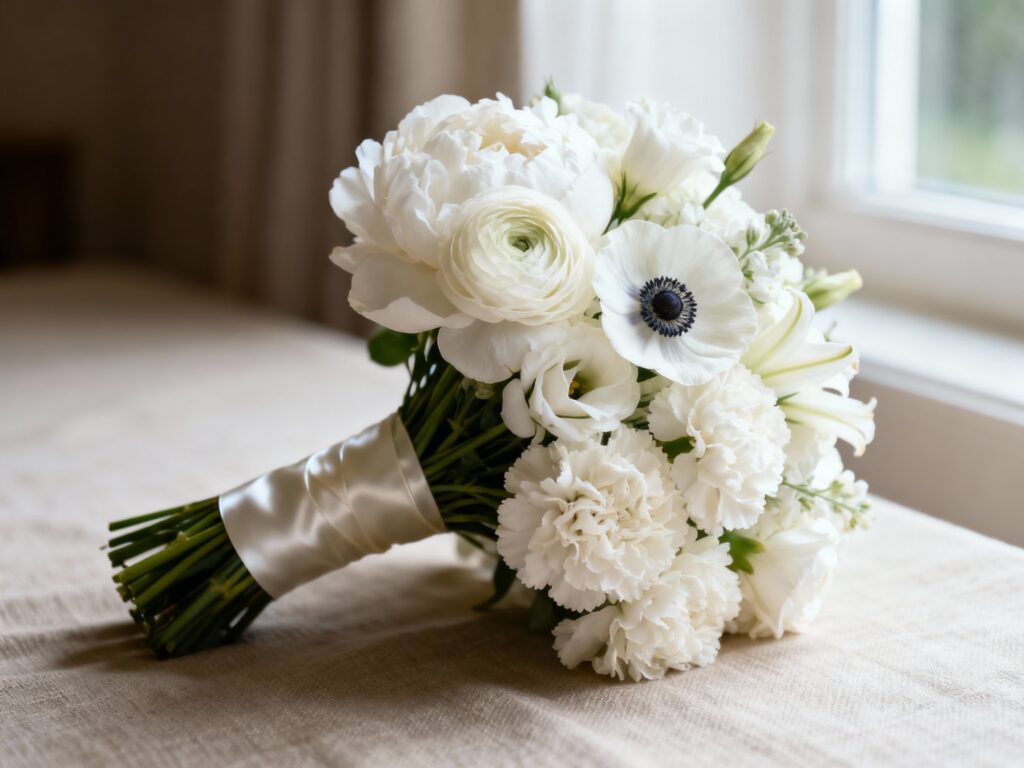
White rose bouquets are timeless for a reason: clean, romantic, and they go with literally everything. But if you’re getting married when roses are pricey, scarce, or just not giving what they need to give, you have options that still hit that “classic bridal” vibe.
Below are five gorgeous, rose-free alternatives that read elegant in photos, feel intentional (not like a backup plan), and are easier to source seasonally.
Top 5
1) White Peonies
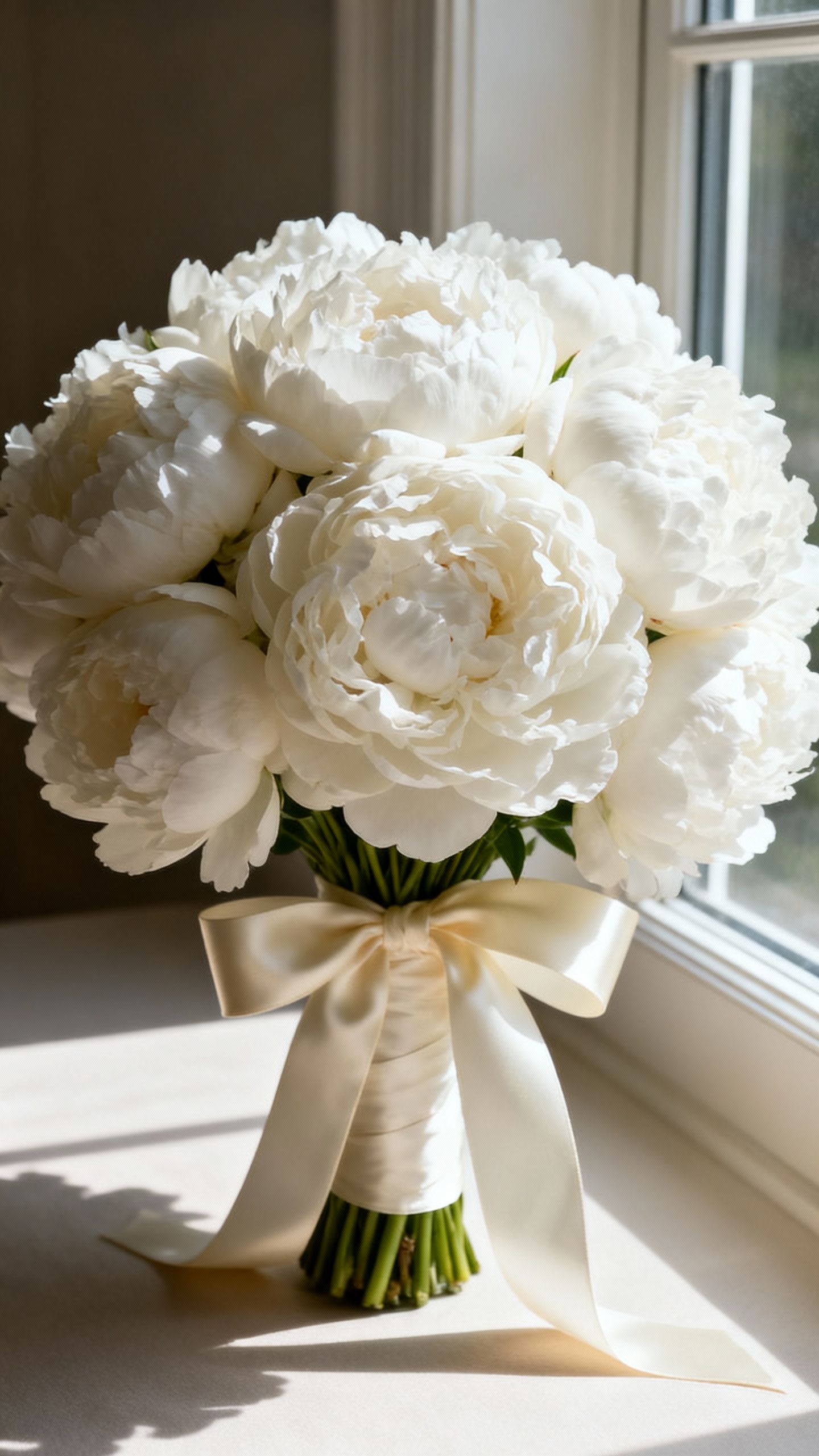
If you love the soft, ruffly fullness of garden roses, white peonies are your dream swap. They create that luxe, cloud-like look with fewer stems, which can help your bouquet feel expensive without being oversized. Ask your florist for tighter “marshmallow” buds if you want a cleaner shape, or more open blooms for maximum romance. They pair beautifully with eucalyptus, jasmine vine, or delicate sweet pea.
2) White Ranunculus
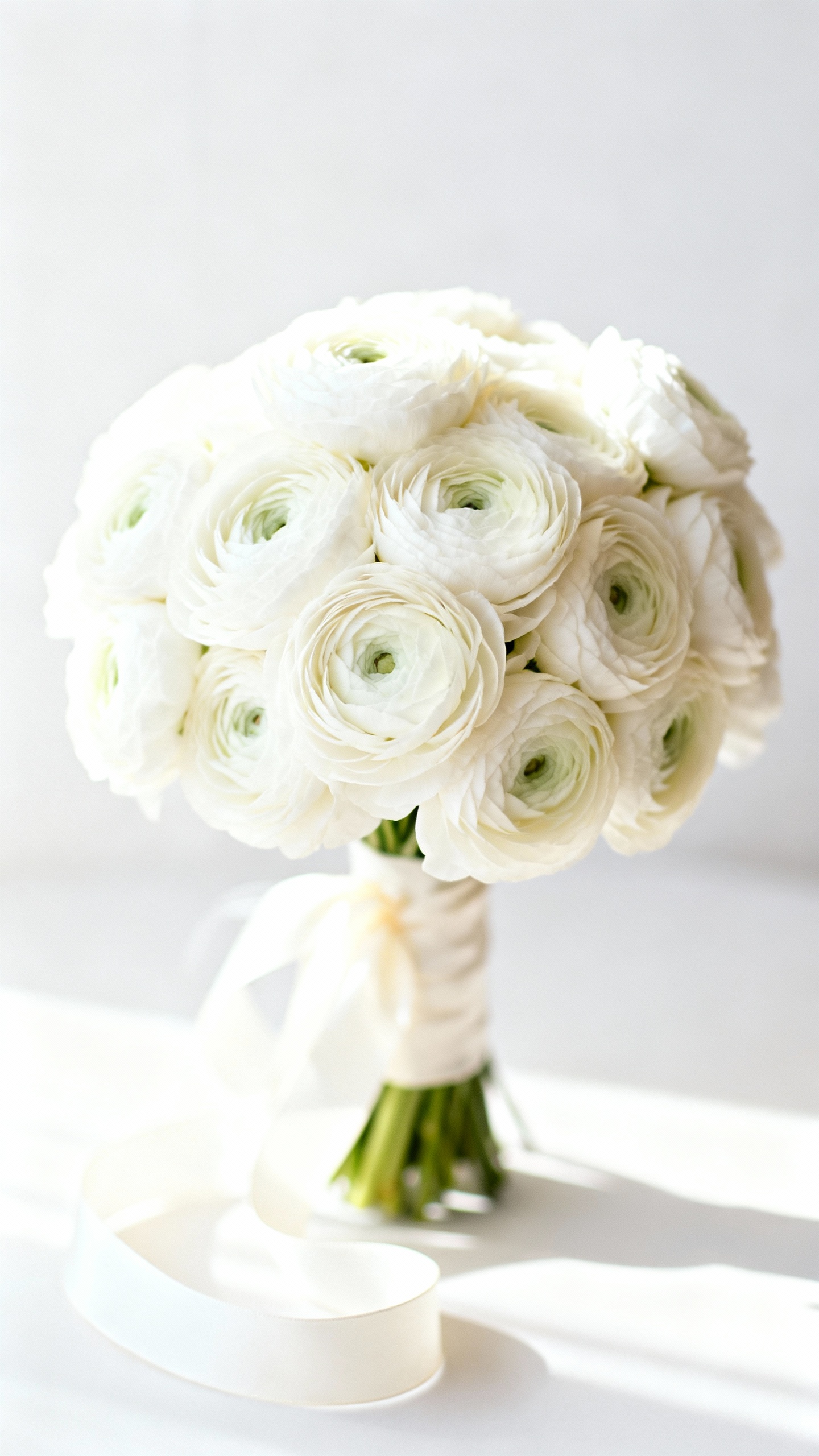
Ranunculus are a go-to when you want that layered-petal look but with a slightly more modern, editorial feel. They’re lighter on the hand than roses, so they’re great for airy bouquets and brides who don’t want something heavy all day. For a rose-like effect, choose larger, rounder ranunculus and mix in a few buds for texture. They photograph crisp and bright, especially against greenery and soft neutrals.
3) White Lisianthus
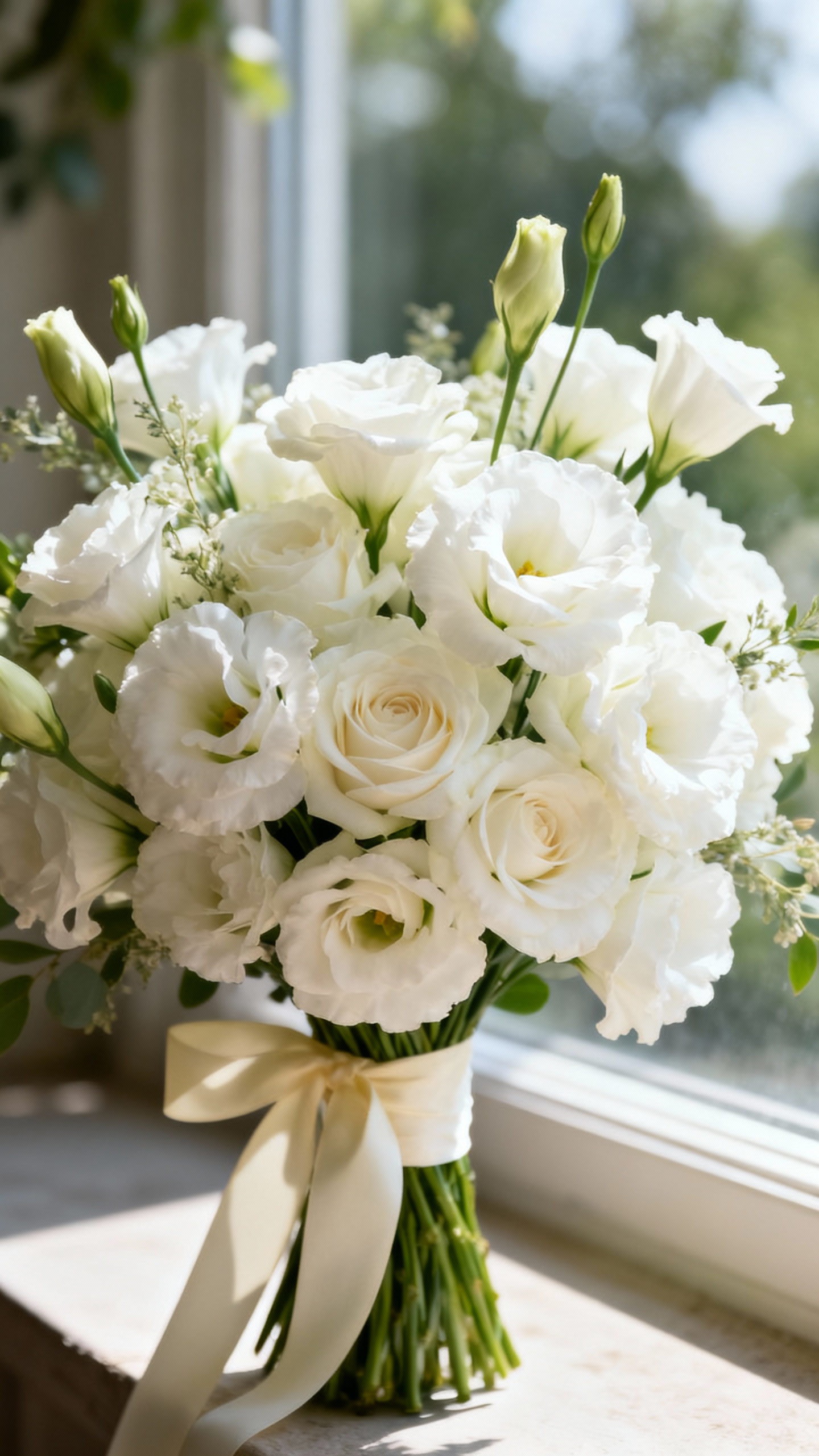
Lisianthus gives you the romantic, fluttery vibe of roses—just a little more delicate and garden-inspired. It’s an amazing choice for a “bridal but not too traditional” look, and it plays well with almost any palette. Use standard blooms for fullness and add lisianthus buds on long stems for movement. If you want a clean white bouquet, ask for minimal green throats and lots of double-petal varieties.
4) White Anemones (with a Soft Center)
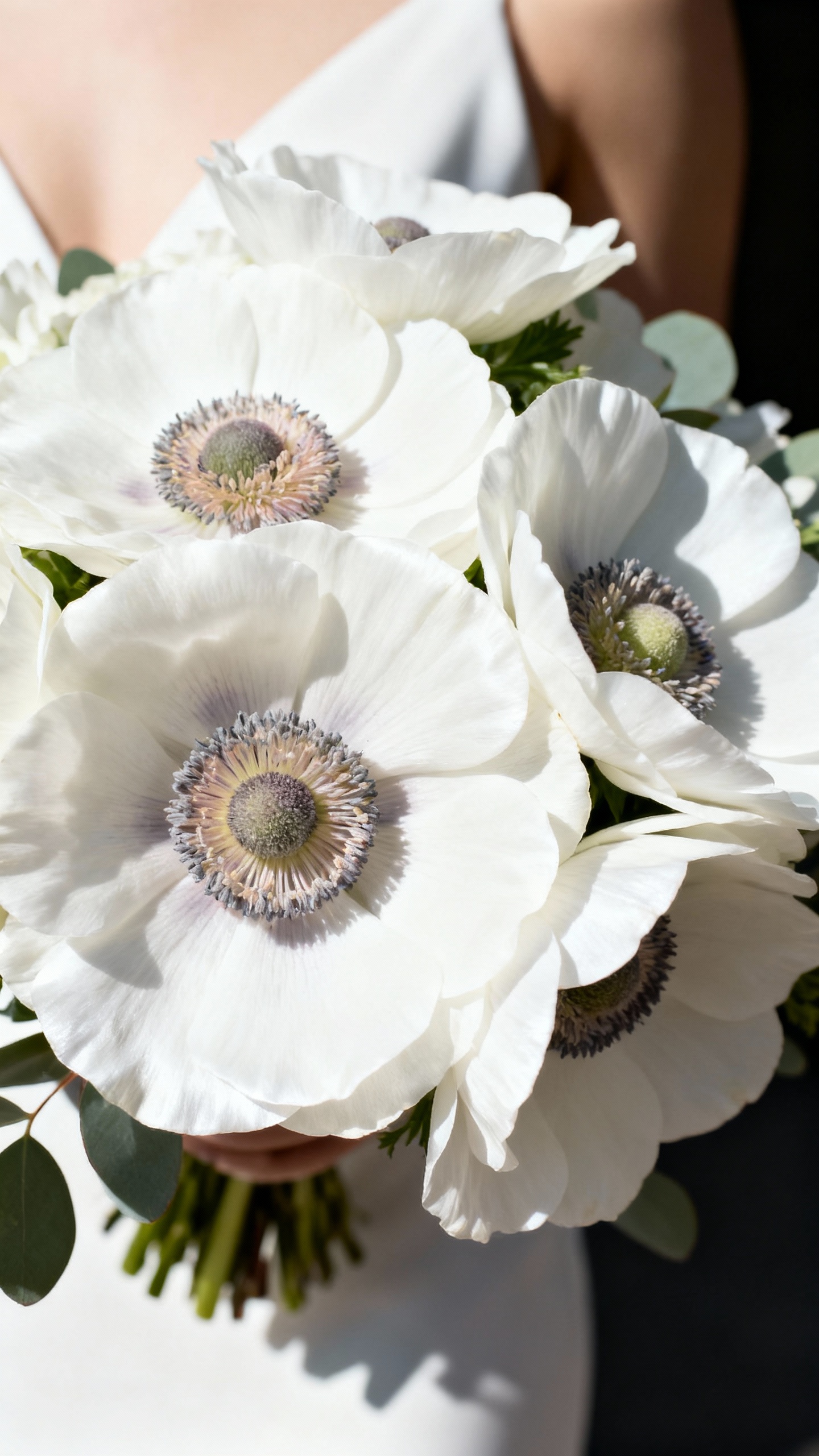
Anemones are for the bride who wants classic white, but with a little pop that reads high-fashion. They’re known for their dark centers, but you can ask your florist about varieties with softer centers or have them balanced with plenty of white blooms so it stays bridal. They look stunning in modern bouquets with structured greenery like Italian ruscus. Bonus: they instantly add contrast, which makes your bouquet stand out in photos against a white dress.
5) White Carnations (Done the Chic Way)
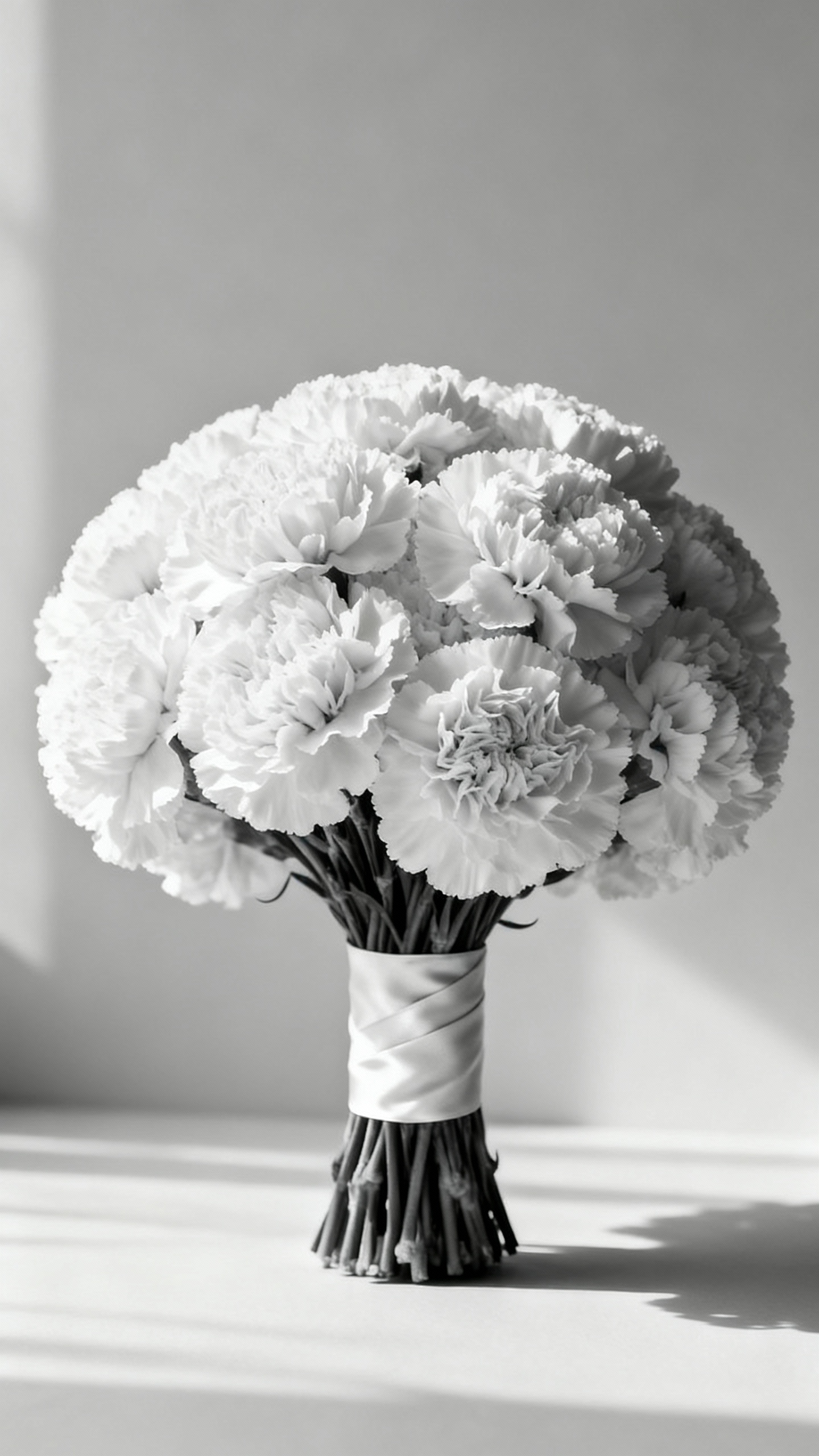
Carnations are having a quiet comeback, and when they’re used intentionally, they can look surprisingly elevated. The key is choosing premium stems and keeping the recipe tight: all-white carnations with a few textural accents (think scabiosa pods, baby’s breath done minimally, or soft trailing ribbon). They’re durable, budget-friendly, and hold up beautifully for long wedding days and summer heat. If you want a rose-like silhouette, have your florist cluster them in a rounded, classic shape.
FAQ
How do I keep my bouquet looking “classic” without white roses?
Focus on shape and palette: a rounded or softly cascading bouquet in a clean white/ivory mix will read timeless no matter the flower. Ask for a blend of big focal blooms (like peonies or ranunculus) plus softer fillers (like lisianthus) to mimic the depth roses usually give. Finish with a satin ribbon for that traditional bridal polish.
Which alternative looks most like a white rose in photos?
Ranunculus and double lisianthus are the closest visual substitutes because they have layered petals and a similar soft, romantic feel. If you want that “garden rose” fullness, peonies are the best match—just bigger and more plush. Bring a reference photo and ask your florist to match the overall texture, not just the flower type.
What’s the most budget-friendly option that still looks expensive?
White carnations can be extremely chic when designed in a tight, intentional recipe with minimal filler. Lisianthus is also often a great value because one stem can have multiple blooms and buds. Your florist can help you choose the best option based on your date and what’s plentiful locally.
Can I mix these flowers together in one bouquet?
Yes, and it usually looks even better. A mix like ranunculus + lisianthus + a few anemones can give you dimension and a curated, designer feel. Just keep the whites consistent (bright white vs. creamy ivory) so the bouquet looks cohesive next to your dress.
How do I make sure my “white” bouquet doesn’t look too stark?
Add gentle texture and tonal variety: ivory blooms, soft green-gray foliage (like eucalyptus), and subtle accents (like buds or vines) keep it from looking flat. You can also warm it up with champagne ribbon or include a few blush-tinted whites. In photos, dimension comes from layers, not extra color.