
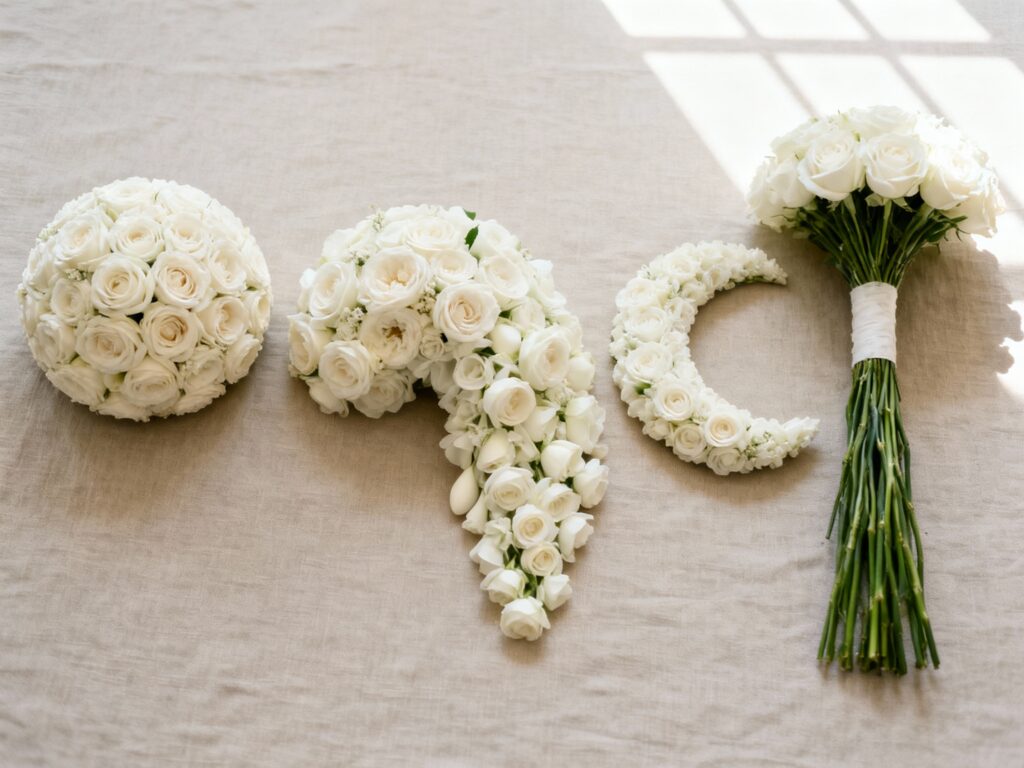
White rose bouquets are basically the little black dress of wedding florals: timeless, clean, and instantly elevated. But the shape of your bouquet matters just as much as the blooms—especially when you want it to look flawless from every angle in photos and video.
Below are the five white rose bouquet shapes that consistently photograph beautifully, whether you’re holding them at your waist, walking down the aisle, posing for portraits, or getting caught in candid moments.
Top 5
1) Classic Round (Tight Dome)
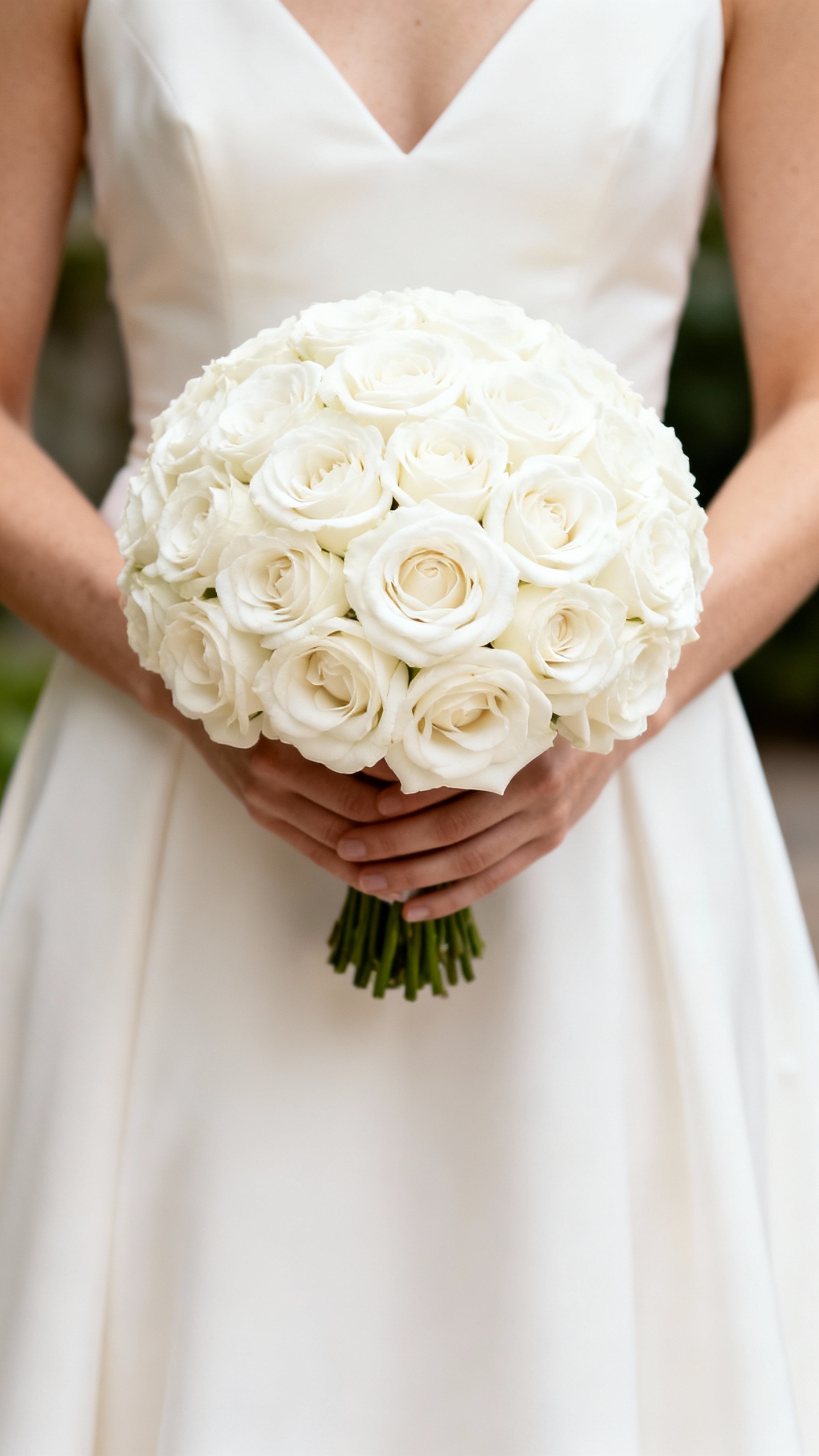
A tight, round dome of white roses is the easiest “yes” for clean, symmetrical photos. It reads polished from the front, side, and even overhead shots because the outline stays consistent. This shape also keeps stems and mechanics hidden, so your dress and hands look neat in close-ups.
2) Loose Garden Round (Airy + Textural)
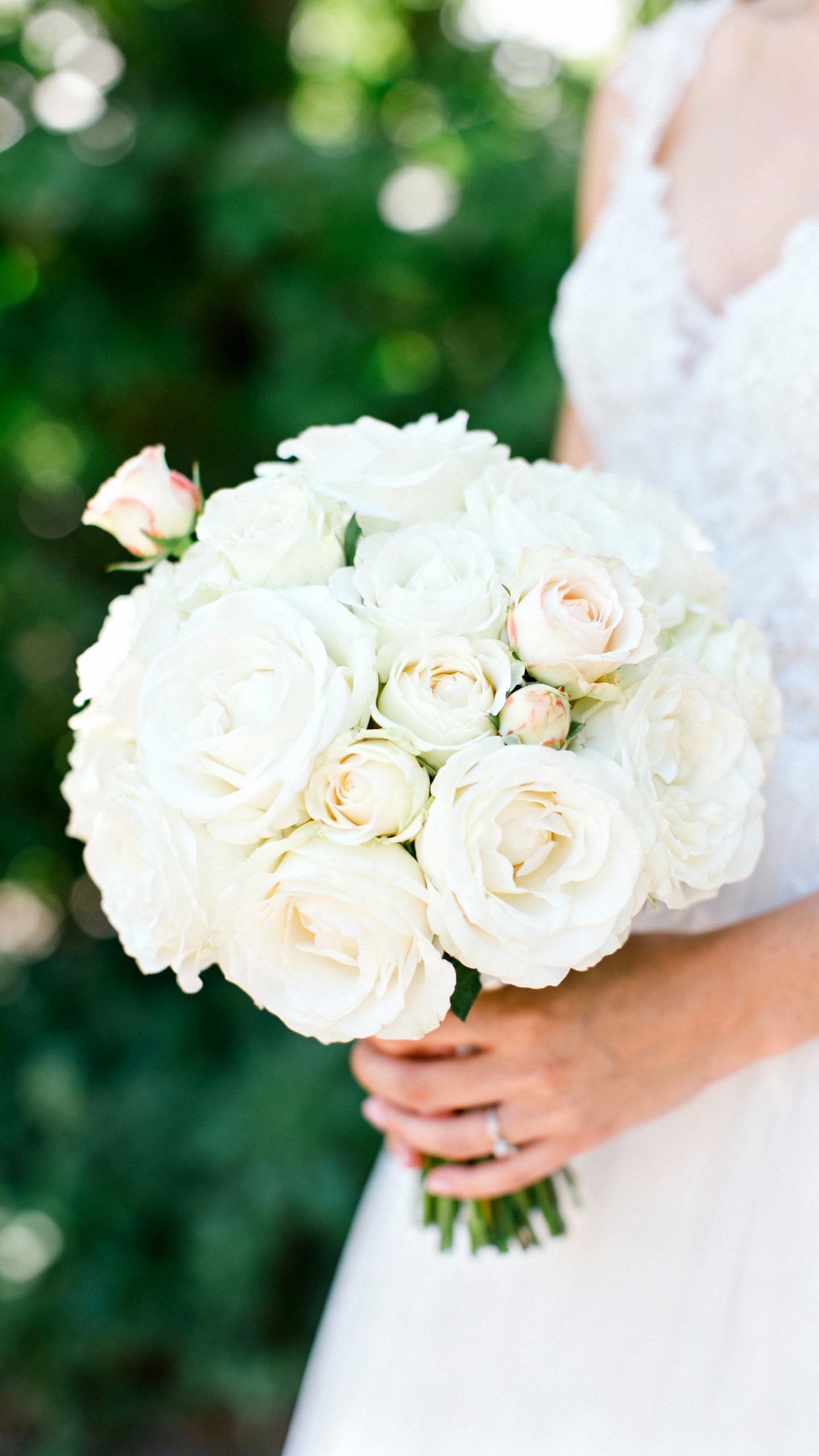
This is the softer, more romantic cousin of the classic round—still rounded, but with a little movement and negative space. It photographs especially well in natural light because shadows and petals create depth, not a flat “ball.” Ask your florist for varying rose opens (some tight, some fully bloomed) so it looks dreamy from every angle.
3) Teardrop (Soft Cascade)
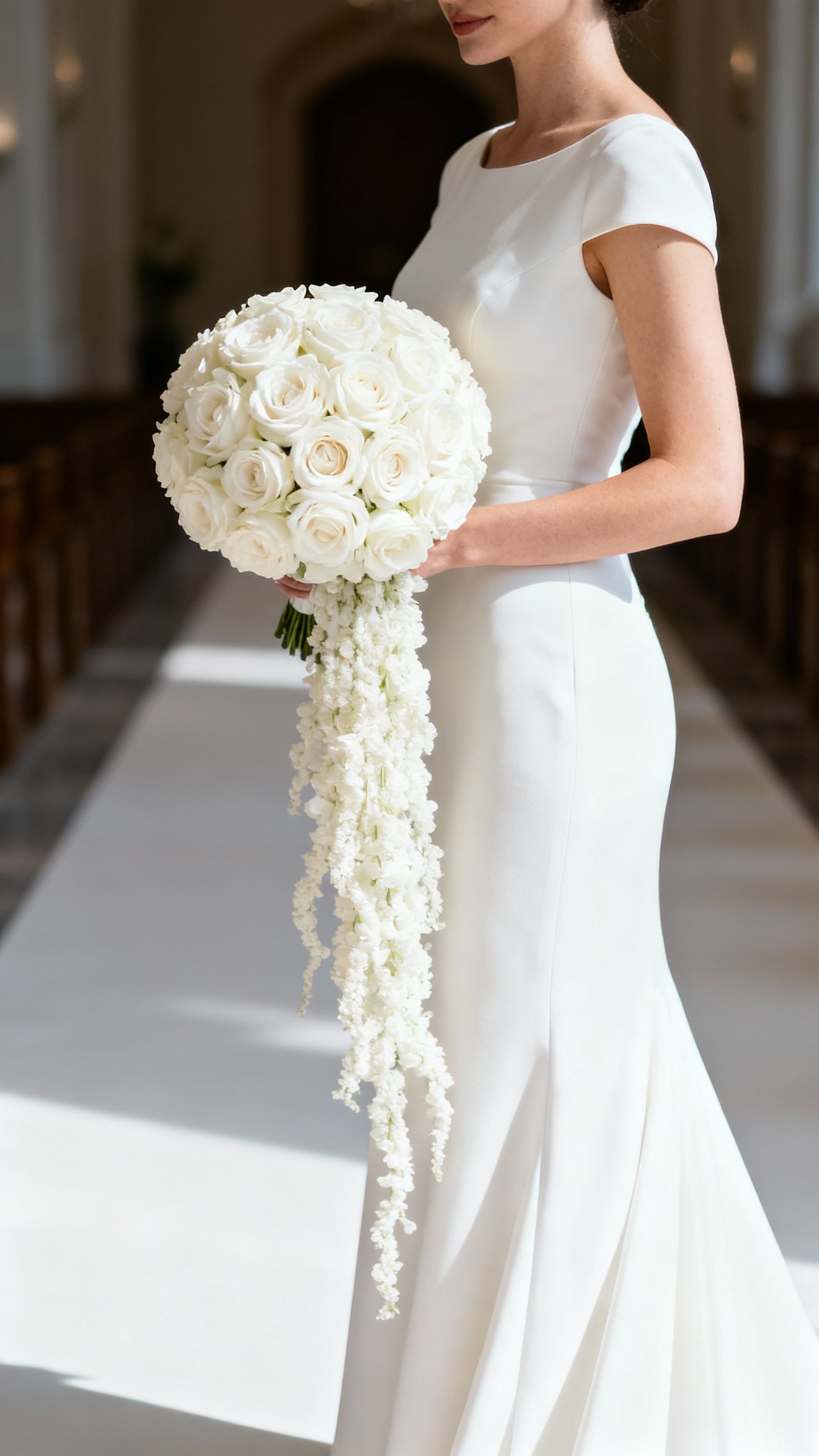
A teardrop bouquet is made to flatter your silhouette in full-length photos: round at the top, then gently tapering down. It looks elegant in aisle shots because it elongates your torso and creates a graceful line without overwhelming your dress. Keep the cascade subtle for modern photos—think “flow,” not “waterfall.”
4) Asymmetrical Crescent (Modern Editorial)
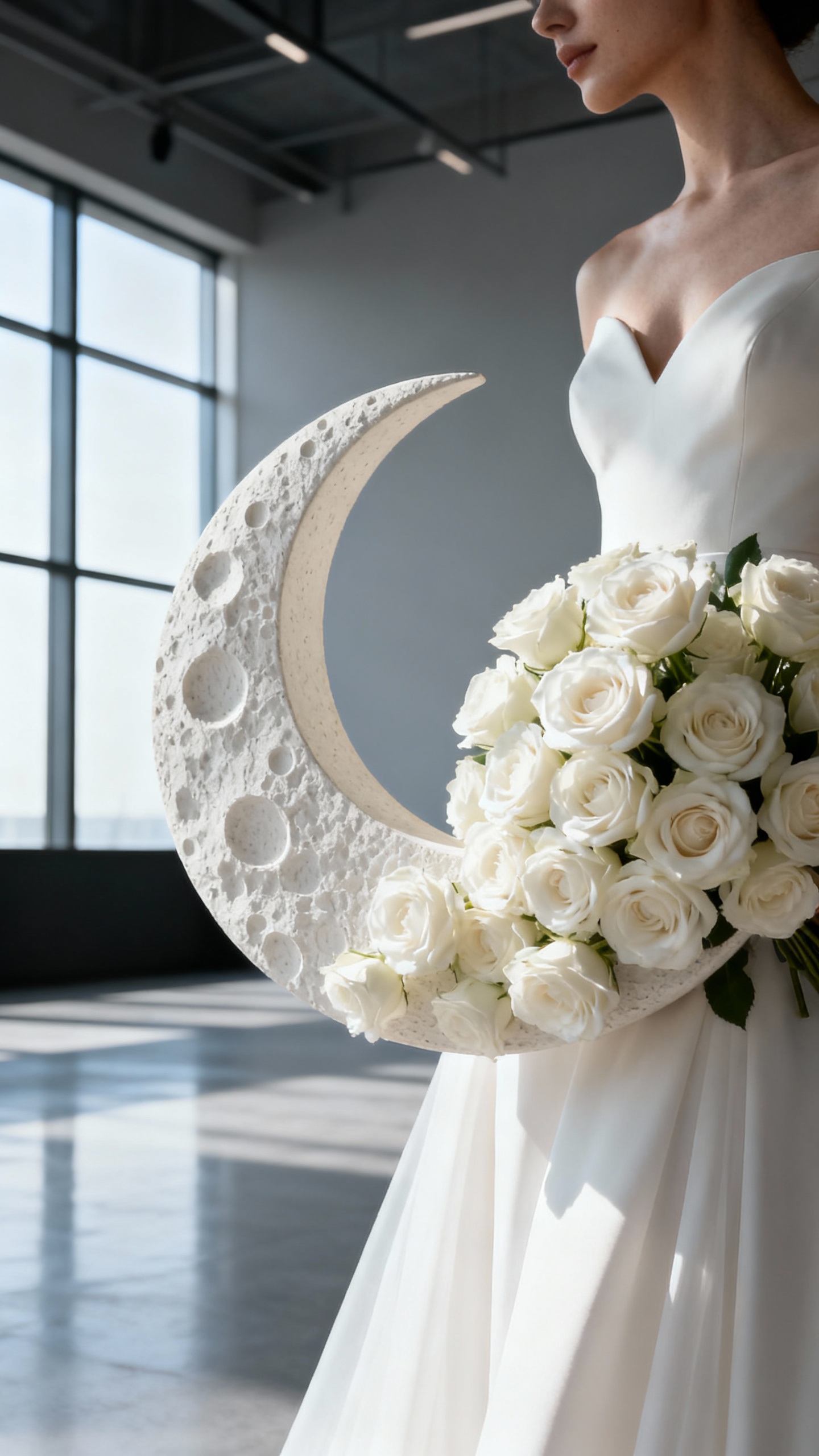
A crescent shape photographs like art: it frames your waist and creates a high-fashion curve that looks amazing in angled poses. White roses keep it from feeling too wild, while the asymmetry adds that editorial vibe in candids and motion shots. Pro tip: practice holding it slightly off-center so the curve reads clearly in photos.
5) Long-Stem Presentation (Arm Sheaf)
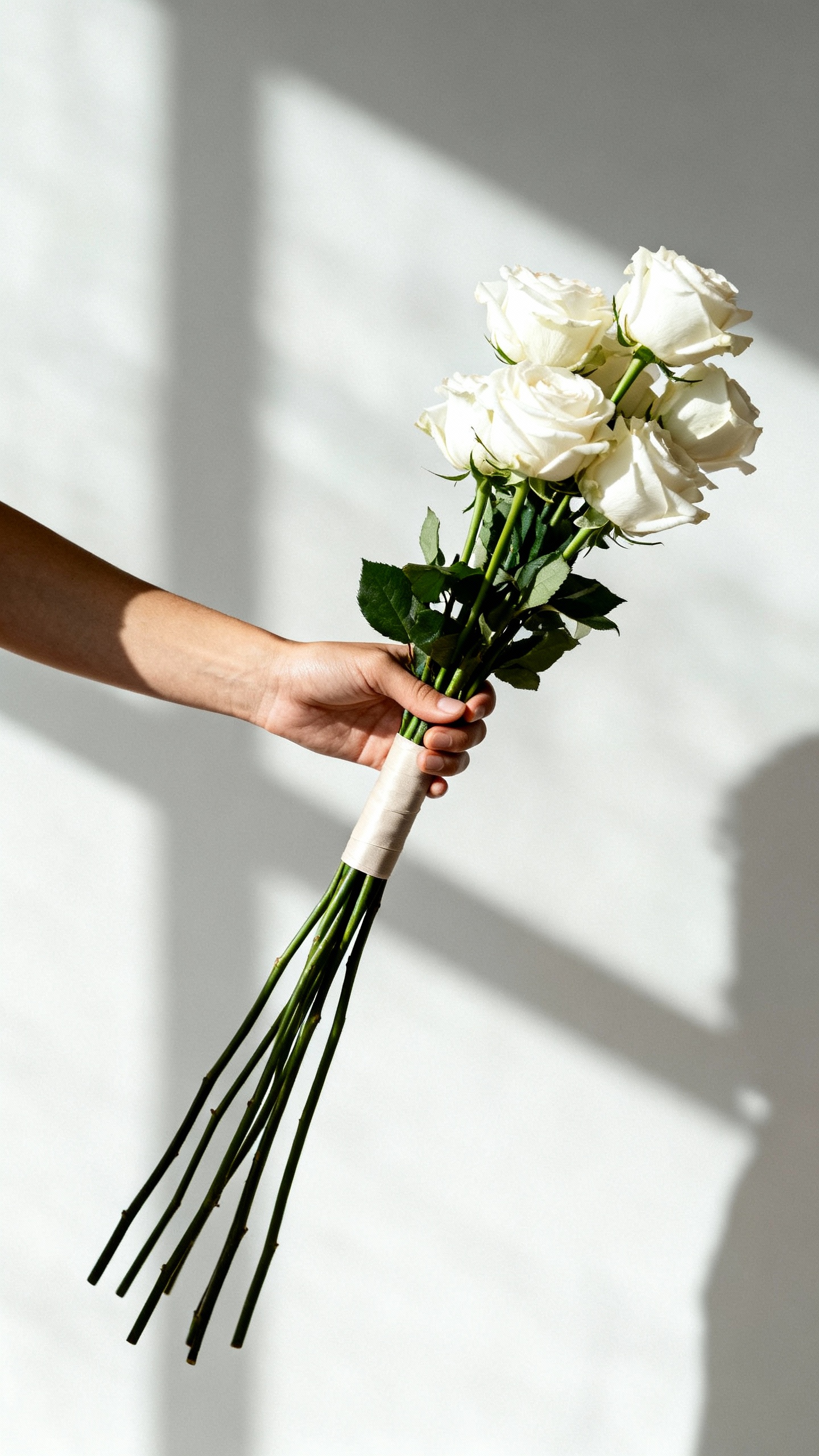
This shape is all about clean lines: long stems, roses aligned in one direction, and a sleek wrap. It photographs insanely well from the side (hello, ceremony profile shots) and looks chic in detail photos with your rings, invitation suite, or veil. Choose sturdy rose varieties and a structured wrap so it doesn’t shift during hugs and dancing.
FAQ
What bouquet shape looks best in candid photos?
Loose garden rounds and asymmetrical crescents tend to win for candids because they have movement and dimension. They look natural when you’re laughing, walking, or turning—so the bouquet doesn’t feel overly “posed.” If you want a safer classic, a tight dome still photographs cleanly in spontaneous moments.
Which bouquet shape is most flattering for petite brides?
A classic round (tight dome) or a small loose garden round is usually the most proportion-friendly. They keep the focus on you and your dress without adding visual weight. If you love a teardrop, go for a shorter, softer taper so it doesn’t swallow your frame.
Do white rose bouquets photograph too “flat”?
They can if the bouquet is too uniform in size and bloom stage. To add depth, mix rose opens (tight buds + medium + fully open) and consider gentle texture like a touch of matte greenery or white florals with a different petal shape. Even in all-white, dimension is the secret to gorgeous photos.
What bouquet shape works best with a dramatic dress (ballgown or long train)?
Teardrop bouquets and crescents pair beautifully with statement gowns because they echo the drama without competing. If you want timeless balance, a larger classic round also looks amazing—just size it up slightly so it doesn’t disappear next to the skirt. The goal is harmony: the bouquet should feel intentional, not tiny.
How should I hold my bouquet so it photographs better?
Hold it slightly below your belly button, angled a touch forward so the roses face the camera. Keep elbows relaxed (not pinned back) and wrists soft to avoid looking stiff. For long-stem presentations, hold it along your forearm or at hip level so the line stays sleek in photos.