
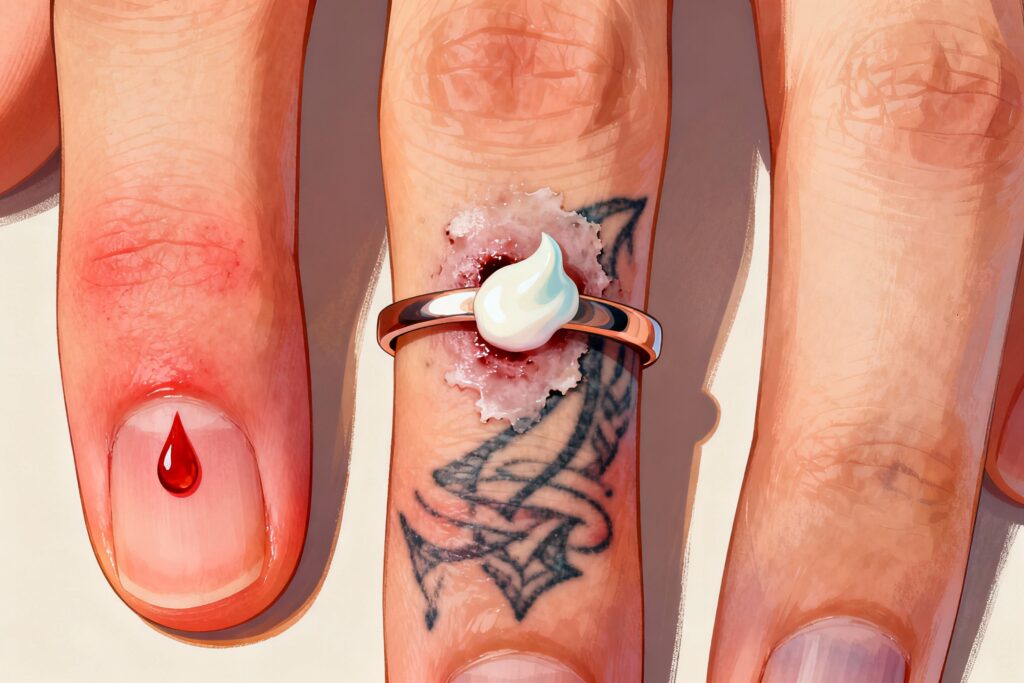
You want a ring finger tattoo. Cute, edgy, meaningful—and right on the spot you use for love, commitment, or just looking cool while holding a latte. Before you say “I do” to ink on that tiny canvas, let’s talk pain, healing, and how long it’ll actually look good.
Spoiler: finger tattoos are high-maintenance. Still in? Great.
Let’s dive in.
Why Ring Finger Tattoos Are a Whole Different Beast
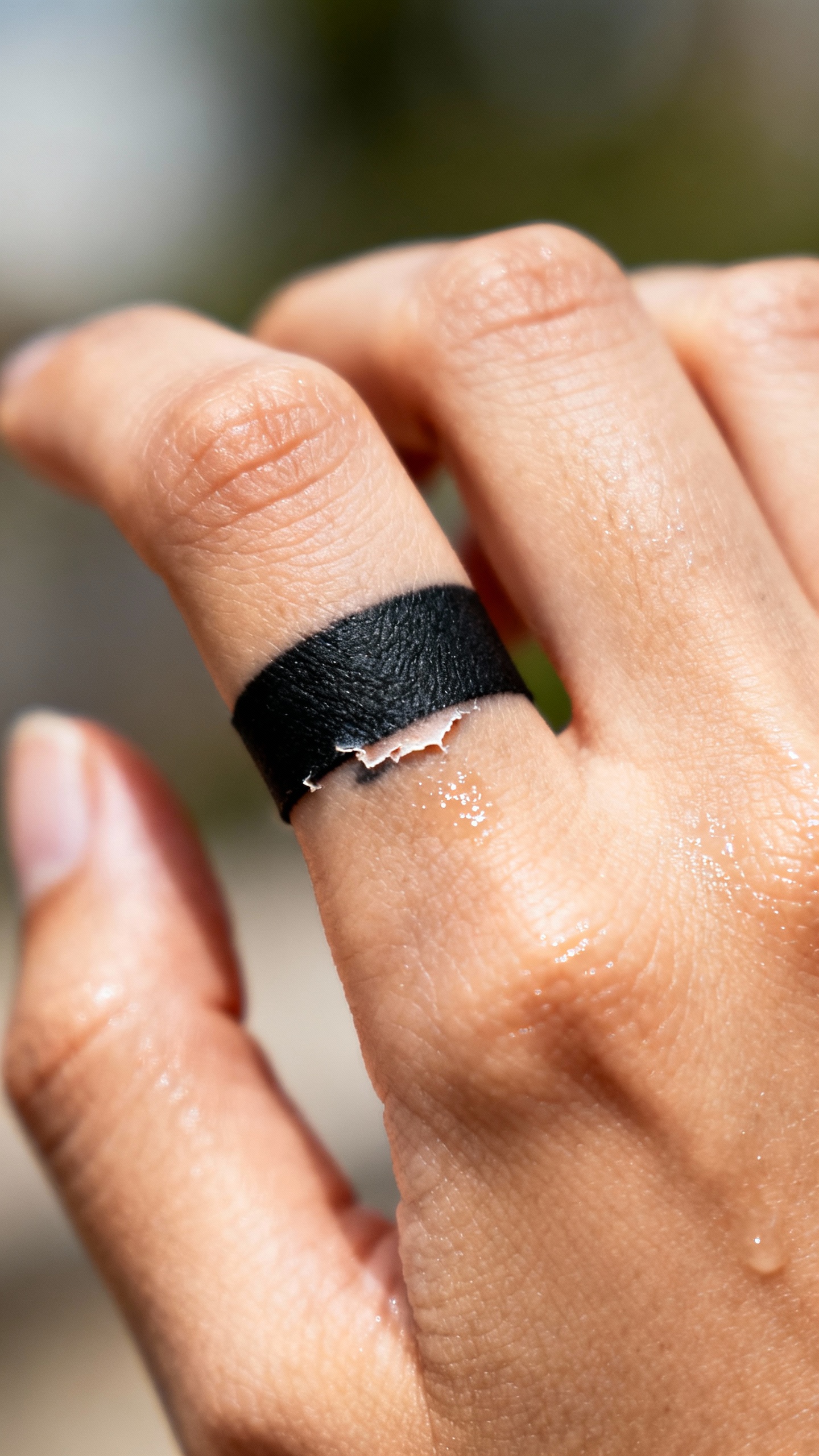
Your ring finger isn’t like your forearm or thigh. It’s a small, bony area with thin skin and constant movement. You wash your hands, grab stuff, type, lift, and gesture all day.
That constant friction and exposure changes everything. Translation: ring finger tattoos hurt more, heal slower, and fade faster than most placements. I’m not saying “don’t do it.” I’m saying “go in with eyes open and a touch-up fund ready.”
How Much Does It Hurt?
Short answer: more than average. Long answer: pain varies by your pain tolerance and the exact spot.
- Top of the finger (dorsal side): Sharp, scratchy pain.
Manageable but spicy.
- Side of the finger: Zingy and tender. It’s thin skin over tendons. You’ll feel it.
- Palm side (inner finger): Often not recommended.
Ink blows out and fades fast, and it hurts like stepping on a Lego every 3 seconds.
Pain-Management Tips
- Eat a solid meal and hydrate beforehand.
- Avoid alcohol and caffeine the day of—both thin your blood.
- Keep sessions short and designs simple. Less time = less misery.
Designs That Actually Work
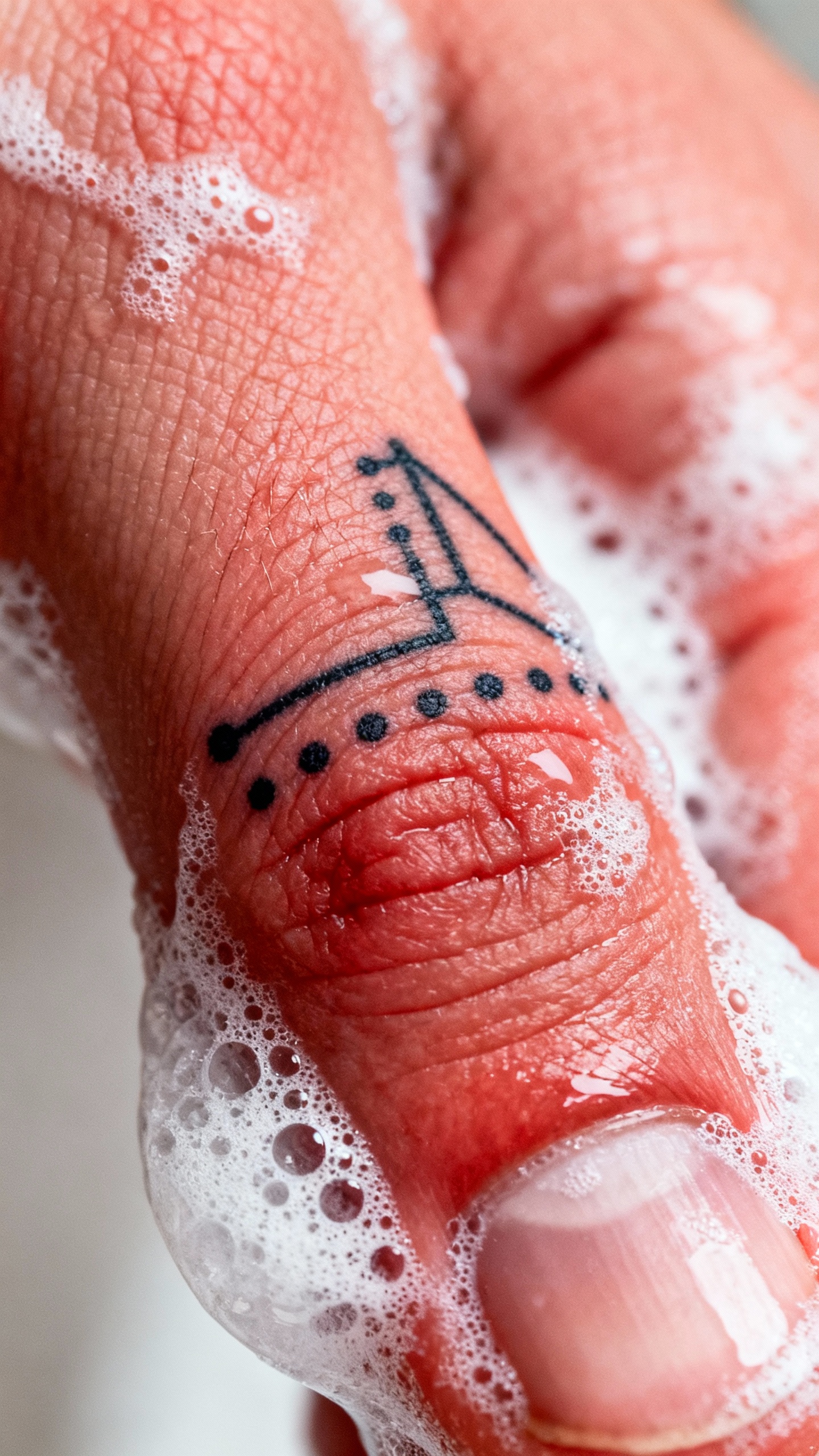
Finger tattoos need high-contrast, simple designs. Tiny gradients and micro-details won’t survive your daily hand-wash-a-thon.
- Best bets: Bold lines, simple symbols, dots, initials, minimal geometric shapes, clean bands.
- Tricky choices: Fine script, intricate filigree, delicate shading.
- Placement tip: Top or side of the finger outlasts the inner/palm side.
IMO, avoid the palm side unless you love touch-ups.
Line Weight Matters
Ask for slightly thicker lines than you think you need. Lines blur over time, and a hairline script turns into mystery spaghetti in a year. A good artist will suggest the right thickness for longevity.
The Healing Process (and Why It’s Annoying)
Hands move a lot, so ring finger tattoos heal slower and need more babysitting. Healing timeline, generally:
- Days 1–3: Oozing, tenderness, slight swelling.
Wash gently with fragrance-free soap 2–3 times a day. Pat dry.
- Days 4–10: Peeling and flaking. Moisturize lightly with a tattoo-safe ointment or lotion.
Don’t overdo it—too much moisture can blur ink.
- Weeks 2–4: Top layer looks healed, but the deeper layers still stabilize. Keep it clean and moisturized.
Aftercare Rules You Cannot Ignore
- No soaking: Skip baths, hot tubs, dishwater marathons. Waterlogged skin = lost ink.
- Minimal friction: Avoid tight rings, gloves, heavy lifting, and high-friction activities for 1–2 weeks.
- Sun is the enemy: Once healed, use SPF 30+ daily.
Sun fades ink fast.
- Be realistic: Even perfect aftercare won’t beat biology. Fingers shed skin quickly.
Longevity: How Long Will It Look Good?
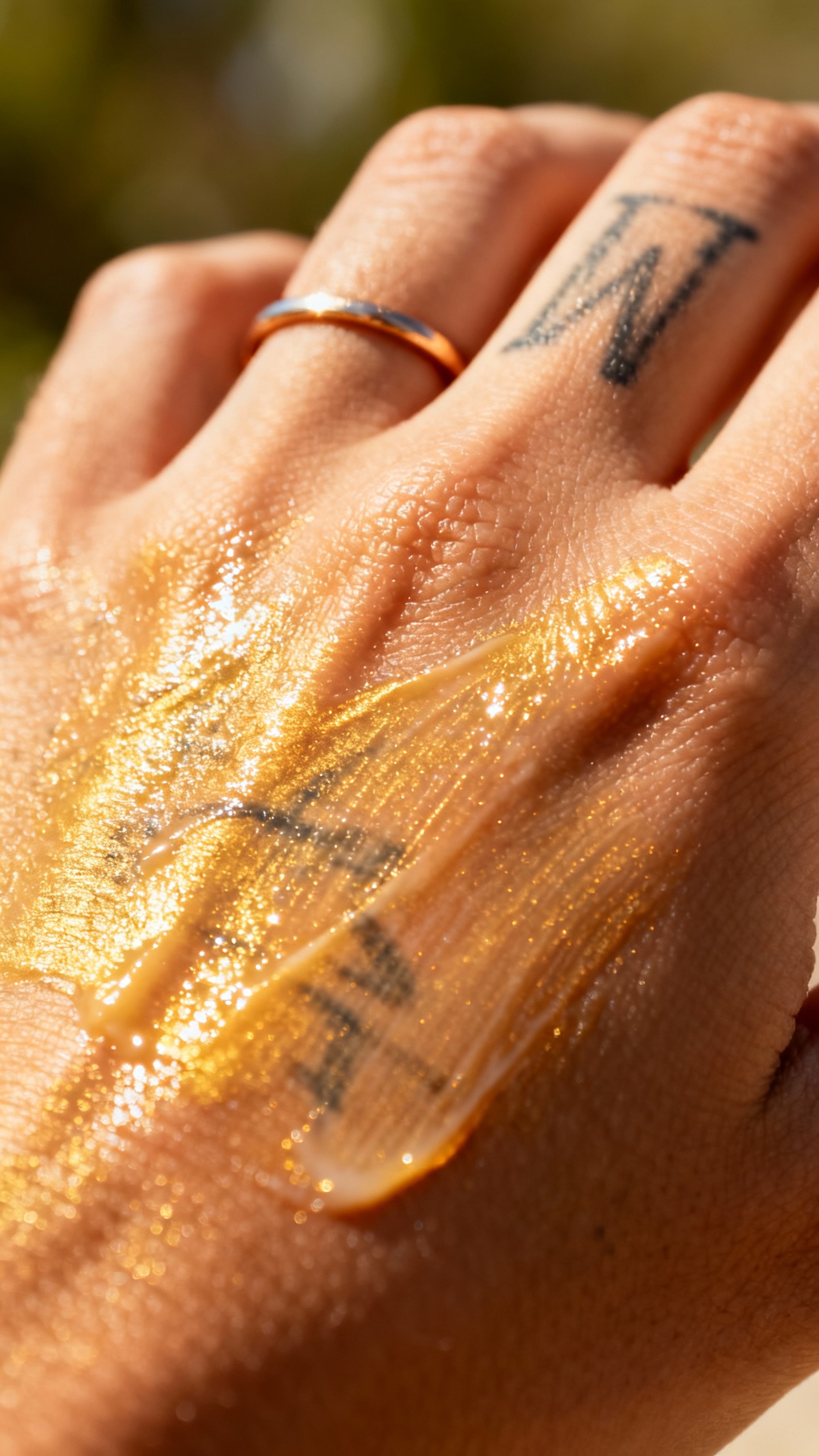
Here’s the blunt truth: finger tattoos fade and blur faster than almost anywhere else. You can expect some blurring within months and noticeable fading within a year or two.
Many people need a touch-up every 6–18 months, especially for super-fine designs. Want it to last longer?
- Choose bold, simple designs.
- Place it on the top or side of the finger.
- Commit to SPF and moisturizer after it heals.
- Plan for periodic touch-ups. FYI, some shops offer one free touch-up within a certain timeframe.
Ink Fallout and Blowouts
Because the skin on fingers is thin and structured differently, ink can “fall out” (heal patchy) or “blow out” (spread under the skin). Good artists know how to account for that with needle depth and technique, but even the pros can’t defeat finger biology 100% of the time.
Cost, Artist Choice, and Expectations
Ring finger tattoos might look tiny, but they often cost more than you’d expect.
You’re paying for expertise, not square inches. Shops may also charge for touch-ups or have strict policies for finger placements. Pick an artist who:
- Shows healed finger tattoo photos in their portfolio (not just fresh ones).
- Understands line weight, placement, and what not to attempt.
- Talks you out of bad ideas. If they’re honest, that’s a green flag.
What About Wedding Bands as Tattoos?
Tattooed wedding bands look rad and solve “I keep losing my ring” problems.
But keep them simple. A clean band or minimal symbol lasts way better than tiny scripts or micro-patterns. Also, you’ll still probably want a backup metal band for formal events, depending on your style and work dress codes.
Lifestyle and Work Considerations
Think about your job, hobbies, and daily habits.
Mechanics, bartenders, climbers, hair stylists, swimmers—anyone whose hands live in water, chemicals, chalk, or friction—will see faster fading. Pro moves:
- Schedule your tattoo before a lighter work week so you can baby it.
- Wear a loose, breathable bandage for short stints only if your artist recommends it. Don’t suffocate it.
- Moisturize consistently after it heals. Dry fingers crack and shed faster.
Common Myths, Busted
- “Finger tattoos always fall out.” Not always, but they’re high risk.
Good artists + good aftercare = better odds.
- “Fine-line looks cleaner.” On fingers? Not for long. Go slightly thicker than you think.
- “Palm-side ring tattoos are the best.” They’re the worst for longevity.
Sorry.
- “Once it heals, you’re done.” You’re not. Touch-ups are part of the deal, IMO.
FAQ
Do ring finger tattoos hurt more than regular tattoos?
Yes. Fingers have less fat, more nerve endings, and thinner skin.
You’ll feel a sharper, zingy pain compared to fleshy areas like the thigh or upper arm. It’s short, though—most ring designs take under 30 minutes.
How long do ring finger tattoos last before they fade?
You’ll see some fading and blurring within the first year, sometimes earlier. With good aftercare and sun protection, you can keep it looking solid with periodic touch-ups every 6–18 months.
Think of it like maintaining a favorite pair of boots.
Can I get detailed script or micro designs?
You can, but you shouldn’t if you care about how it looks in a year. Fine details blur. Go simple, bold, and clear.
Save the delicate script for your forearm or collarbone.
Is the inner (palm-side) ring tattoo a bad idea?
Usually, yes. It fades incredibly fast, blurs easily, and often heals patchy due to constant friction and moisture. If you’re dead set, expect frequent touch-ups and manage expectations hard.
How much does a ring finger tattoo cost?
Prices vary by city and artist, but expect a shop minimum—often $80–$150+—even for small designs.
You’re paying for specialized technique and time, not just size. Ask about touch-up policies before booking.
What’s the best aftercare routine?
Keep it clean with mild soap, pat dry, and moisturize lightly. Avoid soaking, tight rings, heavy friction, and direct sun.
Once healed, daily SPF and hand lotion help a lot. Follow your artist’s instructions over anything you read online (even this—FYI).
Bottom Line
Ring finger tattoos look awesome and carry real meaning, but they come with trade-offs: more pain, fussier healing, and faster fading. If you pick a skilled artist, choose a bold, simple design, and commit to aftercare and touch-ups, you’ll keep that tiny badge of commitment looking sharp.
If you want a low-maintenance forever piece, pick a different spot. But if you love the symbolism and the style? Go for it—just go in informed and ready to nurture that little ring of ink.